Soot Warms More Once It Picks up a Coating, a Decade of Air Samples Finds
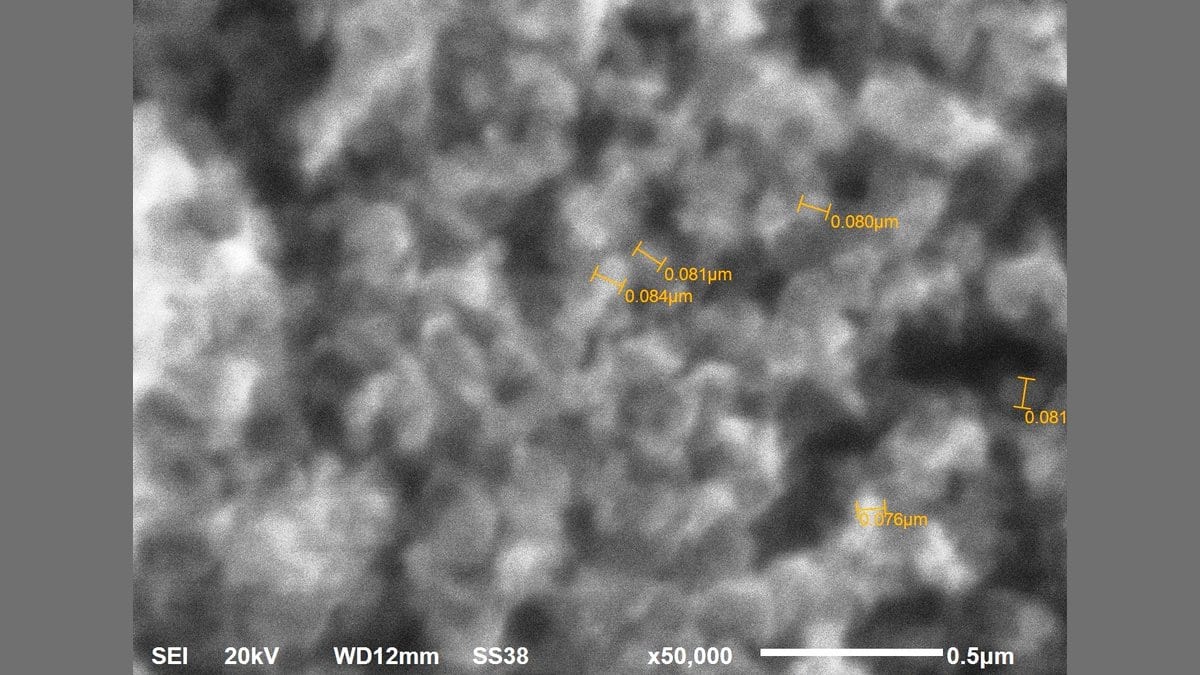
Coatings that build up on soot particles in the air raise black carbon's warming effect from 0.20 watts per square meter, plus or minus 0.25, to 0.30 watts per square meter, plus or minus 0.42, according to a study published on August 25, 2026, in Nature Geoscience. Both figures carry an uncertainty range wider than the difference between them.
The figures are for black carbon's effect at the top of the atmosphere, the standard measure of how much extra energy a substance traps across the planet. Dantong Liu and colleagues drew these estimates from ground-based and aircraft measurements of individual particles collected between 2012 and 2021, then used those observations to constrain the global calculation.
The team also calculated an additional 0.065 watts per square meter, plus or minus 0.15, from black carbon carried inside cloud droplets.
Soot from burning vegetation was two to three times more effective at trapping heat, per unit of black carbon, than soot from cities, the study shows, attributing the difference to the thicker coatings that biomass-burning particles acquire.
Black carbon is the light-absorbing part of soot, produced by the incomplete burning of fuels and vegetation. Airborne particles acquire coatings of other material as they age, and it is that coated state the measurements were used to characterize.
The authors close by recommending that black carbon and particulate matter emissions be controlled together rather than separately, which is their recommendation rather than a result of the measurements.
Sources
- www.nature.comPeer-reviewed