Skip to content
See the World Through ScienceA project of ALLATRA
Source: Peer-reviewed1 source

Rapid Climate Attribution Stands up to a Key Criticism

Environment

Republish this story

Our work is licensed under Creative Commons BY-NC 4.0. You may republish this piece for free — with credit to ALLATRA Media and a link to the original, unedited beyond length trims, and not for commercial use.

Read the full license

Rows of black computer racks inside a converted stone chapel at the Barcelona Supercomputing Center, seen from a raised walkway.
MareNostrum 4 at the Barcelona Supercomputing Center. Attribution studies rest on large ensembles of climate-model simulations run on machines of this class (illustrative)."2017 BSC Superordenador MareNostrum-4 Barcelona-Supercomputing-Center" by Martidaniel, via wikimedia, CC-BY-SA-4.0 · CC-BY-SA-4.0

When comparable methods and datasets are used, climate attribution results hold up across different choices of how an extreme-weather event is defined. A new synthesis of published studies finds that this consistency is stronger than critics of rapid attribution have assumed.

The paper, published Sept. 17 in Communications Earth & Environment by Friederike E. L. Otto and Joyce Kimutai of Imperial College London and colleagues, addresses a question that has become pressing as attribution studies multiply: when does a new study actually add insight?

The research team found that attribution results for events of the same type and magnitude within a region are often strikingly consistent when similar probabilistic frameworks and comparable datasets are applied, even as the temporal and spatial boundaries of the event are varied. Rapid studies typically define an event narrowly to match the one in the news, and critics have argued that those definitions are chosen after the fact to produce a desired result. The study notes that this concern largely does not hold when methods and data are matched.

The more influential variable is the dataset. Attribution statements shift more when researchers switch the underlying climate data than when they redraw the event boundary.
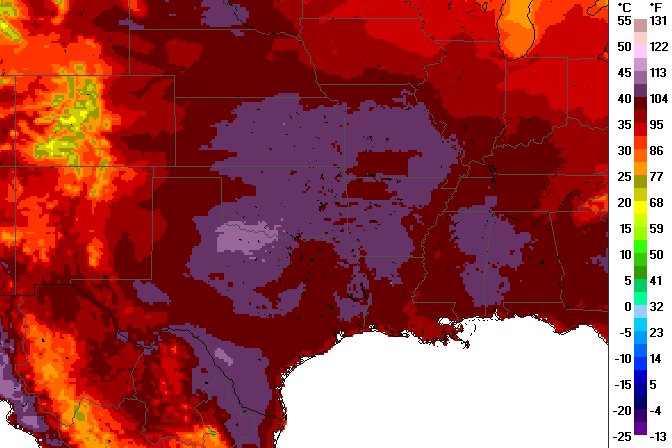
A reanalysis map of the central and southern United States shading maximum temperatures during the 1980 heat wave, with a color scale in Celsius and Fahrenheit at the right.
Maximum temperatures across the central and southern United States during the 1980 heat wave, drawn from the ERA5-Land reanalysis. The study finds the choice of dataset shifts attribution statements more than the choice of event boundary does (illustrative). – "1980 Central-Southern Plains heat wave ERA5-Land reanalysis maximum temperature map" by Source 1: Own work based on: Basemap.png, Source 2: Copernicus programme, via wikimedia, CC-BY-SA-4.0

The authors conclude that additional studies using established methods for well-studied hazards and regions often add limited insight unless they bring a substantial improvement in data quality. They recommend that the field redirect effort toward understudied regions and approaches that deepen causal understanding rather than reaffirm what is already known about well-characterized hazards such as European heatwaves.

The findings bear directly on operational attribution services, including the rapid studies published within days of a disaster, and on how attribution evidence is weighed in policy and legal contexts.

Sources

Spot an error?

Spot an error?

Report an error

Spotted a mistake on this page? Tell us what's wrong and our editors will take a look.

What kind of problem?

Only if you'd like us to be able to follow up. We won't use it for anything else.

We correct mistakes openly. Select any text to flag it. Fixes are logged under our Corrections Policy.

Report an error

Reporting on

Rapid Climate Attribution Stands up to a Key Criticism

What kind of problem?

Only if you'd like us to be able to follow up. We won't use it for anything else.

We read every report. Corrections are logged publicly.