A Drone Caught Airborne Plastic 100 Meters Above Colorado
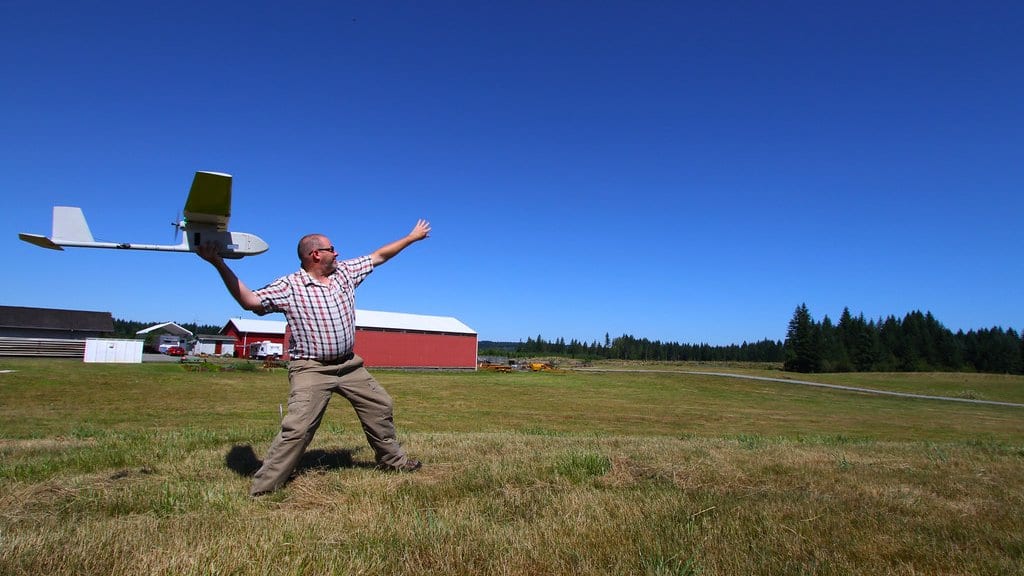
A drone carrying a cyclone air sampler collected microplastics 80 to 100 meters above the ground at two sites in Colorado, researchers reported Oct. 6, 2026, in Scientific Reports. The authors describe the flights as a proof of concept and say the work demonstrates the feasibility of sampling airborne plastic this way.
Plastic particles are known to move through the atmosphere, and the paper states that direct measurements at altitude remain scarce. The team presents the drone method as a framework it says can be adapted to sampling over the ocean surface, at higher altitudes and in remote places.
Radiance Calmer of the Cooperative Institute for Research in Environmental Sciences at the University of Colorado Boulder led the work, with Gijs de Boer of Brookhaven National Laboratory among the co-authors. The team flew in fall 2024, at sites the paper describes as having high human activity. Particles were counted under an optical microscope, then identified by Raman microscopy, a laser fingerprinting method.
Confirmed plastics came to a mean of 13.8 ± 1.8% of the particle counts the team had selected by shape for analysis, in the 3 to 10 micrometer size range, after blank samples were subtracted. That is a share of the selected particles in one narrow size band, not a share of the air. Most of what the sampler caught was plastic stuck to other material rather than loose grains, a pattern the authors say is consistent with material from traffic.
The paper was published open access under a Creative Commons non-commercial, no-derivatives license, and the posted version is the accepted manuscript, which the journal says will be replaced by the final version of record. The work was funded through the institute's Innovative Research Program.
Sources
- Scientific ReportsPeer-reviewed