Arctic Sea Ice Can Be Forecast From Its Own Past, With No Physics at All
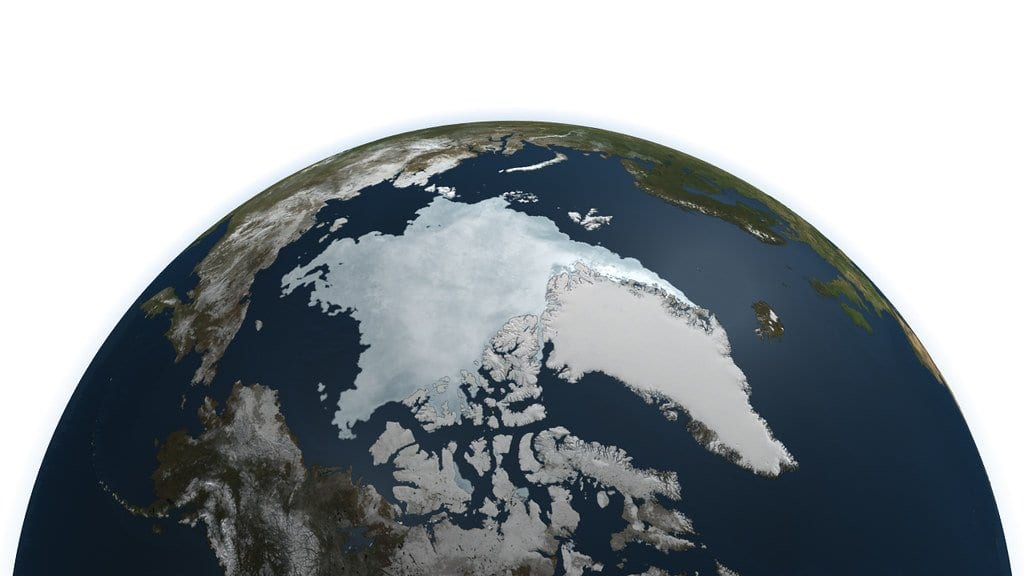
Two researchers have built a predictor of how much of the Arctic Ocean will be covered by ice a season ahead, using nothing but the historical record of the ice itself. There is no physics in it and no climate model. Writing in Scientific Reports on Oct. 5, Faiq Raees of New York University's Courant Institute of Mathematical Sciences and Francesco Paparella of New York University Abu Dhabi report that when the method is run over past years, it predicts the September average with skill they describe as comparable to that of the models of the Sea Ice Prediction Network.
The pair propose it not as a forecast to use but as a floor to clear: a baseline that any physics-based or AI-based sea ice model should have to beat, and they argue that failing to outperform it is a serious shortcoming for a model meant to describe sea ice realistically.
The technique is an old one. Their random analog predictor is a randomized version of the analog method: it searches the past record for stretches that resemble the present one and treats what followed each of them as one possible forecast, producing a spread rather than a single number. A statistic called band depth then picks the most representative forecast in that spread. Compared with what was actually observed, the authors report negligible bias and a root-mean-square error no larger than 0.6 million square kilometers.
On their account, what makes it suitable as a benchmark is what it lacks. It is simple, it can be inspected, it assumes nothing about the physics of ice, and it attaches an uncertainty estimate to its own forecasts.
The paper is open access, and Tamkeen funded both authors through New York University Abu Dhabi research institute awards.
Sources
- Scientific ReportsPeer-reviewed