A Warm North Atlantic Nudges the Pacific, but Only Slightly
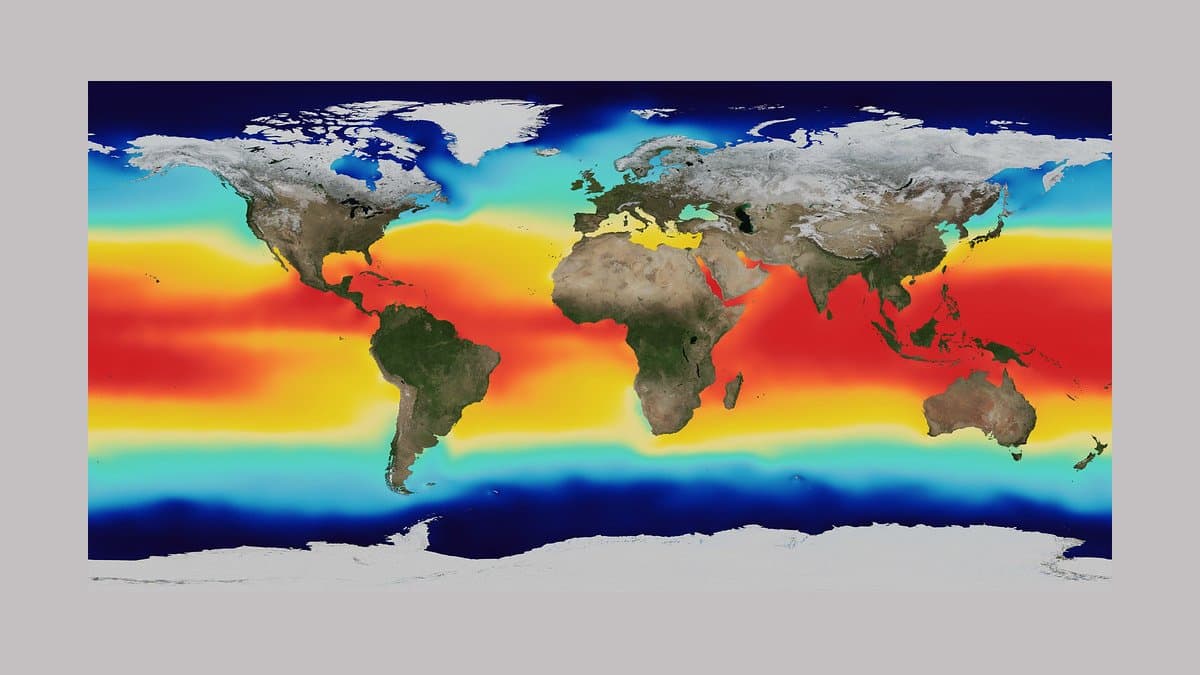
Across several large ensembles of climate models, a warm North Atlantic leaves the tropical Pacific slightly warmer rather than cooler, according to a study published Sept. 18, 2026 in npj Climate and Atmospheric Science. All the models pointed the same way, and none produced a large effect.
The study was led by Arundhati Kalyan of the University of Leeds, with colleagues at Leeds, the Met Office Hadley Centre and the Barcelona Supercomputing Centre. Atlantic Multidecadal Variability is a slow swing in North Atlantic ocean temperature that runs over decades. It contributes remotely to changes in the tropical Pacific, the authors write, and it had been unclear whether models agree on which direction that push goes. The tropical Pacific is where El Niño and La Niña form, and shifts there move rainfall and temperature patterns worldwide.
Two kinds of experiment had been giving opposite answers, the paper says: runs that force the ocean toward a warm Atlantic produce cooling in the tropical Pacific, while models left to run freely produce warming. Across historical simulations from several large ensembles, the team found warming in all of them. The temperature gap in the Niño 3.4 region, the patch of central Pacific used to track El Niño, ran from 0.03(±0.05) K to 0.12(±0.03) K between the warm and cool Atlantic phases. A kelvin and a degree Celsius are the same size, and at the low end the stated uncertainty is wider than the anomaly itself. These are simulated values, not measurements of the ocean.
Which model gives the larger Pacific response is not set by how large its Atlantic swing is: across models, the sizes of the two vary independently, the authors report. What does track the differences between models is the strength of the Atlantic variability, the heat moving between the North Atlantic and the air above it, and the response of the Walker circulation, the tropical Pacific's east-west wind loop.
The paper is open access, and was funded by the UK's Natural Environment Research Council and the Met Office.
Sources
- nature.comPeer-reviewed