Old Newspapers Reveal What a Forgotten Heatwave Did to Western North America
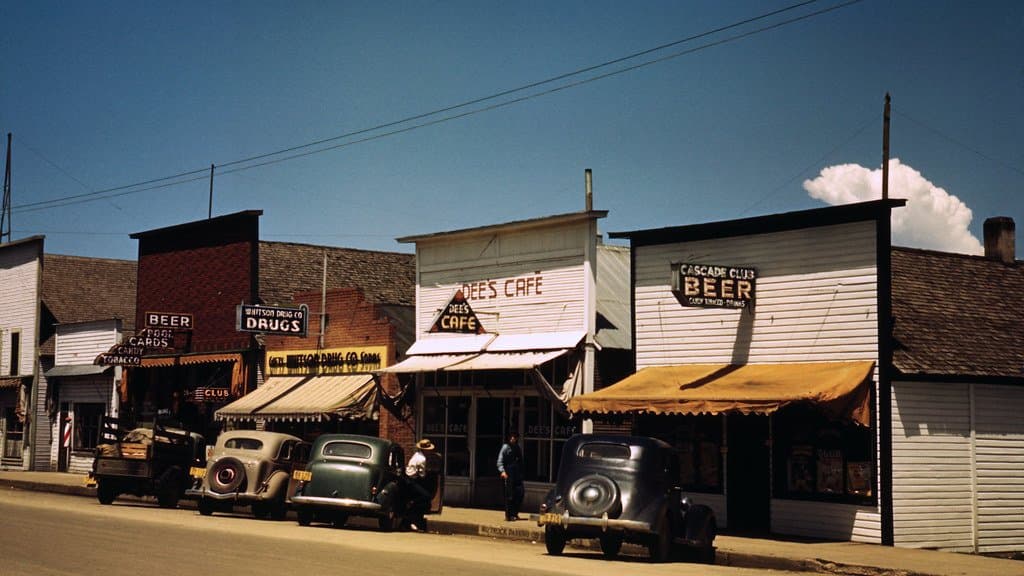
Researchers at Simon Fraser University have reconstructed what a 1941 heatwave did to western North America by reading 357 issues of 25 news publications printed before, during and after it, and compared it to the region's 2021 heat dome. Their study appeared Sept. 19 in Communications Earth & Environment.
The older event was not unknown: earlier work had identified it as comparable in magnitude and location to the modern one. What was missing was any account of what it did to people. Sam Anderson and Shawn M. Chartrand, both at Simon Fraser's School of Environmental Science, write that little is known about the impacts of the 1941 heatwave, and their paper assembles one from the contemporary press.
The newspapers record deaths, water shortages, crop damage, wildfires, flooding and changes to social customs and behavior. The researchers then compared the two heatwaves using climate reanalysis, a reconstruction of past weather, along with river flow, sea level, crop yield and mortality data.
The two did not leave the same mark, and the authors trace the differences to several causes at once. The heatwaves spread differently across the continent, and different weather followed each. Policy responses were entangled with crises already under way, the Second World War in one case and the COVID-19 pandemic in the other. Social norms, daily tidal cycles, technology, engineering and infrastructure had all changed in between. The team describes the pair as driving widespread but contrasting impacts, calling the later heatwave among the most extreme ever recorded.
The research was funded by the Natural Sciences and Engineering Research Council of Canada. The publisher has posted the peer-reviewed accepted version ahead of the final edited text.
