A Computer Built From DNA Works by Relaxing
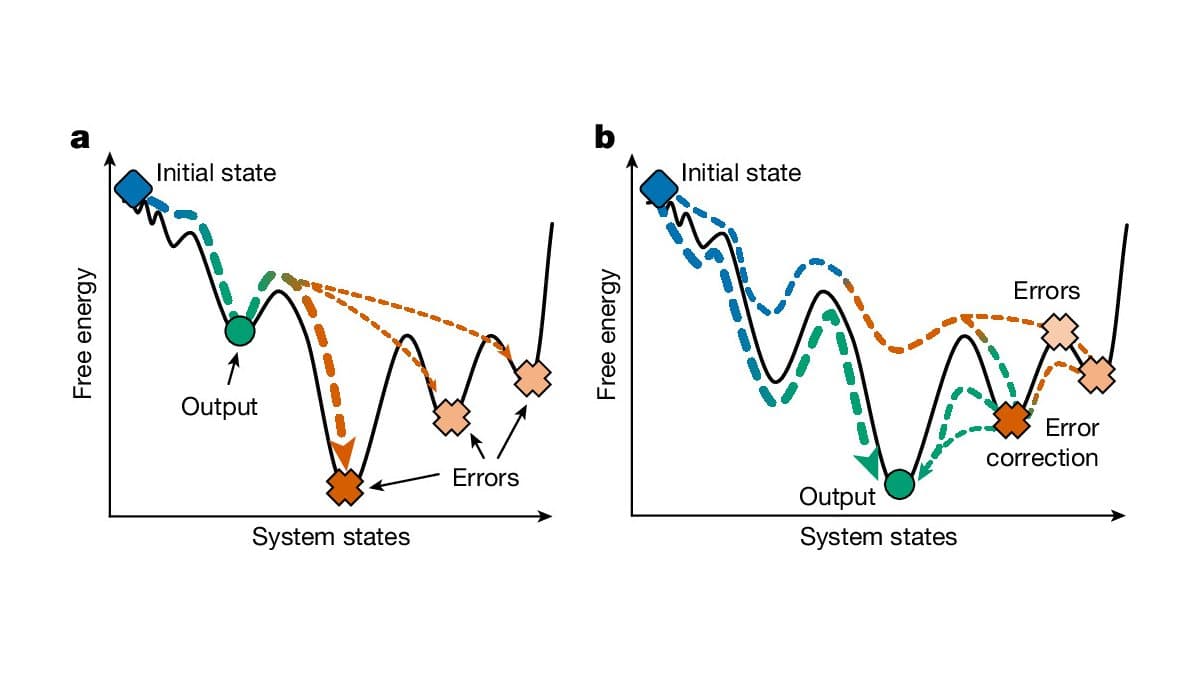
A computer made of DNA strands ran 10 programs, among them an addition of 25-bit numbers that its authors call "a 100-bit computation." The work was published Sept. 16 in Nature. Nothing drives the machine while it runs: the answer is the arrangement the strands settle into on their own, and getting there needs neither error correction nor fine control of reaction speeds.
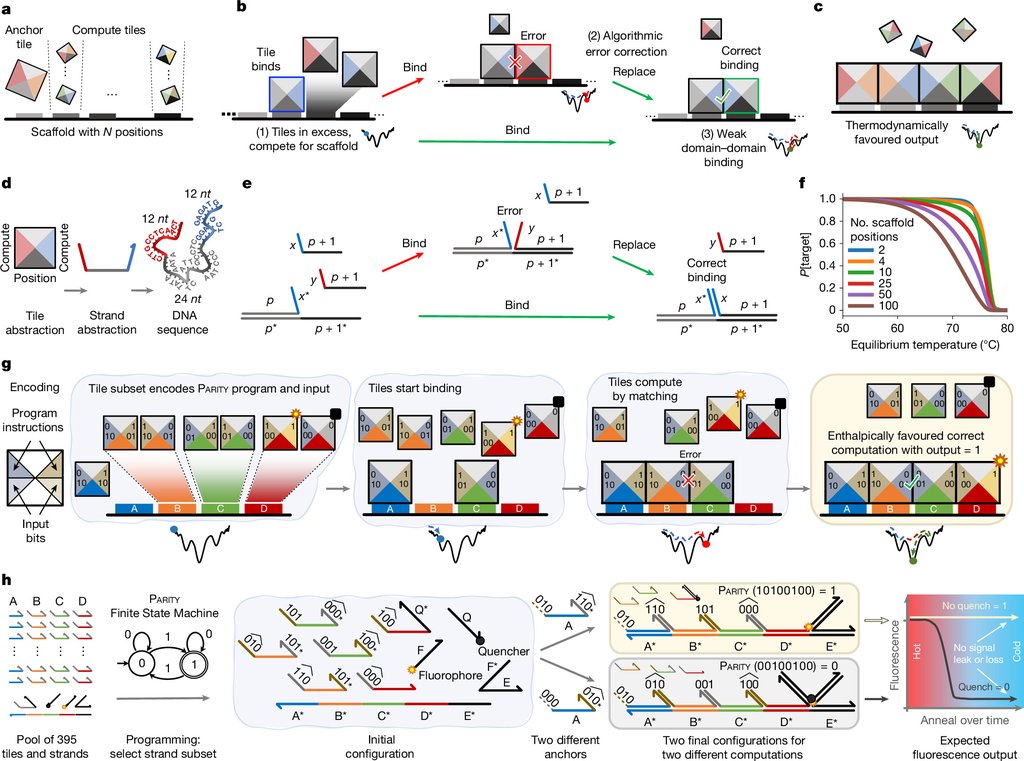
Tristan Stérin, Damien Woods and colleagues, who call the system a Scaffolded DNA Computer, write that the work "creates a new way to think about equilibrium computation in all manner of synthetic systems." Equilibrium is the point at which a mixture stops changing.
The 10 programs include multiplying by three, dividing by two and the 25-bit addition. The authors report that the experimental protocols are simple, that a system can be reused dozens of times, and that small instances finish in under a minute.
The paper's opening argument is that computers are normally held out of equilibrium, and that holding them there costs energy: error states are suppressed by control processes that are energetically costly. Machine learning and search algorithms already use the idea of letting a system relax into a favored state, but they run it on hardware that is itself out of equilibrium and expensive to power.
Its competing-interests declaration names Stérin, Abeer Eshra and Woods as inventors on pending patent applications filed by Maynooth University that cover the core principles of the work, and records that Stérin was employed by the company PRGM DEV for the latter part of it.
Sources
- nature.comPeer-reviewed
