A Fiber Sensor That Untangles Its Signals in Light, Before Anything Is Digitized
A group at INESC TEC and the University of Porto reports separating several signals carried by one optical fiber in the light itself, before a camera and before any digitization step, in a paper published Nov. 4, 2026, in Communications Engineering. The sorting is done by the optics the light passes through, upstream of the point where the measurement normally becomes data.
Tomás Lopes, Nuno A. Silva and colleagues write that camera-based acquisition and the electronic digitization that follows it add latency and limit bandwidth, which is what keeps this kind of sensor from running in real time or at finer time resolution. Doing the task-specific part of the computation optically bypasses that pipeline, their paper reports.
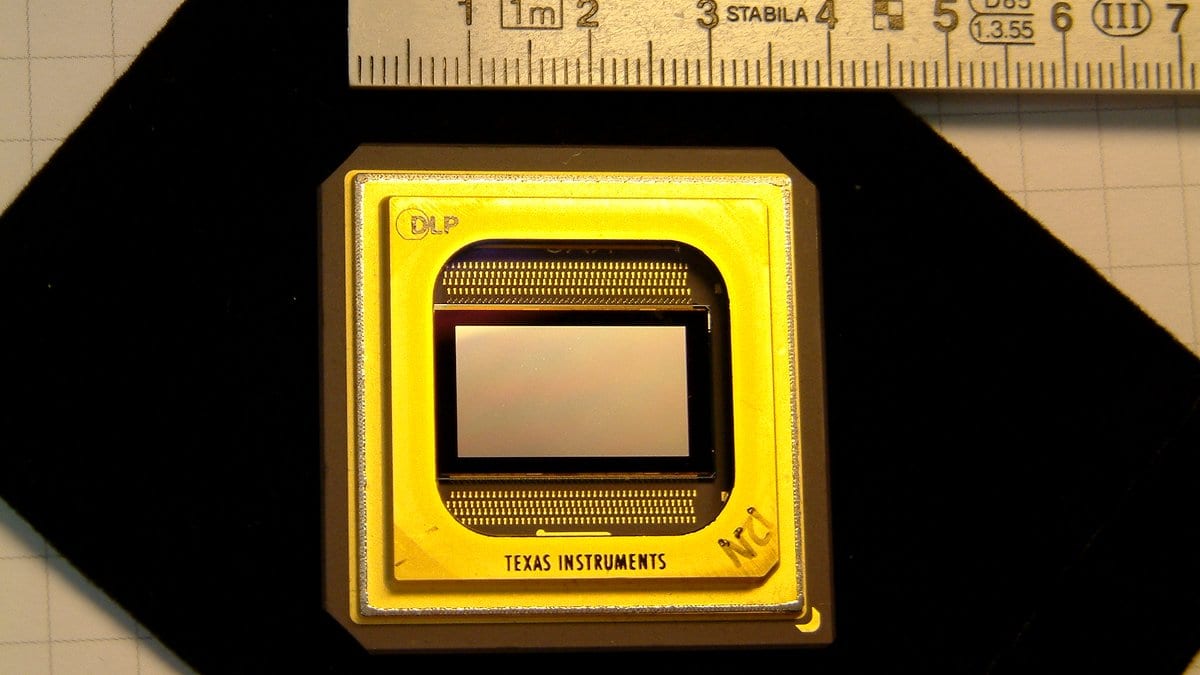
The sensors read speckle, the grainy pattern light forms as it scrambles along a fiber, which shifts whenever the fiber is bent, pressed or vibrated. In the reported setup, the light leaving the fiber falls on a digital micromirror device, a dense array of tiny mirrors tilted under electronic control, used as a programmable optical layer. Its mask patterns were trained in place, by trial and error from the detector's output alone, using what the authors call an evolutionary optimization strategy.
The test was a multi-point sensing task. Several piezoelectric actuators, which flex when a voltage is applied, perturbed the same fiber at once, each changing the speckle pattern. With a set of masks optimized to pull the overlapping signals apart, the authors report raising the target signal by more than 4 dB while holding crosstalk below minus 10 dB (leakage at least ten times weaker than the signal being read). They describe the separation as working in real time.
The authors argue that bandwidth in such a scheme is then set only by the photodetector, and present the work as a route toward ultrafast optical sensing. That is their reading of a laboratory demonstration, not a measured rate.
The paper is open access, and its supplementary material includes audio recordings for three sensing locations, each paired with the signal recovered through the optimized mirror pattern. Communications Engineering is releasing the accepted manuscript ahead of the final version of record. The work was funded by Portugal's Foundation for Science and Technology.
Sources
- Communications EngineeringPeer-reviewed