Driverless Cars Kept a Safer Gap. The Drivers Behind Them Did Not
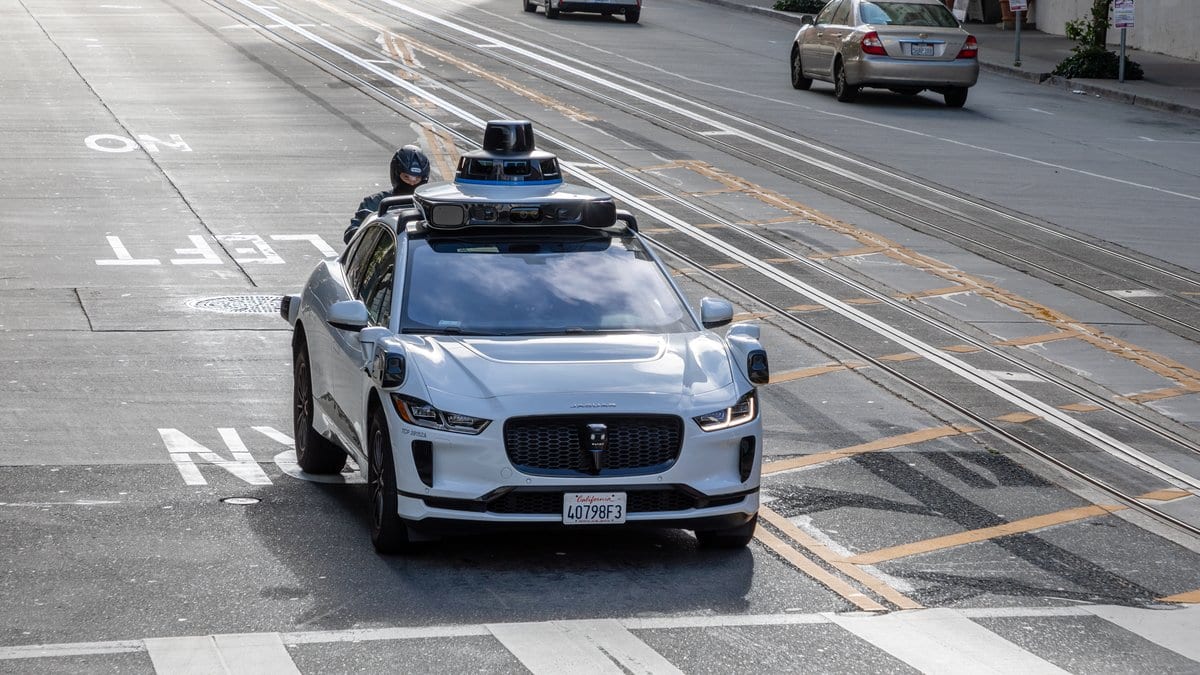
Driverless cars run by Lyft and Waymo kept longer gaps behind the vehicle in front than human drivers did in comparable traffic, while the human drivers following those same driverless cars closed up and left themselves less time to react. The result comes from a peer-reviewed study published Oct. 5, 2026, in Communications Engineering.
The authors' starting point is a design assumption: automated vehicles are programmed to drive smoothly and keep to traffic rules in order to make traffic safer. Whether that works also depends on how the people driving nearby respond to a car that does not behave like a person.
The paper draws on three real-world datasets, covering Lyft driverless cars, Waymo driverless cars and vehicles driven under adaptive cruise control. Rather than comparing car-following events as they arose, the authors matched events by how the lead vehicle's speed was changing, then ran the matched sets through quasi-experiments.
In the Lyft data, the driverless cars followed more smoothly and more safely than human drivers under matched conditions. They held longer time headways, the gap in seconds to the car ahead, and higher time to collision. Human drivers did the opposite. Following a Lyft driverless car, they took shorter time headways and smaller time to collision than when following a car driven by a person, which the authors attribute partly to the greater stability of the automated leader. They call that second result paradoxical. Similar shifts turned up in the other two datasets.
The measurements cover car-following in observed traffic, not a controlled trial, and one behavior among many in driving. The authors describe their contribution as a fuller understanding of how automated vehicles affect traffic safety.
The work was led by Yueying Chu and Peng Liu of Zhejiang University, with Ying Gao and Zhigang Xu of Chang'an University. Communications Engineering has published the accepted manuscript ahead of the final version, noting that it may still be edited.
Sources
- Communications EngineeringPeer-reviewed