The Electrical State of Micro- and Nanoplastics

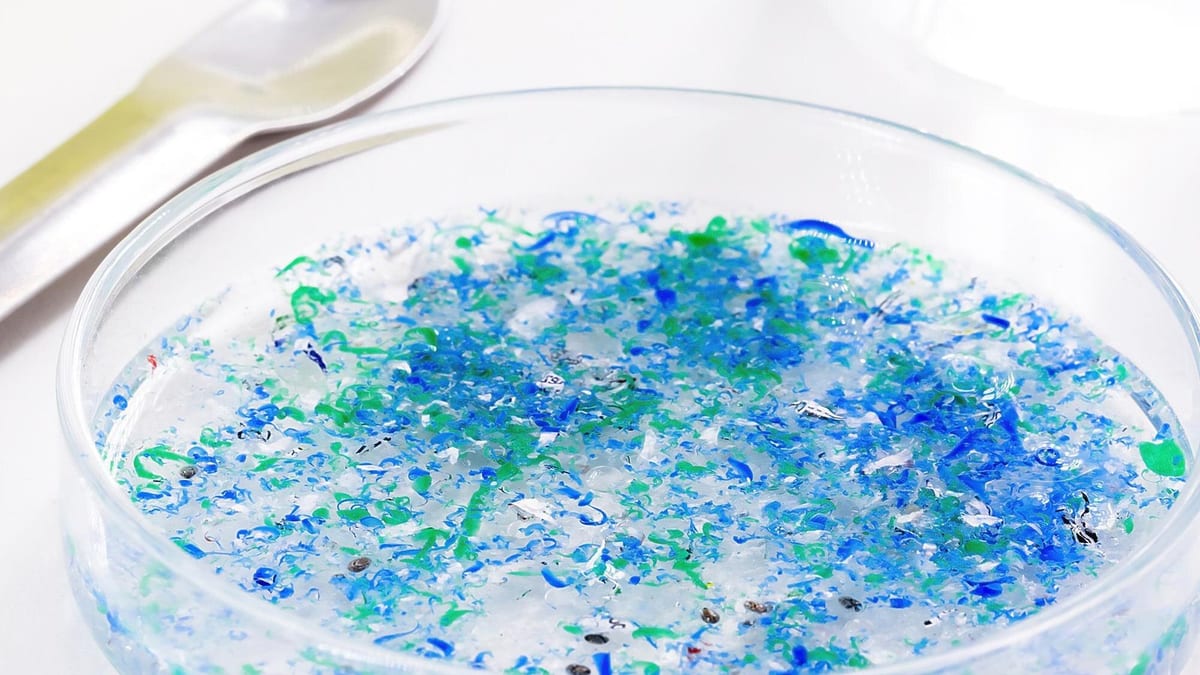
Every day, we encounter the electrostatic properties of plastics, often without giving them much thought. Synthetic fabrics cling to one another, dust is readily drawn to plastic surfaces, and in industrial settings, accumulated charge can become a serious hazard, damaging sensitive electronic components or producing a spark capable of igniting flammable vapors. As plastics fragment into smaller particles, these familiar electrical properties do not disappear. At the same time, micro- and nanoplastics (MNPs) are being detected across an extraordinary range of environments and biological tissues, from Antarctica to the human brain. These discoveries raise a fundamental question: what determines where these particles travel and how they interact with living systems?
Research into MNPs has examined a wide range of characteristics, including particle size, shape, chemical composition, and surface charge. The electrical dimension, in particular, may become increasingly relevant as plastics fragment into smaller particles because, for a given amount of material, reducing particle diameter tenfold results in roughly a thousand times as many particles and ten times the total surface area. For example, fragmenting a 1 mm particle into 100 nm particles could produce roughly one trillion particles while increasing the total surface area about 10,000-fold. This greatly expands the area available for contact with water, other particles, biomolecules, and cells, increasing the opportunities for electrostatic interactions to influence particle behavior. Thus, at the micro- and nanoscale, electrostatic charge may be more than a familiar feature of plastic. I suggest that it may be an overlooked factor in MNP behavior.
The Electrical State of Plastics
Understanding why charge may matter for MNPs first requires considering how plastics acquire and retain charge, what commonly used measurements actually capture, and how a particle’s electrical state can change over time.
Acquiring Charge
The tendency of plastics to accumulate electrostatic charge stems partly from the same property that makes many polymers useful as electrical insulators. Unlike metals, in which mobile charge can readily redistribute, plastics have low electrical conductivity, allowing excess charge to persist rather than rapidly dissipating. Charge can be acquired when plastic comes into contact with and separates from another material, a process known as contact electrification. Mechanical fracture can also generate surface charge comparable to that produced by collision, rubbing, and mixing, suggesting that fragmentation itself may alter the electrical state of newly formed MNPs. Depending on the materials involved and the surrounding environment, proposed mechanisms of contact electrification include electron, ion, and material transfer.
Contact with water provides another route by which plastic surfaces can become electrically charged, as both electron transfer and ion adsorption can contribute to electrification at liquid-solid interfaces. This may be particularly relevant to MNPs because they come into contact with water on a vast scale — in oceans, rivers, rain, and living systems. In experiments with deionized water and PTFE, for example, contact electrification produced surface charge densities on the order of 1 nC cm−2, about ten times greater than calculated for ion transfer alone, indicating a substantial contribution from electron transfer. First-principles calculations for model water-polymer interfaces suggest that close contact between water and the polymer surface can produce sufficient electron-cloud overlap for electrons from the interfacial water layer to transfer into surface electronic states of the polymer, with the extent depending on interfacial separation and polymer chemistry.
Charge Retention and Distribution
But acquiring charge is only part of the story. In insulating plastics, excess charge can become localized in energetic “traps” associated with molecular structure, disorder, defects, impurities, and internal interfaces. The depth and density of these traps influence how readily charge can escape and therefore how long it persists. Beyond its persistence, charge can also be distributed unevenly, with positive and negative domains coexisting on the same surface. Experiments on contact-electrified polymers have identified a random mosaic of oppositely charged regions with characteristic length scales of approximately 44 and 450 nm, with these local regions partially canceling one another in the net charge. These length scales overlap the size range of nanoplastic particles themselves, raising the question of how such heterogeneity is partitioned or reorganized as plastics fragment to the nanoscale.
What Zeta Potential Captures
MNP surface charge is commonly characterized using zeta potential, but this quantity is not a direct measure of the charge on the plastic surface itself. Rather, zeta potential represents an effective electrokinetic potential at the slipping plane and therefore does not directly resolve the local charge heterogeneity described above. Zeta potential also depends on the surrounding medium, as ions, biomolecules, and other adsorbed species can alter the particle-liquid interface. For example, 50 nm polystyrene (PS) nanoparticles with substantially different zeta potentials in water (-8, -21, and +20 mV) all exhibited negative values (-8 to -14 mV) when measured in cell-culture medium, a shift the authors attributed to the formation of a negatively charged protein corona.
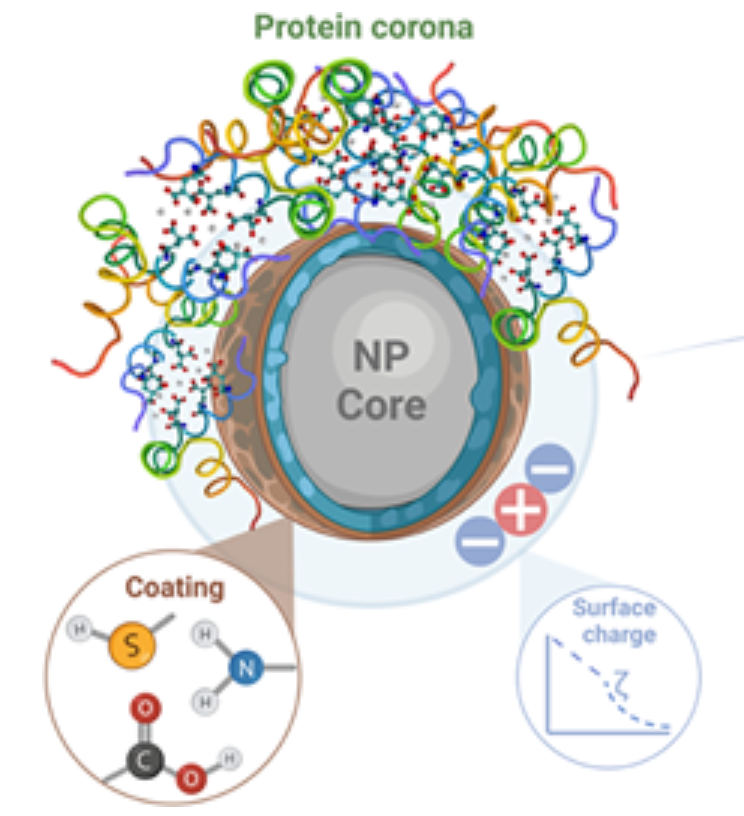
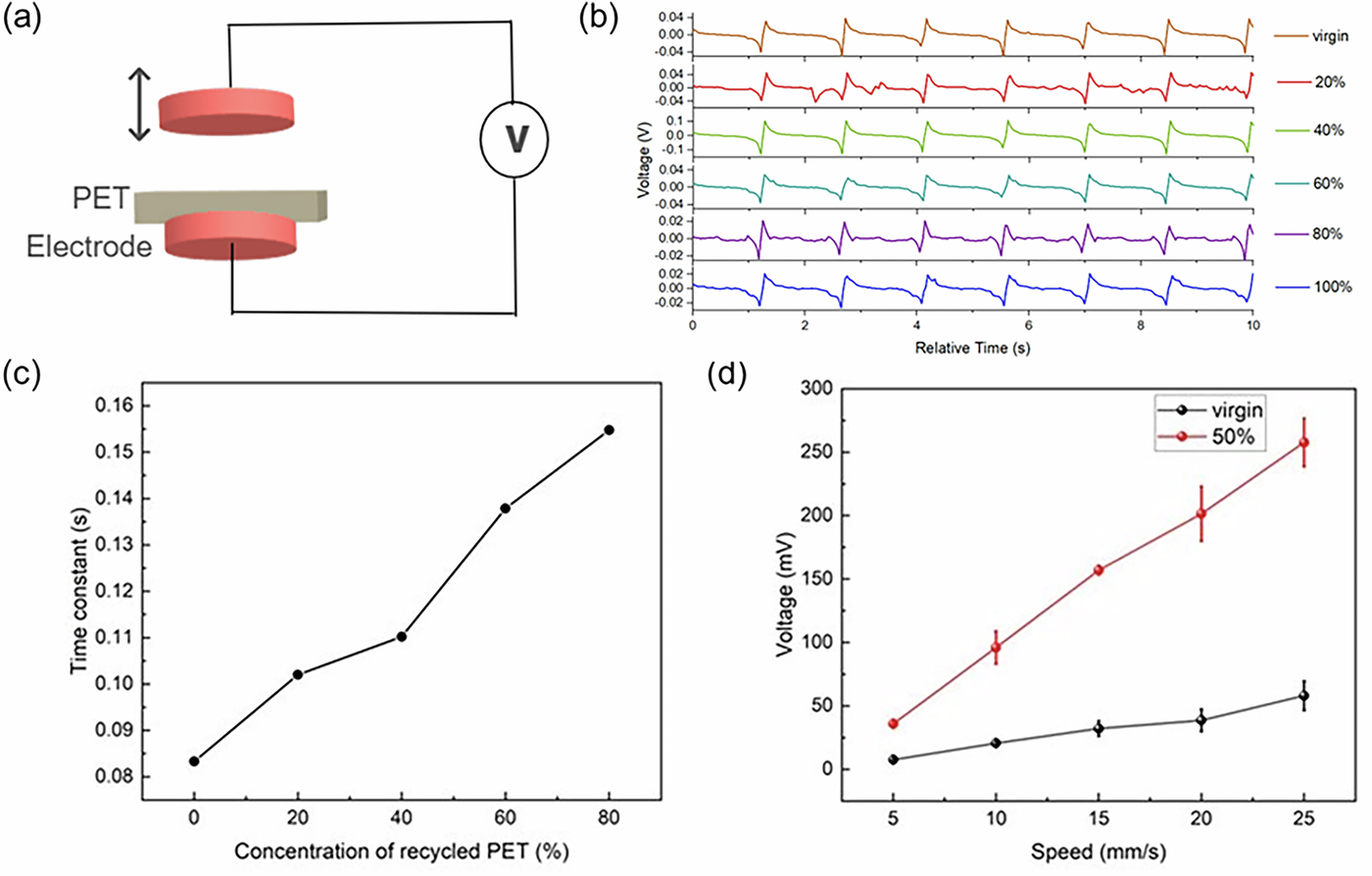
The electrical state of MNPs may also change over time as sunlight, heat, oxidation, and mechanical stress alter their shape, surface chemistry, and underlying molecular structure. The resulting degradation can generate free radicals, break polymer chains, alter crystallinity, and introduce structural disorder and defects, potentially affecting how charge becomes trapped and how readily it moves or dissipates. In a recent study of PET, greater recycled content was associated with greater charge retention and changes in dielectric behavior, consistent with polymer chain scission and defect-induced polarization. The electrical state may also change when MNPs enter biological environments, where proteins and other biomolecules can form a corona that modifies the particle interface and its electrostatic interactions, with corona formation itself influenced by particle charge under certain conditions.
Why Electrical State May Matter
A particle’s electrical state matters when it encounters another particle or surface. Opposite charges attract and like charges repel, but even an electrically neutral object can be attracted to a charged one as its internal charge distribution becomes polarized. For MNPs, electrostatic forces can influence whether particles remain dispersed or aggregate, attach to minerals or organic matter, and interact with biomolecules and biological surfaces. These interactions depend not only on how much charge a particle carries, but also on how that charge is distributed and on its polarizability — how its internal charge distribution responds to nearby charges and electric fields. Electrostatic forces may therefore help determine where MNPs travel and what they associate with in environmental and biological systems.
The electrical state of MNPs may be particularly relevant in living systems because electrical and electrochemical gradients are central to many biological processes. Cell membranes maintain voltage differences and ion gradients that regulate processes ranging from molecular transport to cellular signaling, while the distribution of charge across membrane surfaces can itself be dynamically organized and participate in processes such as cell polarity and migration. Proteins, lipids, nucleic acids, and other biomolecules also carry charged groups that shape their molecular interactions. An MNP entering this environment therefore encounters a complex electrical landscape, and its own charge could influence how it associates with biomolecules, adheres to cell membranes, and interacts with charged structures at the cell surface.
For example, experiments with differently surface-functionalized PS nanoplastics have produced substantial, but system-dependent, differences in biological effects. In one study using 50-60 nm particles in C. elegans, positively charged nanoplastics were more than 60 times as toxic as negatively charged particles, while experiments with 50 nm particles in murine lymphocytes found charge-associated differences in oxidative stress, mitochondrial dysfunction, and apoptosis, with positively charged particles producing the strongest toxicity. Other experiments, however, have reported a different relationship between surface charge and toxicity, including lower acute toxicity of positively charged PS nanoplastics in Daphnia magna under particular conditions. These findings show that biological effects can differ with particle surface charge, but charge sign alone does not consistently predict those effects. Whether a broader electrical state — including persistent or spatially heterogeneous charge acquired through contact electrification, fragmentation, or environmental processing — can help explain such differences in biological interactions, or even perturb local electrical conditions at the cell surface, remains an open question.
Here, water deserves particular attention because it is often the medium in which MNPs encounter other particles, surfaces, and molecules across biological and environmental systems. At MNP-water interfaces, electron transfer and ion adsorption can alter the local electrical environment, which may in turn influence the orientation and hydrogen-bond organization of nearby water molecules, as observed at charged mineral-water interfaces. For plastics specifically, molecular simulations of PS-water interfaces show that water organization is sensitive to polymer surface chemistry, with greater surface oxidation associated with increased interfacial water density, altered molecular ordering, and increased hydrogen bonding between water and the polymer. Whether persistent or spatially heterogeneous electrostatic charge on MNPs produces additional changes in this interfacial water structure remains largely unexplored. More broadly, experiments with dissolved ions have reported, under particular conditions, changes in water organization extending well beyond the immediate hydration shell, suggesting that electrical effects on water may not always remain confined to the immediate interface. Because water’s hydrogen-bond network contributes to its physical properties, including its thermal behavior, it is notable that recent experiments have reported changes in the thermal conductivity and thermal diffusivity of water and seawater containing microplastics, although whether electrical effects contribute to these changes remains unknown.
The electrostatic effects discussed here differ from the continuous flow of charge we commonly associate with electricity, such as the current that powers our homes and electronic devices. Electrostatic charge can instead accumulate and remain localized, particularly on or within an electrical insulator such as plastic. A spark or static shock occurs when some of that accumulated charge suddenly discharges, but even without such a discharge, localized charge generates electric fields and electrostatic forces that can influence nearby particles and surfaces. The potential importance of these forces at microscopic scales is illustrated by experiments relevant to the early stages of planetary formation, where collisions can electrically charge dust grains and electrostatic attraction can help them aggregate even when gravity between individual grains is extremely weak. Although MNPs are a very different system, the example shows how electrical forces that are easy to overlook can become important in the behavior of microscopic particles.
The question, then, is not simply whether MNPs can carry electrostatic charge, but what electrical state they actually present when they encounter another particle, surface, biomolecule, or cell. As a particle moves through different environments, charge may be acquired, retained, lost, or redistributed through interactions with its surroundings. Environmental conditions such as pH and ionic strength can modify surface ionization and electrostatic screening, while adsorbed organic matter, proteins, and other coatings can further alter the effective interface presented by the particle. For example, PS nanoplastics can exhibit substantial changes in zeta potential after exposure to biological media, in part because of protein-corona formation.
What matters for a particular interaction is therefore likely to be the particle’s electrical state at that moment, reflecting its intrinsic properties, its history, and its immediate surroundings. That state may not be captured by a single conventional descriptor such as zeta potential, particularly when charge is spatially heterogeneous across the particle surface. Moreover, engineered, laboratory-weathered, and environmentally aged particles with comparable zeta potentials have been reported to exhibit different aggregation behavior, contaminant interactions, and biological responses. Assessing the significance of electrical state will therefore require studies of appropriately aged and conditioned particles under conditions representative of the environments in which those interactions occur.
MNPs are already widespread across the environment and within living organisms, making it increasingly important to understand not only where these particles are found, but what determines their behavior once they get there. In my view, electrical state deserves greater attention as a potentially important part of MNP behavior, and if its importance is established, finding ways to modify how charge is generated, retained, or dissipated could eventually offer a means of altering how MNPs interact, move, or accumulate. What begins with something as familiar as static electricity may ultimately reveal an overlooked dimension of the MNP problem — and perhaps new possibilities for addressing it.
Sources
- A.R. Aves, L.E. Revell, S. Gaw, H. Ruffell, A. Schuddeboom, N.E. Wotherspoon, M. LaRue, A.J. McDonald (2022). First evidence of microplastics in Antarctic snow. The Cryosphere, 16:6, 2127-2145.
- A.J. Nihart, M.A. Garcia, E. El Hayek, R. Liu, M. Olewine, J.D. Kingston, E.F. Castillo, R.R. Gullapalli, T. Howard, B. Bleske, J. Scott, J. Gonzalez-Estrella, J.M. Gross, M. Spilde, N.L. Adolphi, D.F. Gallego, H.S. Jarrell, G. Dvorscak, M.E. Zuluaga-Ruiz, A.B. West, M.J. Campen (2025). Bioaccumulation of microplastics in decedent human brains. Nature Medicine, 31, 1114-1119.
- N.P. Ivleva (2021). Chemical Analysis of Microplastics and Nanoplastics: Challenges, Advanced Methods, and Perspectives. Chemical Reviews, 121:19, 11886-11936.
- G. Crosset-Perrotin, A. Moraz, R. Portela, V. Alcolea-Rodriguez, D. Burrueco-Subirà, C. Smith, M.A. Bañares, H. Foroutan, D.H. Fairbrother (2025). Production, labeling, and applications of micro- and nanoplastic reference and test materials. Environmental Science: Nano, 12:6, 2911-2964.
- L.B.S. Balestrin, D. Del Duque, D.S. da Silva, F. Galembeck (2014). Triboelectricity in insulating polymers: evidence for a mechanochemical mechanism. Faraday Discussions, 170, 369-383.
- T. Kadono, K. Ogawa, K. Shirai, H. Kobayashi (2025). Charge density on fracture surfaces and contact electrification of identical materials. Physical Review E, 111, 015502.
- D.J. Lacks, T. Shinbrot (2019). Long-standing and unresolved issues in triboelectric charging. Nature Reviews Chemistry, 3, 465-476.
- S. Lin, X. Chen, Z.L. Wang (2022). Contact Electrification at the Liquid–Solid Interface. Chemical Reviews, 122:5, 5209-5232.
- J. Hu, M. Iwamoto, X. Chen (2024). A Review of Contact Electrification at Diversified Interfaces and Related Applications on Triboelectric Nanogenerator. Nano-Micro Letters, 16, 7.
- J. Nie, Z. Ren, L. Xu, S. Lin, F. Zhan, X. Chen, Z.L. Wang (2020). Probing Contact-Electrification-Induced Electron and Ion Transfers at a Liquid–Solid Interface. Advanced Materials, 32:2, 1905696.
- Y. Nan, J. Shao, M. Willatzen, Z.L. Wang (2022). Understanding Contact Electrification at Water/Polymer Interface. Research, 2022, 9861463.
- T. Tian, B. Zhao, Y. Wang, S. Huang, X. Ju, Y. Fan (2025). First-Principles Study on Interfacial Triboelectrification Between Water and Halogen-Functionalized Polymer Surfaces. Lubricants, 13:7, 303.
- G. Teyssedre, F. Zheng, L. Boudou, C. Laurent (2021). Charge trap spectroscopy in polymer dielectrics: a critical review. Journal of Physics D: Applied Physics, 54:26, 263001.
- H.T. Baytekin, A.Z. Patashinski, M. Branicki, B. Baytekin, S. Soh, B.A. Grzybowski (2011). The Mosaic of Surface Charge in Contact Electrification. Science, 333:6040, 308-312.
- L.M.A. Martin, N. Gan, E. Wang, M. Merrill, W. Xu (2022). Materials, surfaces, and interfacial phenomena in nanoplastics toxicology research. Environmental Pollution, 292 (Pt B), 118442.
- A.V. Delgado, F. González-Caballero, R.J. Hunter, L.K. Koopal, J. Lyklema (2005). Measurement and Interpretation of Electrokinetic Phenomena (IUPAC Technical Report). Pure and Applied Chemistry, 77:10, 1753-1805.
- J. Drelich, Y.U. Wang (2011). Charge heterogeneity of surfaces: Mapping and effects on surface forces. Advances in Colloid and Interface Science, 165:2, 91-101.
- W. Song, L. Popp, J. Yang, A. Kumar, V. S. Gangoli, L. Segatori (2015). The Autophagic Response to Polystyrene Nanoparticles Is Mediated by Transcription Factor EB and Depends on Surface Charge. Journal of Nanobiotechnology, 13, 87.
- Y. Gao, W. Gao, Y. Liu, D. Zou, Y. Li, Y. Lin, J. Zhao (2024). A comprehensive review of microplastic aging: Laboratory simulations, physicochemical properties, adsorption mechanisms, and environmental impacts. Science of The Total Environment, 957, 177427.
- Y. Qiu, T. Zhang, P. Zhang (2023). Fate and environmental behaviors of microplastics through the lens of free radical. Journal of Hazardous Materials, 453, 131401.
- Y. Zhao, C. Adhivarahan, C. L. Jyothula, K. Dantu, T. Thundat, A. Goyal (2026). Determining the Percentage of Recycled Plastic Content in a Plastic Product. Communications Engineering, 5, 51.
- Y. Xing, M. Liu, R. Lv, J. Liu, M. Alqudaimi, N. Chitakwa, Y. Bian, H. Marri, Q. Xu, X. Ding, D. Wu (2026). Characteristics of protein corona formation on the surface of micro- and nanoplastics and their effects on cellular uptake and transport. Journal of Hazardous Materials, 516, 143324.
- S. Kihara, S. Ghosh, D.R. McDougall, A.E. Whitten, J.P. Mata, I. Köper, D.J. McGillivray (2020). Structure of soft and hard protein corona around polystyrene nanoplastics-Particle size and protein types. Biointerphases, 15, 051002.
- A. Sadiq, L. Litti, S. Bogialli, G. Arrigoni, P. Pastore, F.A. Monikh (2026). The influence of nanoplastics' surface charge on the formation of protein corona and the subsequent sorption of Cd²⁺ and Pb²⁺ ions. Colloids and Surfaces C: Environmental Aspects, 4, 100088.
- E. Besley (2023). Recent Developments in the Methods and Applications of Electrostatic Theory. Accounts of Chemical Research, 56:17, 2267-2277.
- V.K. Sharma, X. Ma, B. Guo, K. Zhang (2021). Environmental factors-mediated behavior of microplastics and nanoplastics in water: A review. Chemosphere, 271, 129597.
- Y. Liu, T. Yue, L. Liu, B. Zhang, H. Feng, S. Li, X. Liu, Y. Dai, J. Zhao (2023). Molecular assembly of extracellular polymeric substances regulating aggregation of differently charged nanoplastics and subsequent interactions with bacterial membrane. Journal of Hazardous Materials, 457, 131825.
- F. Bezanilla (2008). How membrane proteins sense voltage. Nature Reviews Molecular Cell Biology, 9, 323-332.
- T. Banerjee, D. Biswas, D.S. Pal, Y. Miao, P.A. Iglesias, P.N. Devreotes (2022). Spatiotemporal dynamics of membrane surface charge regulates cell polarity and migration. Nature Cell Biology, 24, 1499-1515.
- S. Eisenberg, E. Haimov, G.F.W. Walpole, J. Plumb, M.M. Kozlov, S. Grinstein (2021). Mapping the electrostatic profiles of cellular membranes. Molecular Biology of the Cell, 32:3, 301–310.
- H.X. Zhou, X. Pang (2018). Electrostatic Interactions in Protein Structure, Folding, Binding, and Condensation. Chemical Reviews, 118:4, 1691-1741.
- P. Ren, J. Chun, D.G. Thomas, M.J. Schnieders, M. Marucho, J. Zhang, N.A. Baker (2012). Biomolecular electrostatics and solvation: a computational perspective. Quarterly Reviews of Biophysics, 45:4, 427-491.
- S. Balog, M.S. de Almeida, P. Taladriz-Blanco, B. Rothen-Rutishauser, A. Petri-Fink (2024). Does the surface charge of the nanoparticles drive nanoparticle–cell membrane interactions? Current Opinion in Biotechnology, 87, 103128.
- T. Zhang, Z. Wang, Y. Wu, S. Zhu, J. Su (2025). Interactions of Micro- and Nanoplastics with Biomolecules: From Public Health to Protein Corona Effect and Beyond. The Journal of Physical Chemistry B, 129:22, 5355-5374.
- C.L. Schultz, S. Bart, E. Lahive, D.J. Spurgeon (2021). What Is on the Outside Matters–Surface Charge and Dissolve Organic Matter Association Affect the Toxicity and Physiological Mode of Action of Polystyrene Nanoplastics to C. elegans. Environmental Science & Technology, 55:9, 6065-6075.
- Y. Li, M. Xu, Z. Zhang, G. Halimu, Y. Li, Y. Li, W. Gu, B. Zhang, X. Wang (2022). In vitro study on the toxicity of nanoplastics with different charges to murine splenic lymphocytes. Journal of Hazardous Materials, 424 (Pt B), 127508.
- J. Wu, R. Jiang, W. Lin, G. Ouyang (2019). Effect of salinity and humic acid on the aggregation and toxicity of polystyrene nanoplastics with different functional groups and charges. Environmental Pollution, 245, 836-843.
- R. Khatib, E.H.G. Backus, M. Bonn, M.J. Perez-Haro, M.P. Gaigeot, M. Sulpizi (2016). Water orientation and hydrogen-bond structure at the fluorite/water interface. Scientific Reports, 6, 24287.
- S. Bekele, M. Tsige (2013). Interfacial Properties of Oxidized Polystyrene and Its Interaction with Water. Langmuir, 29:43, 13230-13238.
- S.A. Muntean, M. Kemper, L.J. van IJzendoorn, A.V. Lyulin (2011). Roughness and Ordering at the Interface of Oxidized Polystyrene and Water. Langmuir, 27:14, 8678-8686.
- Y. Chen, H.I. Okur, N. Gomopoulos, C. Macias-Romero, P.S. Cremer, P.B. Petersen, G. Tocci, D.M. Wilkins, C. Liang, M. Ceriotti, S. Roke (2016). Electrolytes induce long-range orientational order and free energy changes in the H-bond network of bulk water. Science Advances, 2:4, e1501891.
- E. Brini, C.J. Fennell, M. Fernandez-Serra, B. Hribar-Lee, M. Lukšič, K.A. Dill (2017). How Water's Properties Are Encoded in Its Molecular Structure and Energies. Chemical Reviews, 117:19, 12385-12414.
- V. Kirthika, C. Galpaya, A. Induranga, H. Wijesekara, K. Koswattage (2026). Influence of polyethylene microplastics on thermal properties of water and seawater: A novel detection method for microplastics and nanoplastics. Journal of Water Process Engineering, 83, 109601.
- P.A. Abraham, V. Gokul, M.S. Swapna, K. Padmakumar, S. Sankararaman (2026). Threat to thermohaline circulation via rising thermal diffusivity in microplastic-contaminated seawater – a dual-beam thermal lens study. Gondwana Research, 150, 176-184.
- T. Steinpilz, K. Joeris, F. Jungmann, D. Wolf, L. Brendel, J. Teiser, T. Shinbrot, G. Wurm (2020). Electrical charging overcomes the bouncing barrier in planet formation. Nature Physics, 16, 225-229.
- T. Habumugisha, Z. Zhang, E.C. Minor, A. Rehman, C. Yan, F. Ndayisenga, H.P. Manzi, C. Eric, U. Shaheen, Y. Iradukunda, X. Zhang (2026). Micro/nanoplastics as environmental mediators: A systematic review of sources and interfacial processes driving cross-media transport and impacts. Journal of Hazardous Materials, 504, 141257.
- W. Song, J. Zhang, C. Ling, Y. Zhao, R. Ji, Y. Su, B. Xing (2026). Formation and Transformation of Micro(nano)plastics: Mechanisms and Environmental Health Implications. Environment & Health, 4:5, 826-842.
- S. Sengottiyan, A. Mikołajczyk, K. Jagiełło, M. Świróg, T. Puzyn (2023). Core, Coating, or Corona? The Importance of Considering Protein Coronas in nano-QSPR Modeling of Zeta Potential. ACS Nano, 17:3, 1989-1997.
- T. Lima, K. Bernfur, M. Vilanova, T. Cedervall (2020). Understanding the Lipid and Protein Corona Formation on Different Sized Polymeric Nanoparticles. Scientific Reports, 10, 1129.
- V.C. Shruti, G.Kutralam-Muniasamy (2026). Beyond surface functionalization: Reassessing aging claims in micro- and nanoplastics for hazard interpretation. Journal of Hazardous Materials, 514, 142598.
- J. Zhao, R. Lan, H. Tan, J. Wang, Y. Ma, Q. Chen, F. Jiang, Z. Wang, B. Xing (2025). Detection and characterization of microplastics and nanoplastics in biological samples. Nature Reviews Bioengineering, 3, 1019-1033.
- M.H. Lamoree, J. van Boxel, F. Nardella, K.J. Houthuijs, S.H. Brandsma, F. Béen, M.B.M. van Duursen (2025). Health impacts of microplastic and nanoplastic exposure. Nature Medicine, 31, 2873-2887.