A Restaurant Kitchen's Air Can Be Worse After Everyone Goes Home

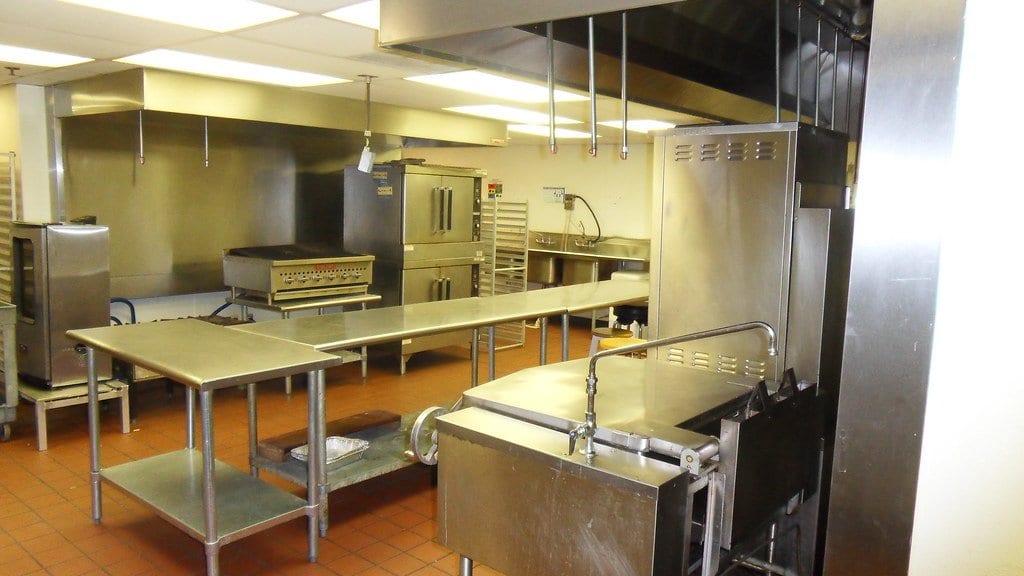
Lock up a restaurant kitchen at midnight and most of it goes quiet. The burners are off. The fryers are cold. The hoods above the line stop pulling air. What does not stop is the row of small blue pilot flames that keep gas appliances ready for the morning. In most of the gas and propane kitchens one research team measured, the air in that empty room was dirtier than the air the cooks had breathed all day.
The measurements come from 27 commercial kitchens in California, Pennsylvania and New York: 24 that cook with natural gas or propane, and three that are fully electric. Yannai S Kashtan, Drew R Michanowicz and ten colleagues logged pollutants and temperature at points in each kitchen chosen for where chefs and cooks stand. Their paper was published Oct. 6, 2026, in Environmental Research Letters, free to read under an open license. The United States restaurant and foodservice industry employs about 15.7 million people, which is the workforce the authors say may be affected.
In two-thirds of the gas and propane kitchens the median level was higher overnight than during work hours, the median being the middle of the readings. That held for all five pollutants: nitrogen dioxide, carbon monoxide, carbon dioxide, methane and benzene. The ventilation was off by then and the pilot lights were still lit.
What the study measured is what was in the air and how hot it was, not anyone's health. It found nitrogen dioxide above the one-hour level treated as protective of health in 17 of the 24 gas and propane kitchens. It did not examine, test or follow the health of a single worker, and nothing in it establishes that anyone became ill.
That level is 100 parts per billion over an hour. The U.S. EPA sets it for outdoor air, and the researchers use it indoors as a health benchmark; it sits close to the World Health Organization's one-hour indoor guideline of 200 micrograms per cubic meter. The authors report roughly 170 hours of work time in which nitrogen dioxide stood above it, measured immediately outside the hoods and in the open kitchen air. Carbon monoxide and benzene also went over California's one-hour guidelines in some of the gas kitchens. The hoods were running the whole time.
Why that benchmark exists has nothing to do with these kitchens. It rests on earlier research into what nitrogen dioxide does to people. The EPA's summary of that evidence is that breathing air with a high concentration of the gas can irritate the airways, and that short exposures can make respiratory illness worse, asthma most of all. People with asthma, children and the elderly are the groups the agency puts at greater risk.
Heat is the paper's other half. The authors report that 13 of 19 gas and propane kitchens went above 90 °F (32.2 °C) at some point. That is the high-heat trigger in a federal rule the Occupational Safety and Health Administration proposed in 2024 and has not made final.
None of the three all-electric kitchens in the study crossed any pollution or temperature threshold. The researchers say no earlier study has compared commercial kitchens with gas-fired appliances to fully electric ones. That comparison is the paper's new contribution and also its thinnest part: three electric kitchens against twenty-four that burn gas or propane.
The people who ran the study are not disinterested. Seven of the twelve authors, including the first and the last, work at PSE Healthy Energy, a research nonprofit that advocates for cleaner energy. The work was paid for out of that organization's own unrestricted funds and by the Stanford Doerr School of Sustainability. One co-author, Christopher A Galarza, lists two affiliations and both are commercial kitchen electrification businesses; the acknowledgments credit him and one of those companies with helping the team get into kitchens. Part of the sample, in other words, was recruited through a business with a stake in the answer. The remaining co-authors are at Stanford University, New York University, Lawrence Berkeley National Lab and the UC Berkeley School of Public Health. The published paper declares all of that and carries no competing-interests statement.
Measurements by other groups do not line up neatly with a picture that stark. A 2026 study of fifteen restaurant kitchens in northern Italy, led by Marta Keller, found most pollutant levels below guideline values despite short bursts of pollution, with benzene high in a minority of the kitchens.
What the authors take from the overnight numbers is a question about who else is in the building. Cleaning and prep crews arrive when the cooking has stopped and the hoods are off. So do the people who live and work above a restaurant in a mixed-use building. Neither group is cooking, and neither is the reason the pilot lights are lit.
Sources
- Environmental Research LettersPeer-reviewed
- Indoor Air