Most Big U.S. Solar Farms Are Being Built on Good Farmland

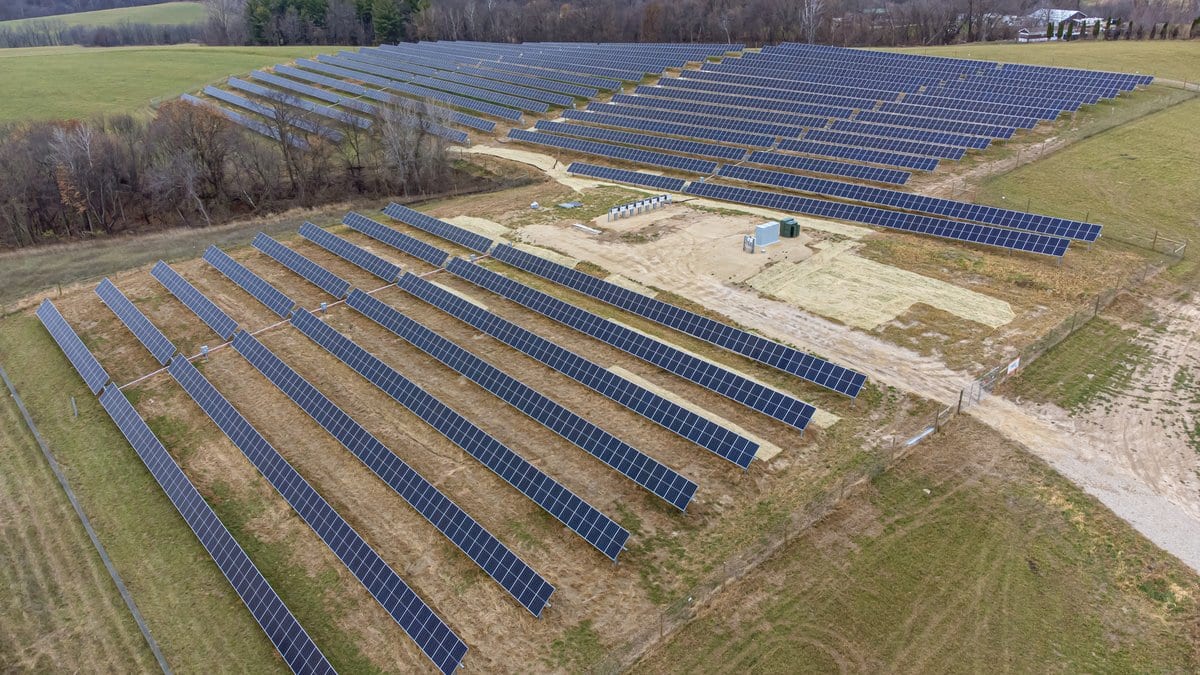
The land that is best for growing crops turns out to be attractive for another reason: it is flat, open, cleared, close to roads and power lines, and often bathed in the strong sunshine that also makes a good harvest. A national study published July 15 in Environmental Research Letters finds that U.S. utility-scale solar has been following exactly that logic, and landing disproportionately on the country's better farmland.
Led by Jianyu Gu with a team from the National Renewable Energy Laboratory, Lawrence Berkeley National Laboratory, and the U.S. Geological Survey, the analysis mapped where large solar projects have actually been built and asked what kind of ground they sit on. The assessment found solar clustering where sunlight is strongest (no surprise, since irradiance drives output), but also concentrating on agricultural land, and croplands in particular, with a notable pull toward irrigated systems. The headline number: more than 90 percent of projects were built on agricultural land scoring above the national median on a productivity, versatility, and resilience index.
In plain terms, when big solar goes on farmland, it is not landing on the marginal acres. It is landing, more often than not, on land that rates as better than average for farming. That is the crux of a land-use tension that has been building quietly as solar scales: the same qualities that make a parcel easy and cheap to develop for panels (flat, open, sunny, serviced) are the qualities that make it valuable for food.
The study stops short of claiming that solar is displacing a measurable amount of food production, and this draft won't overstate it either. What it documents is a siting pattern: a strong statistical association between where panels have gone and where good soil is, not a proven causal loss of agricultural output. The correlation with irrigated cropland, likewise, describes where projects have landed, not a demonstrated harm.
Still, the direction is clear enough to matter for policy, which is where the authors point. Their conclusion is not that solar should stop, but that it needs smarter siting: frameworks that steer development toward rooftops, brownfields, degraded land, or dual-use "agrivoltaic" setups that let crops or grazing share the ground with panels, before defaulting to prime cropland. The energy transition and the food system are competing for the same flat, sunny acres; the finding here is a measurement of how often the panels have been winning, and a case for planning the next wave so the two don't have to.
Sources
- Environmental Research LettersPeer-reviewed