US Mainland Honey Was as Clean as Certified Organic Imports; 30% of Hawaii's Certified Organic Honey Was Not

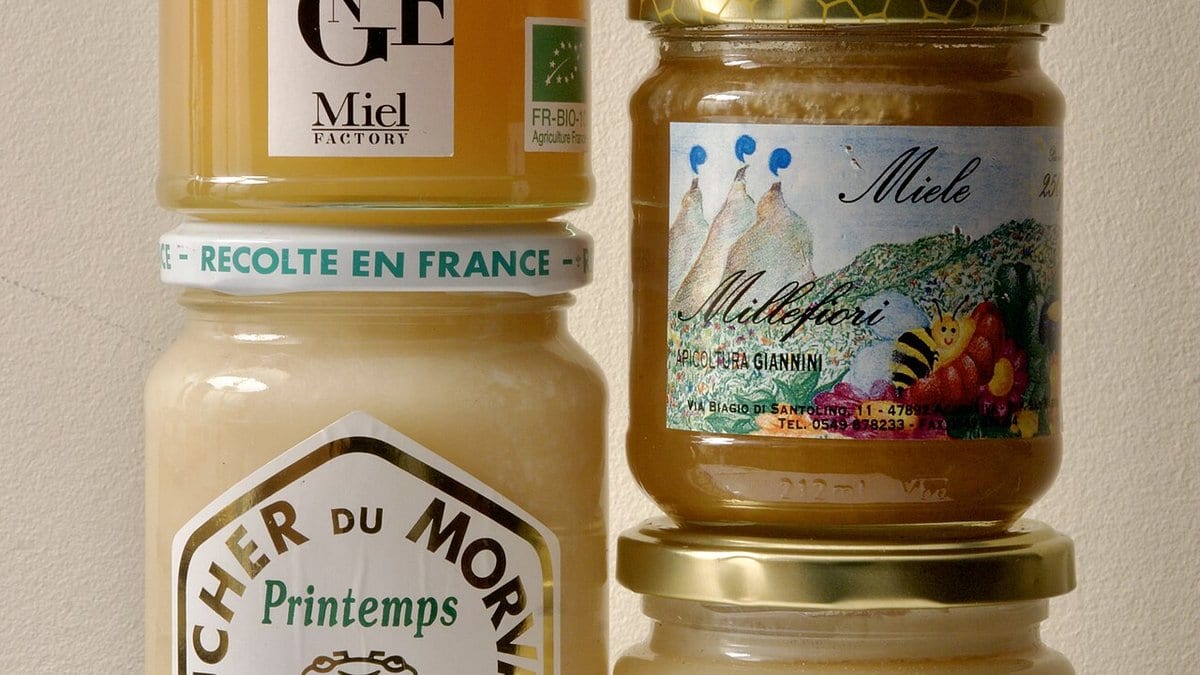
Pick up a jar labeled USDA organic honey in an American supermarket and the label is almost certainly describing a farm somewhere else. Brazil, Argentina, or one of a handful of apiaries in Hawaii. Beekeepers in the continental United States are effectively shut out of the organic label, and not because their honey is dirty. They cannot find enough clean land.
That gap is what a team from Penn State, Cornell and Auburn set out to measure. In a paper published July 29 in Science of the Total Environment, Ben DeMoras, Scott McArt, Margarita López-Uribe, and colleagues describe 72 colonies they established in 2023 under organic management on six large organic farms in the Northeast, each averaging about a square kilometer, or 249 acres. The following year they screened the honey for 96 pesticide residues and set the results against 20 store-bought brands, organic and conventional.
The honey came back clean. Residues were low and comparable to store-bought certified organic honeys, and lower than the conventional samples. Only one sample from the organically managed Northeast colonies exceeded maximum residue limits for organic honey. Penn State's summary renders that as 98.2% of samples suitable for organic certification "when only considering pesticide contamination limits." The qualifier matters: the land requirement is untouched, so these honeys still could not be certified.
Then the comparison turned around. Thirty percent of the Hawaiian honeys carried amitraz metabolite residues above the limit, and those honeys are certified organic. Amitraz is a varroa-mite treatment that beekeepers apply inside the hive. Bees do not bring it back from a field. The authors read the residues as in-hive contamination, and conclude that preventing it "may be as important as" maintaining organic foraging zones.
Margarita López-Uribe, a Penn State entomologist and co-author, put it more bluntly in the university's announcement: contamination from these miticides, not the size of the bees' foraging area, is the major challenge in organic honey production.
The 6.4-kilometer figure is not one buffer but two, and it is not settled law. It traces to a 2010 National Organic Standards Board recommendation on apiculture, which defines a forage zone of 1.8 miles around the apiary and adds a surveillance zone of a further 2.1 miles: 3.9 miles in all, about 6.3 kilometers. The National Organic Program has never finalized apiculture-specific standards, so this remains an interim recommendation that certifiers apply in practice rather than a finished federal rule.
One number in the press coverage needs handling with care. Cornell's account of the study reports a median foraging distance of about 750 meters, comfortably inside the zone the standard asks for. That figure does not appear in the paper's abstract, whose stated methods cover the colonies, the residue screen and a test of whether landscape composition predicted contamination. It is a claim from the university's release, not a published result of this study.
The authors are careful about what six farms in one region can show. Landscape composition did not predict contamination at all, which they attribute to the limited number of sites and the narrow range of landscape conditions they sampled in their peer-reviewed paper.
What the work supports is a case for rewriting the standard, not a finding that mainland honey is clean everywhere. It also shifts the question from the map to the hive. If the residues that matter most are the ones beekeepers introduce themselves, a wider circle of clean land around the apiary will not catch them.