Every Treated Water Sample in Eight Northern Communities Held Chlorination By-Products

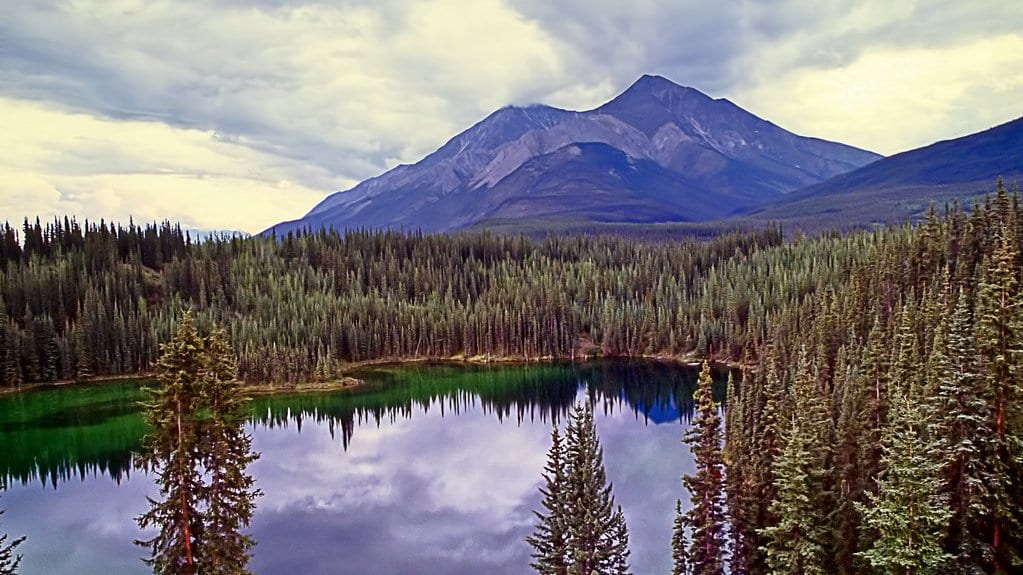
The lakes and rivers that supply drinking water in northern Canada do not carry much dissolved carbon. They are oligotrophic, or nutrient-poor, and across the eight communities in a new survey the carbon dissolved in the source water stayed under 6 milligrams per liter. Low, in other words. Not low enough, it turns out, to keep chlorination by-products out of the water people drink.
The survey was led by Camilo A. Herrera at the Institut national de la recherche scientifique in Quebec City, with Isabelle Laurion as its senior author. Their paper appeared Oct. 23, 2026, in Arctic Science. It reports that by-products of chlorination were detected in all treated samples from the eight communities, which sit across the Northwest Territories, Nunavut and Nunavik. The author list also includes members of community organizations in the Northwest Territories and Nunavut, alongside researchers at Université Laval and the Centre d'Études Nordiques.
Chlorine is in the water to deal with microbes, and it does that job well. It also reacts with the dissolved remains of plants and soil, and those reactions make trihalomethanes and haloacetic acids, two families of compounds Canada regulates because of potential health risks. In northern communities, surface water is generally treated without taking the organic matter out first. Whatever the lake carries is still there when the chlorine goes in. The by-products are a product of the treatment itself, not something the lake delivered.
The exceedances were occasional, which is the paper's own word for them. The highest readings it reports are 109 micrograms per liter for trihalomethanes and 100 for haloacetic acids. Health Canada sets a maximum acceptable concentration of 100 micrograms per liter for trihalomethanes and 80 for total haloacetic acids. Each of those is written as a running annual average of at least quarterly samples at a point in the distribution system. So a single reading above one of those numbers is above the number, and it is not by itself a failed standard.
Herrera's team found that the amount forming correlated primarily with how much dissolved organic carbon the water held. Secondarily, it correlated with the water's pH and with the optical properties of the organic matter, meaning how it absorbs and gives off light. Those light measurements are a practical stand-in for what kind of material is dissolved rather than how much of it there is. These are correlations, and the paper claims no more than that.
The regional differences are where the character of the carbon showed itself. The quality of the dissolved organic matter varied from region to region, measured with those optical and fluorescence indicators, and the variations went with differences in which by-products formed. The amount of carbon tracked how much appeared. The kind of carbon went with what appeared, and that is the finding with the longer reach: the quantity in a lake is not the whole story of what chlorine will make of it.
Dissolved organic matter is rising in surface waters around the world, a change known as browning, and northern ecosystems are where it is strongest. Browning alters how a lake mixes, how deep light reaches, how much oxygen is available and which microbes live in it. For a treatment plant, it alters the raw material coming in. As climate change intensifies browning through precipitation, permafrost thaw and runoff, the authors expect by-product risks to rise. They ask for closer monitoring, better treatment and longer-range planning. That is their expectation rather than a result: the study measured the water as it is, and traced no trend through time.
The part that travels beyond those communities is the first result. Source water low in carbon did not mean treated water low in by-products, and the systems most exposed are the ones that chlorinate without removing the organic matter first.
Sources
- Arctic SciencePeer-reviewed