Staying in School One More Year Meant Fewer Dementia Diagnoses Decades Later

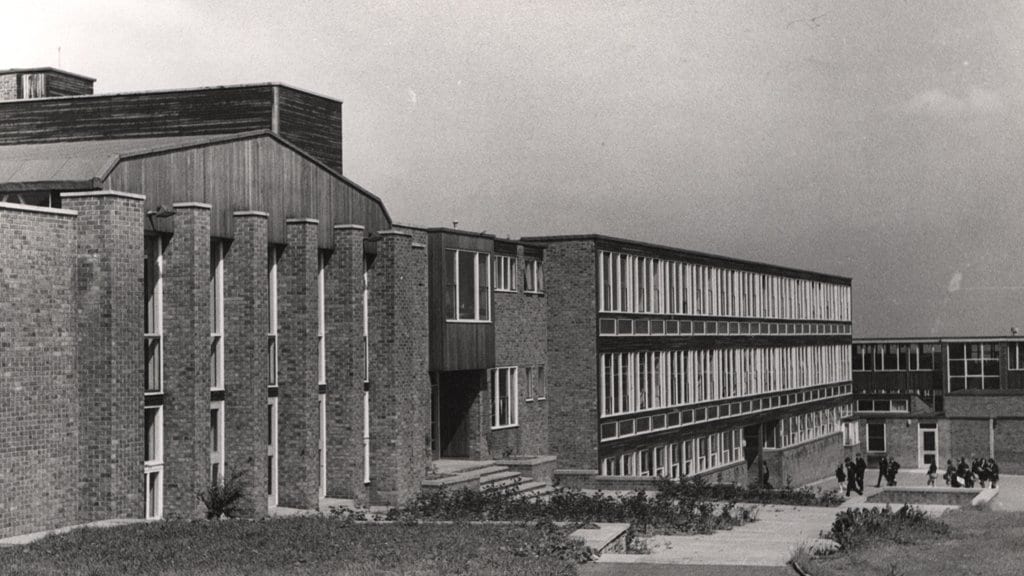
In 1972 the minimum school-leaving age in England, Scotland and Wales rose from 15 to 16, and the dividing line fell on a single birthday. A British teenager born on Aug. 31, 1957, could still leave and look for work. A classmate born a day later had to stay on.
Half a century later, that birthday is still visible in British hospital records. Silvia H. Barcellos, a health economist at the University of Wisconsin-Madison and the University of Southern California, and four colleagues report that the people on the late side of the cutoff were diagnosed with Alzheimer's disease and related dementias less often than the people born just before it. Their paper was published Oct. 23, 2026, in the Proceedings of the National Academy of Sciences.

Nobody chose which side they fell on, and that is what makes the reform useful. The law, not a family's income or a teenager's ambition, decided who got the extra year, so two people born days apart are alike in almost everything else. The authors compared them right at the dividing line. According to USC's announcement of the study, the reform raised the share of pupils staying to at least 16 by 14 percentage points.
The people themselves come from UK Biobank, a large British health study, and the team followed them to age 65. Diagnoses were read off hospital records, death registries and self-reported medical history rather than collected at a clinic visit, which the authors say guards against a familiar trap: the participants who stop turning up are not a random sample of those who started.
The second finding is the one that reaches past schooling. The team also had genetic data on the same people, and reports that the reform weakened the relationship between inherited risk and a dementia diagnosis. The authors put it this way: genetic risk of dementia "is not immutable and can be modified by social policy."
"Genes help shape disease risk, but they do not necessarily determine the outcome," said Leandro Carvalho, an economist at USC and a coauthor, in the university's announcement. That announcement goes further than the paper does, calling the benefits particularly large among people at higher genetic risk. The paper's own claim is narrower: the measured link between genes and diagnosis grew weaker, and the drop in diagnoses showed up among people at high genetic risk as well.
How much that extra year is worth is the part the researchers emphasize they cannot pin down. Dementia is still uncommon in a group followed only to age 65, so the estimates are imprecise. Watching the same people into their seventies and eighties is what will show whether the reduction holds once dementia becomes common.
Why a single extra year of school would matter half a century later is not settled. More schooling tends to bring better jobs, higher pay and more mentally demanding work. In this study the extra year did raise household income, and it did lower the rates of stroke and heart attack. Which of those paths carried the dementia effect, the team could not determine.
The larger reason to hold the result loosely is that another group has looked for the same effect in the same place and not found it. In the April 2026 issue of Social Science & Medicine, Nathalie Monnet of the University of Lausanne and three colleagues examined both British reforms: the 1947 one, which raised the leaving age from 14 to 15, and the 1972 one. They used a different cohort, the English Longitudinal Study of Ageing, and judged dementia risk with an algorithm built on a harmonized set of cognitive tests. For the earlier reform, they found suggestive benefits, but only for women and for people whose parents had little schooling. For the one the PNAS team used, they write: "we find no statistically detectable reductions in dementia risk associated with exposure to the 1972 reform." Their reading is that what compulsory schooling does to the aging brain depends on the context it lands in.
The PNAS authors cite that work, and their own opening line concedes the state of the field: there is little causal evidence on what protects anyone from dementia. Two teams used two datasets and two ways of deciding who has dementia, and reached opposite answers about the same year of school. The PNAS result is the one that found something, in a cohort still in its sixties. If it survives another decade of follow-up, the interesting part will not be the extra year of school. It will be that a risk written in the genome turned out to be partly a matter of what happened to a person at 15.
Sources
Medical Disclaimer: This content is provided for general informational and educational purposes only. It is not medical advice and should not be used as a substitute for professional medical advice, diagnosis, or treatment. Always consult a qualified healthcare professional regarding any medical condition, concern, symptom, or treatment decision.