Where Permafrost Thaws, 'Forever Chemical' Risk Rises, a New Map Projects
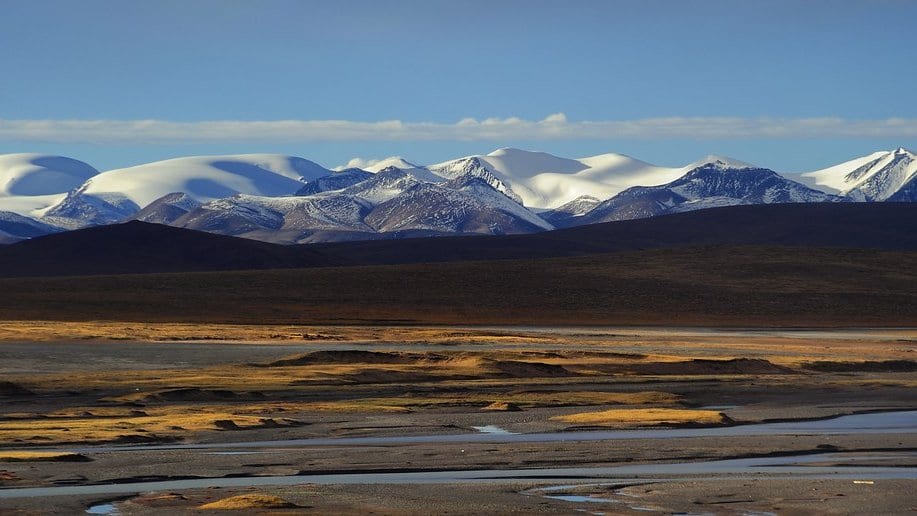
A machine-learning study published August 24 in Communications Earth & Environment places surface waters in the northwestern Tibetan Plateau, Mongolia and the pan-Arctic among the areas at highest current risk of contamination by perfluoroalkyl substances, the long-lived industrial chemicals often called forever chemicals.
The result is a risk map built from existing environmental observations, not a new field survey. Huimin Yu and colleagues at the Institute of Tibetan Plateau Research of the Chinese Academy of Sciences report that they combined those observations with machine learning to estimate contamination risk across the world's permafrost regions, and that heavier permafrost degradation and reduced plant cover "substantially increase" it.
Running the model forward under future climate scenarios, the authors project that continued deepening of the active layer, the shallow band of ground that thaws each summer above permanently frozen soil, raises contamination risk further, and they identify a high-risk zone spanning Mongolia and northeastern China. Those hot spots and that zone are model outputs, not counts of contamination that has been measured on the ground.
Perfluoroalkyl substances are used in water-repellent coatings, firefighting foams and other products, and break down very slowly once released. The authors write that their findings "provide critical insights for early warning, long-term monitoring and sustainable management of vulnerable cryospheric environments."
The paper lists support from the National Natural Science Foundation of China, science and technology projects of the Xizang Autonomous Region and the China Postdoctoral Science Foundation. It was posted as an accepted version, which the publisher says is subject to further edits before the final version of record replaces it.
Sources
- www.nature.comPeer-reviewed