For 4,234 Species, Protected Areas Cover Less Than a Tenth of Their Mountain Habitat

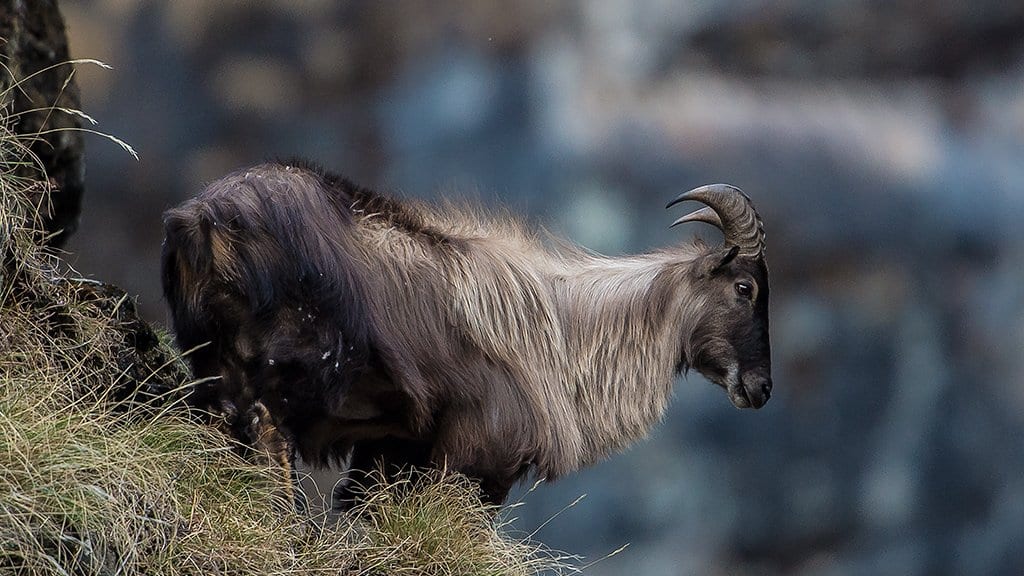
When the lowlands fill with farms, roads, mines and towns, the expectation is that wild animals go uphill. Mountains are steep, cold and awkward to build on, and that awkwardness has worked like a kind of protection. Ecologists describe them as last refuges, the high ground where species can wait out the pressure below. What has been thin on the ground is a check on whether the refuge itself is still quiet.
That check has been run. The work comes from Jianfeng Sun and Guangdong Li at the Institute of Geographic Sciences and Natural Resources Research in Beijing, with co-authors at Beijing Forestry University, the University of Queensland and Michigan State University. They tracked human pressure across 6,717 mountain ranges from 2000 to 2020 and published the result Oct. 24, 2026, in Nature Communications. Over the two decades the study covers, more than 60% of those ranges carried elevated human pressure. That share counts ranges, not land area.
The number that bears on animals is sharper. Sun and Li's team set the mountain habitat of each mountain vertebrate, meaning an animal with a backbone, against the boundaries of the world's protected areas. For 4,234 species, less than a tenth of that habitat fell inside a protected area. Of those, 1,165 already count as threatened; they are part of that total, not a further group. Represented, the study's word, is a question about maps: how much of a species' mountain habitat sits within a protected boundary, not how well that ground is guarded.
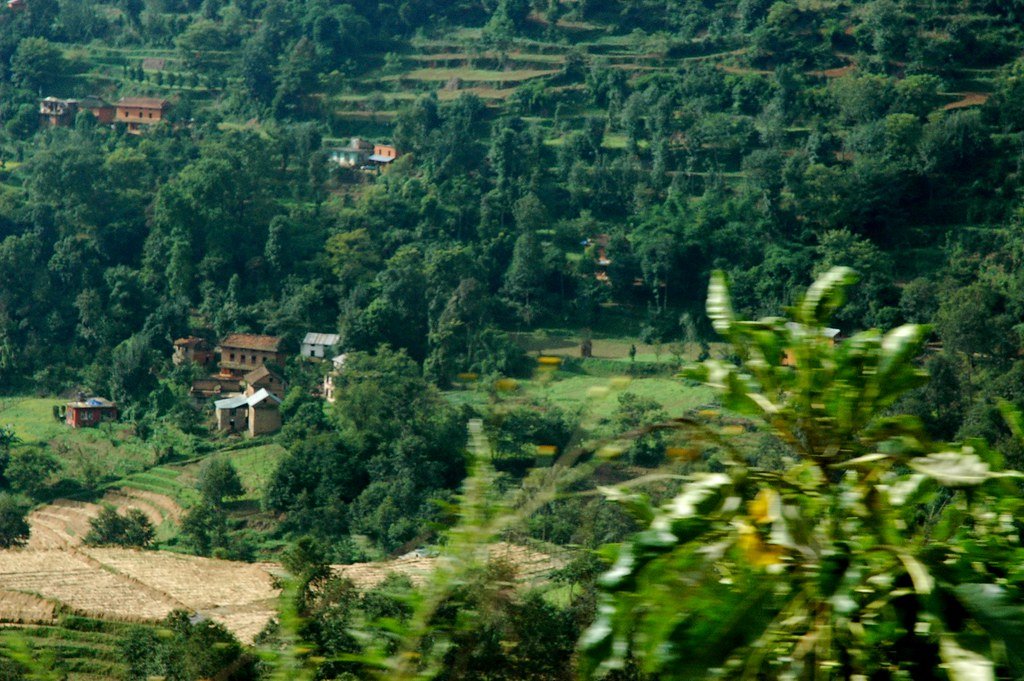
A third number carries much of the study's weight, and it is the one the authors hedge. Over the same two decades, the intensification of human pressure is associated with the loss of 71.69 million hectares of natural mountain habitat. Associated with is the whole of the claim: the team compared where and when pressure rose against where and when habitat went, which shows the two moving together rather than testing one as the cause of the other. About 72 million hectares is the figure to carry away.
Protected areas appear in the results as partial shelter rather than a wall. The authors' phrase is that they provide incomplete buffering from human pressure, which claims less than failure and more than safety. A separate global study published in 2025, led by Chao Yang, points the same way: about 56% of the mountain vegetation loss it mapped between 2000 and 2020 fell inside protected areas and areas rich in threatened mountain species.
The second half of the paper looks forward, and it does so in scenarios rather than forecasts. The team ran the ranges through three Shared Socioeconomic Pathways, standard storylines of future development, and asked which mountains would be most exposed to land-use change under each. None of that is a statement about what will happen.
What is useful is what did not move. The ranges the study ranks highest, where biodiversity importance coincides with thin protection and elevated future exposure, stay broadly consistent across the three pathways. Broadly consistent is not identical. But for anyone drawing up a list of places to protect, a ranking that survives three different futures is worth more than one tuned to a single guess about the next few decades.
The paper is peer-reviewed, and the version posted Oct. 24, 2026, is the publisher's early accepted one, which may still be edited before the final version of record. It also lands in a field that already holds global mountain surveys. Paul R. Elsen and colleagues reported in 2020 that nearly 60% of mountainous area was under intense human pressure, most of it low down, near the mountain bases. That is area rather than ranges, so the two 60% figures are not the same measurement; they point the same way.
What the audit hands conservation planners is not another alarm about mountains. It is a list, naming the ranges where high biodiversity importance, thin protection and heavy projected land-use change sit on top of one another, and it is drawn at the scale planners work at. The authors put it forward as a contribution to global biodiversity targets. For species with less than a tenth of their mountain ground inside a protected boundary, the map is the part that could change something.
Sources
- Nature CommunicationsPeer-reviewed
- www.nature.com
- www.nature.com