The Mediterranean Is Warming Faster Every Decade, and the Speed-Up Runs Deep

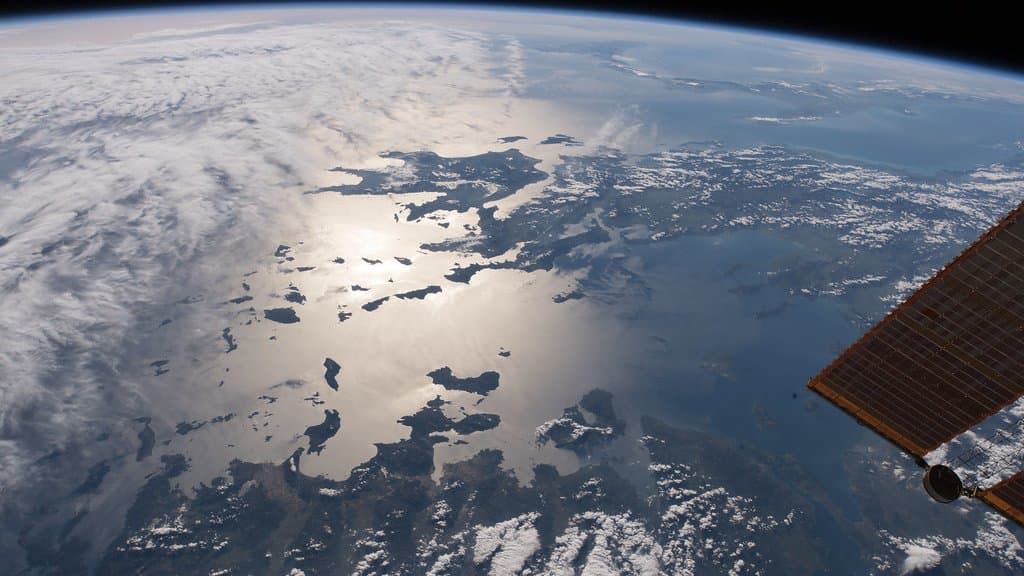
Since 1950, ships working the Mediterranean have stopped over deep water, lowered instruments on a wire and read back the temperature and the saltiness of the sea beneath them. More recently, robots have been doing the same job without the ship, sinking, drifting for days and surfacing to report what they found. Elena Terzić and Ivica Vilibić, oceanographers at the Ruđer Bošković Institute in Croatia, gathered three-quarters of a century of those readings and asked something no single cruise can answer: not whether the sea is getting warmer and saltier, which has been clear for a long time, but whether it is doing so faster than it used to.
It is. Warming and salinification of the upper 1,000 to 2,000 meters are "not only continuing but accelerating, at increasing rates over the record," the two write in a paper published on September 16 in Geophysical Research Letters. In places the warming rate is climbing by as much as 0.3 °C per decade with every decade that passes. The salt is rising on the same compounding terms, which AGU's announcement of the study puts as each kilogram of seawater getting about a tenth of a gram saltier per decade, every decade.
Two depths run through the result, and they belong to two different things. The warming and the salting themselves reach further down than the speed-up does. "The warming and salinification are statistically significant down to three or four thousand meters, and the speed-up itself reaches down to about 2,500 meters," Terzić explained in the announcement. Both figures come from her account of the work; the claim the paper leads with is the shallower one, scoped to that upper band.
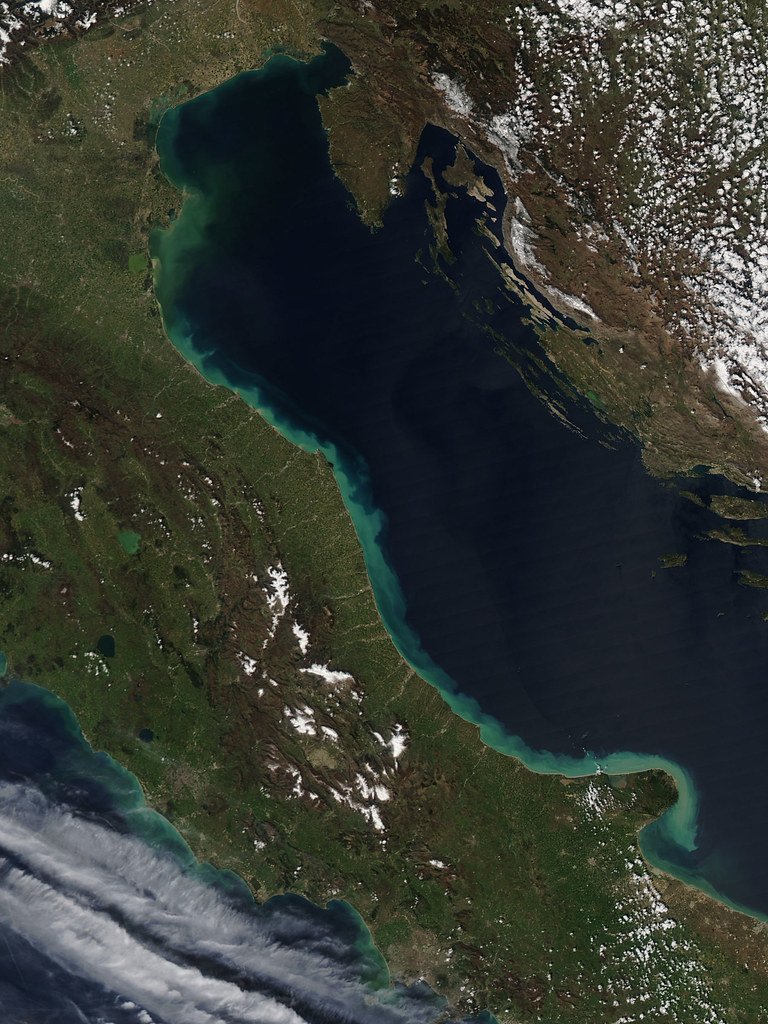
The speed-up is not spread evenly. It is largest in the central and eastern Mediterranean and strongest in the Adriatic, where, according to that announcement, it reaches the sea floor. The Adriatic seafloor is not far down by the standards of this story: the pit off the Adriatic's southern end bottoms out at about 1,200 meters, inside the band the study claims. Terzić and Vilibić had already reported water at the very bottom of that pit warming and growing saltier at an unprecedented rate, in a 2025 study of their own.
The Adriatic counts for more than its size because it is one of the few places in the Mediterranean where surface water becomes heavy enough to sink. Cold winter winds chill the shallow water at its northern end until it is dense; it then slides off the shelf and pours downward, carrying oxygen into the deep sea before spreading south and east into the rest of the basin.
Whether it will continue to do so remains an open question. Warming makes seawater lighter and added salt makes it heavier, and because both are rising, the density of Mediterranean water has changed far less than either its temperature or its salt content. Across most of the basin the warming is winning, so the surface is growing lighter and mixing less readily with the water below it. Where dense water forms, the salt is still winning and the water still sinks, but now it sinks warm. "Dense water is still forming, but we have indications that the way it forms is changing, and the water that sinks is now warmer and saltier than it used to be," Terzić noted.
That sinking is the route by which a change at the surface reaches water kilometers down, and the paper is careful about how far it takes the claim: the shallow coastal basins show extra acceleration in the processes that precondition change in the deep ones, including the warming of the dense water that cascades into the deep Mediterranean. It is an account of how the signal travels, not a measurement of the deep basins speeding up.
The underlying trends are not one group's alone. In July 2026, Pierre-Marie Poulain and colleagues at the National Institute of Oceanography and Applied Geophysics in Trieste set float measurements against a model reconstruction of the same waters and found the water warming and growing saltier below 800 meters in the open basins. That independent support covers the trends; the speed-up is so far this one team's measurement. The new study is open access, and its cleaned Adriatic data and analysis code are publicly available, so the calculation can be redone.
The reason to watch a sea this small is that it runs fast. Water in the Mediterranean circulates between the surface and the depths about ten times faster than in the open ocean, which is why the authors present the basin as a natural laboratory for catching accelerating ocean change early. What drives the acceleration is what they want to settle next: how much comes from the air above, how much from shifting patterns of evaporation, rain and river flow, and how much from Atlantic water entering through the Strait of Gibraltar. They also want to know whether today's climate models reproduce the speed-up at all, since this determines how much weight the region's projections can carry.
"The Mediterranean is small enough that we can watch how a sea responds, on timescales we can witness ourselves, and what we see is unprecedented change," Terzić said. "It is a warning of how fast the ocean can change, and it will continue for as long as our economies keep relying on fossil fuels."