How Much of a Storm's Damage Bill Belongs to Climate Change? Scientists Put a Number on Eunice

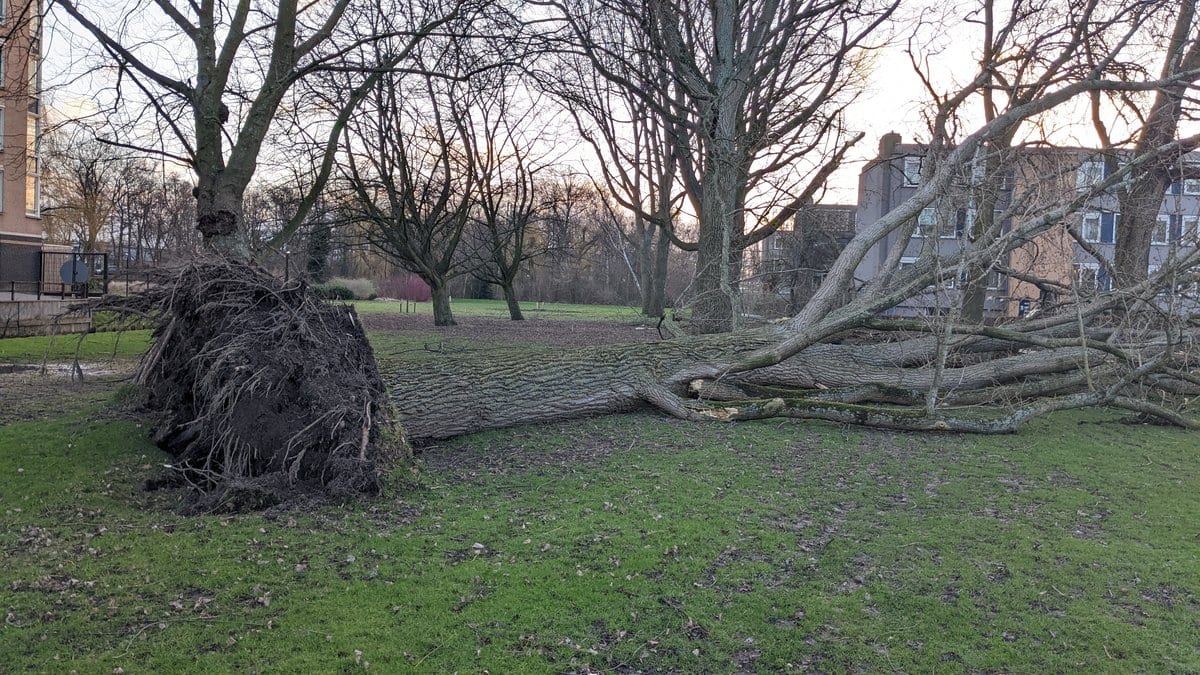
For a day and a half in February 2022, Storm Eunice tore across the British Isles, the Low Countries and northern Germany, driving a red weather warning, shuttering rail networks and leaving well over 2.5 billion euros in insured damage in its wake. It was, by the standards of European windstorms, a genuinely destructive event. The question a team of climate scientists set out to answer is subtler than "did climate change cause it?", a question storms rarely answer cleanly. Instead they asked: of the damage Eunice actually did, how much extra came from the warming already baked into today's atmosphere?
Their answer, published in Environmental Research Letters, is a conditional increase in insured losses of nearly 2 billion euros between a pre-industrial climate and the present-day one.
The method is what makes the work novel. Attributing a storm's winds to climate change is, by now, a fairly established science: researchers rerun a storm in model worlds with and without human-caused warming and compare the meteorology. What this team did was push one step further, into the domain that actually matters to households and insurers: the money. They took counterfactual weather forecasts of Eunice (versions of the same storm evolving in a cooler, pre-industrial atmosphere) and fed them through insurance loss models that translate wind fields into euros of damage. The study describes three such loss models, including two state-of-the-art commercial models of the kind the insurance industry itself relies on.
Coupling counterfactual forecasts to loss models is why the authors describe this as the first impact, or loss, attribution of a European windstorm. That framing deserves a careful footnote. Earlier work has already attributed the severity of European storms (including Eunice, alongside events such as Alex and Xynthia) to warming. What is new here is the leap from physical intensity to financial impact: not "how much stronger were the winds" but "how much larger was the bill."
The most striking finding sits in the tails of the analysis. When the researchers looked across the full ensemble of possible storms in a warmer world, some members produced losses far greater than what Eunice actually unleashed, a reminder that the storm that hit was not the worst the present climate could have delivered. In the present-day climate, one simulated realization yielded an estimated insured loss of over 10 times what Eunice actually caused. In a warmer future climate, that top-end scenario reached 14 times the actual loss. Either way, the direction is unambiguous: a warmer atmosphere widens the range of catastrophic outcomes, so the same weather setup that produced Eunice could, on a slightly different day, produce something considerably costlier.
That is the quiet significance of the work. Insured losses are how the risk of extreme weather reaches balance sheets, premiums and, eventually, the price of living in exposed places. Attribution science has spent a decade telling us that heatwaves and floods carry a human fingerprint; putting a currency value on that fingerprint (even a conditional, model-dependent one) moves the conversation from geophysics toward accountability and adaptation planning. It hands insurers, reinsurers and regulators a way to reason about how much of tomorrow's storm damage is already locked in.
The caveats are real. These are conditional estimates tied to one storm and a specific modelling chain, and the headline euro figure depends on the loss models chosen. But as a proof of concept (that the leap from attributing winds to attributing damage can be made at all), Eunice may be remembered less for the roofs it took off in 2022 than for the number scientists were able to hang on it afterward.
Sources
- Environmental Research LettersPeer-reviewed