Amazon Trees That Weathered the 2010 Drought Hint at Which Forests Bend Rather Than Break

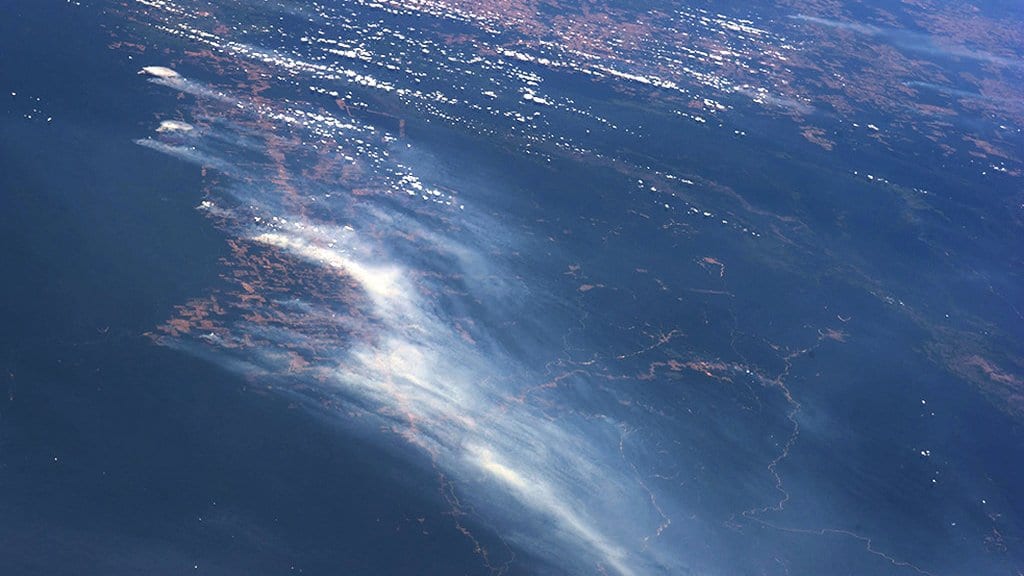
In 2010, a severe drought gripped the Amazon, one of a run of exceptional dry spells this century that have tested the world's largest rainforest. Droughts like that are grim to live through and, for scientists, quietly useful. They are natural experiments, stressing an entire ecosystem at once and letting researchers watch which parts buckle and which hold.
Kien Nguyen and Maria J. Santos, both at the University of Zurich, used the 2010 event to ask a specific question about recovery. Reporting in Environmental Research Letters on 16 July, they focused on evaporation, the flow of water the forest returns to the atmosphere through its leaves, and specifically on the share of that flow driven by the vegetation itself rather than by bare surfaces. A drought that lingers in the plants should show up here, in how much water the forest is still moving a year on.
For much of the basin, the answer was less. Drawing on satellite measurements, the pair found that roughly 65 percent of the Amazon, concentrated in its southern and central reaches, was returning less vegetation-driven evaporation a year after the drought than before it. The forest had not simply shrugged the dry year off.
The more interesting pattern lay in which forests recovered better, and here the paper reaches for plant traits, the measurable properties of leaves. Stands with what ecologists call conservative strategies, tougher leaves with higher dry-matter content, along with a wider diversity of traits across the community, tended to show more resilient responses. Forests leaning the other way, toward acquisitive traits like high specific leaf area, the thin, fast, cheap leaves that trade durability for quick growth, tended toward greater vulnerability. The associations grew stronger in places already thinned by forest loss, as if a degraded forest leans harder on whatever resilience its remaining leaves can supply.
That direction fits what forest ecologists have long argued from other evidence: conservative, hard-wearing foliage generally weathers drought better than the fast-and-flimsy kind. The pieces hang together.
The honest framing, though, has to hold the study's own limits in view, and they are real. This is a retrospective look at a single past drought, not a designed experiment, and its central results are associations, correlations between traits and recovery, not demonstrations that the traits caused the difference. The effect sizes are modest. The authors themselves present the links as tendencies rather than rules, and that restraint should carry into any conclusion drawn from the work. It is a suggestive early signal about where drought resilience might concentrate across the Amazon, not a map to bank on.
Taken at that weight, the study points somewhere worth watching. As droughts in the Amazon grow more frequent and more severe, knowing which stretches of forest are likelier to bend rather than break, and reading part of that from the leaves themselves, would be genuinely useful. This work does not settle where those resilient forests are. It offers an early, cautious hint at how one might begin to look.
Sources
- Environmental Research LettersPeer-reviewed