Do Soil-Protection Laws Actually Work? A Satellite Audit of 4,700 Policies Says Yes, but Only Where Governance Is Real

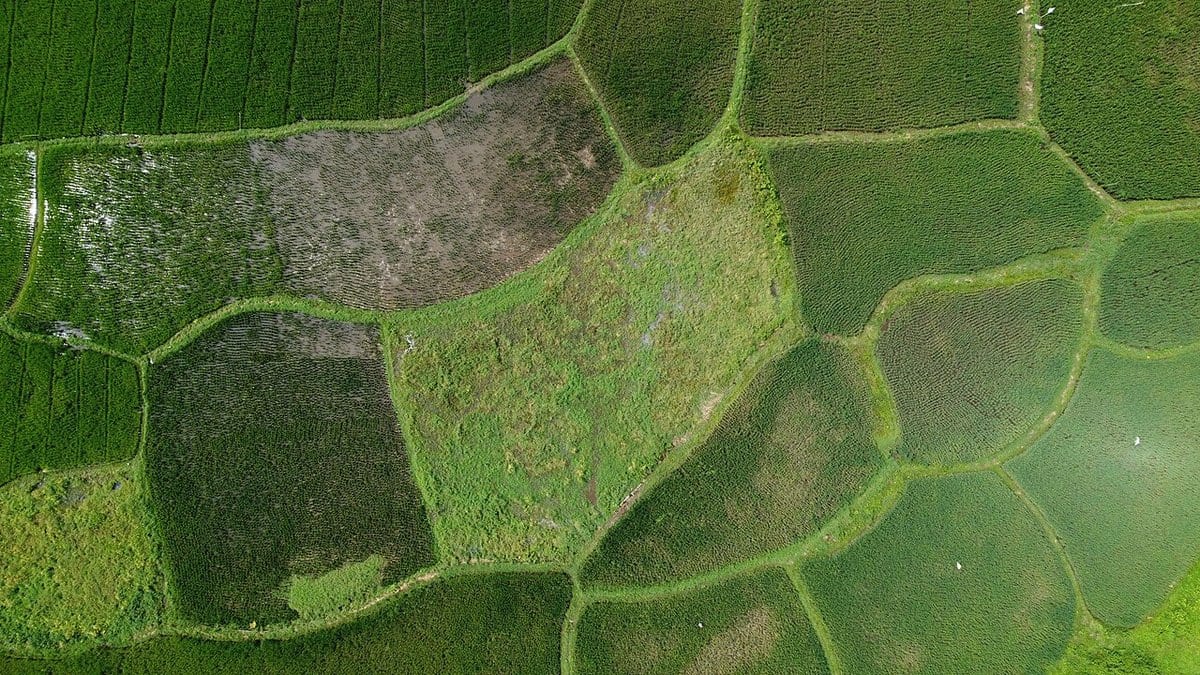
A soil-protection law is easy to pass and hard to grade. A parliament can require crop rotation, subsidize farmers who leave wildflower strips at the edges of their fields, or mandate ground cover to stop erosion, and then move on. Whether any of that actually slowed the slow ruin of the land underneath has been almost impossible to check, because the effect plays out across millions of hectares over decades, far from any single inspector's clipboard.
A team led by Guyo Godana Dureti, working under Professor David Wuepper at the University of Bonn's Institute for Food and Resource Economics, decided to check it from orbit. Reporting in Nature Food, they matched roughly 4,700 national agri-environmental policies against 83 million satellite pixels of cropland, each covering about one square kilometer, tracked from 2001 to 2019. The result, published earlier this year, is one of the first global attempts to ask a blunt question: across the whole planet, do these rules leave a visible mark on the soil?
The short answer is yes, but a modest one. On average, the study finds, agri-environmental measures improved cropland by at least 2 percent and possibly up to 5 percent, compared with what satellite trends suggest would have happened without them. That is not dramatic, but it runs in the right direction, and across the world's farmland even a few percent represents a large area of soil kept productive rather than lost.
The harder part was establishing that the policies caused the improvement rather than merely coinciding with it. To get at cause, the researchers leaned on a natural-experiment design, comparing neighboring countries with sharply different rules along their shared borders, where soil, climate and terrain are otherwise similar. Where the land changes at the line on the map but little else does, the policy becomes the most plausible explanation. Two such quasi-experimental methods pointed the same way, strengthening the case that the rules, not the weather or the geography, moved the needle.
The most important finding is the variation. The average hides a range that runs from essentially zero to more than 20 percent, and the thing that best explains where a country falls on that scale is not the wording of its law but the strength of the state behind it. "The more money countries spend on protecting their soil, the more success" they see, the Bonn team reports. Policies delivered most in nations with the institutional capacity to monitor fields and enforce compliance, and delivered little to nothing where enforcement was weak, budgets thin, or corruption widespread.
That pattern reframes what a soil law is. It is not a self-executing fix but an instruction that still needs a functioning government to carry it out, which helps explain why identical-sounding rules can transform farmland in one country and change nothing across the border in the next. The law is necessary; on its own it is not sufficient.
A few caveats belong on the finding. Satellites measure indicators of cropland health rather than reaching down to sample the soil directly, and lumping thousands of different policies into broad categories inevitably smooths over how any single program performed. The paper offers a planet-scale audit of whether the tools work in aggregate, not a verdict on any one country's law.
For policymakers, the message cuts two ways. It is genuinely encouraging that the world's investment in protecting farmland shows up from space at all, given how often such spending is assumed to vanish into paperwork. But it also warns against exporting a rulebook and expecting the outcome to travel with it. A soil-protection policy is worth roughly as much as the institutions asked to enforce it, which means the cheapest-looking part of the job (writing the rule) may be the least of what determines whether the ground beneath the crops survives.
Sources
- Nature FoodPeer-reviewed
- www.eurekalert.org