Before a Robotaxi Can Be Compared With You, Someone Reads 736 Crash Reports

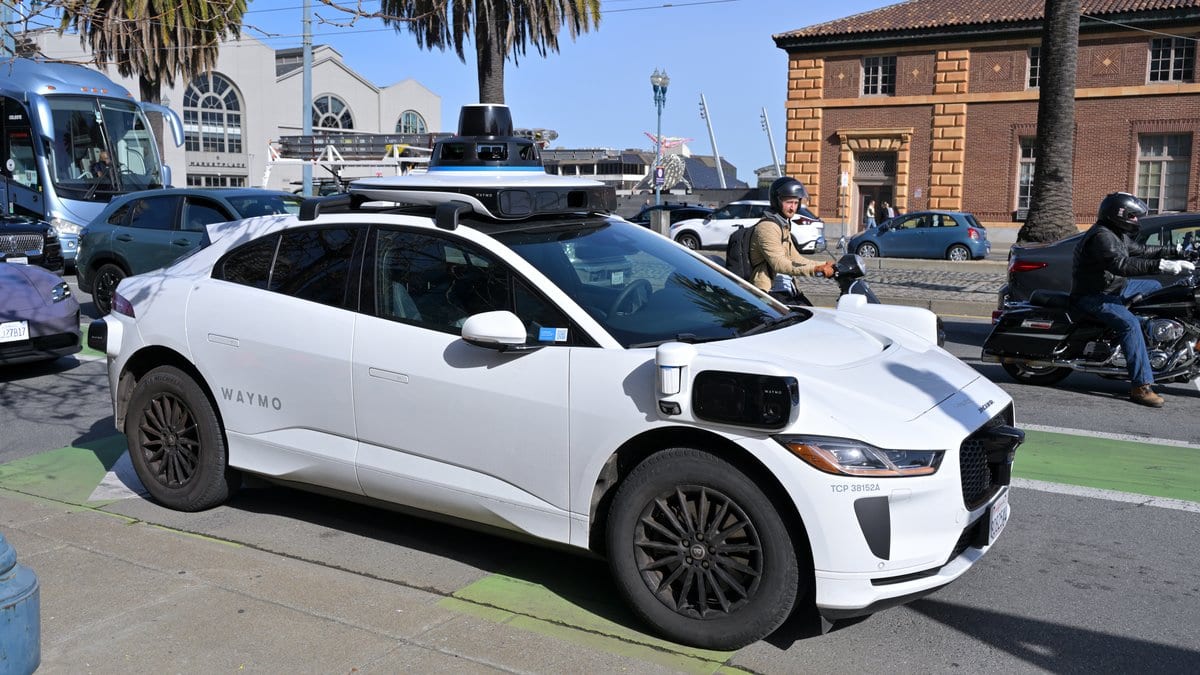
Before anyone could say that a robotaxi crashes less often than you do, somebody had to sit down and read 736 crash reports. Not the tables, the narratives: a few lines of prose describing what hit what, submitted under federal reporting requirements. For each one, the question was the same, and it is a question no database asks: Would a reasonable person have called the police about this?
Eric Teoh, David Kidd and Luke Riexinger of the Insurance Institute for Highway Safety asked it of 736 public-road crash reports involving automated vehicles with their automation engaged between 2021 and 2024. The institute published the answer in July: driverless Waymo vehicles in San Francisco, Phoenix, Los Angeles and Austin were involved in 68% fewer police-reportable crashes per mile than human drivers in the same cities and years. What had to be done to the data before anyone could write that sentence is the harder story, and the researchers say the method cannot be sustained for much longer.
The two piles of records were never built for each other. Crashes involving automated driving are reported to the National Highway Traffic Safety Administration under a standing order designed to identify potential safety defects, not to support crash-rate comparisons. Human crashes come from state databases of police-reported crashes, and drivers are generally required to report a crash only when it causes an injury or property damage above a threshold that varies by state. Many qualifying crashes still go unreported, often because drivers want to avoid higher insurance premiums or for other reasons. Around half of all crashes are never reported, according to IIHS.
The driverless side has the opposite problem. Until the federal order was amended in 2025, companies had to report incidents that many people would not think of as crashes: a vehicle scraping its undercarriage while turning into a parking lot counted. Companies also tend to report qualifying crashes more completely than individual drivers because failing to comply carries regulatory risks. Their vehicles also carry expensive sensors that can be damaged by minor impacts, making a crash more likely to exceed the property-damage threshold.
What a reasonable person would have called in
So the institute's researchers went through the filings by hand before computing anything. Hundreds of duplicate records came out first. Then came cases in which the automation was not engaged, the vehicle was not on a public road or no real crash had occurred. What remained were 736 public-road crashes in which the automation was engaged, involving Waymo, Cruise, Zoox and other companies, and every narrative had to be read.
The coding rule was deliberately ordinary. If someone reported pain but left the scene, the researchers marked the crash as unlikely to have been reported to the police. If an airbag deployed, they marked it as police-reportable regardless of other property damage or injury because the higher impact speed and the cost of replacing the airbag would ordinarily put it past a reporting threshold. Judged that way, 22% of the 736 crashes were deemed police-reportable or possibly police-reportable.
That step is where the study's most counterintuitive feature comes from. The two sides of the comparison are not identical: Waymo crashes judged likely to be police-reportable are set against human crashes that were actually reported to the police. The study does not adjust the human crash count for crashes that went unreported. That means the comparison should be read with the reporting gap in mind, rather than as a perfectly matched census of every crash involving either human drivers or automated vehicles.
The miles are counted by the company being measured
The arithmetic itself is almost an anticlimax. Of Waymo's 89 crash involvements judged police-reportable, 64 occurred during driverless operation, and those are the crashes used for the driverless side of the calculation. Waymo's driverless vehicles covered about 50 million miles over the study period, compared with about 222 billion miles by human drivers in the same places and years. The city-by-city results vary considerably. In Austin, where the number of police-reportable Waymo crashes in the comparison was relatively small, Waymo's crash rate was 4% higher than the human-driver rate, a difference IIHS says is difficult to interpret.
And the mileage underneath the whole comparison comes from the company being measured. Companies must report qualifying crashes, the institute points out, but they are not generally required to disclose how far their vehicles have traveled. Waymo voluntarily provides that figure; Cruise, Zoox and other companies do not provide comparable mileage data, which makes it impossible to calculate their crash rates. That is why this comparison of driverless vehicles ultimately rests on Waymo's fleet. The crash reports come from federally required filings and were independently coded by IIHS. The mileage, however, is voluntarily reported by Waymo rather than collected through a comparable regulatory reporting system.
Who made the number, and what it still cannot say
Two facts about where the number comes from belong beside it. The study has not been peer-reviewed: IIHS published it itself, and the paper the institute serves from its own bibliography is headed "PREPRINT VERSION. THIS ARTICLE HAS BEEN SUBMITTED TO A JOURNAL." Reviewers could still move these figures. And IIHS, as it discloses at the foot of every page of its site, is wholly supported by auto insurers and insurance associations. It is not Waymo's contractor and was not commissioned by Waymo, which is the independence that matters most.
What the comparison holds fixed is city and year; the paper says as much. Road type, time of day and weather are not part of the institute's public account of the method, and outlets that read the full paper disagree about how much that matters. Electrek reported that highway miles were excluded from both sides, because Waymo does not drive them. Jalopnik treated the same limits (slow streets, no freeway) as a residual advantage the robotaxis carry into the comparison. Electrek also reported a mismatch that would survive any highway exclusion: half of Waymo's crashes were on streets posted under 25 mph, against 8% of human crashes.
The authors are blunter than most of the coverage has been. "These results apply only to the L4 vehicles in driverless operation that were studied," the paper states (L4 being Level 4, meaning nobody supervises the driving). They add that "the method of coding narratives is unsustainable as these deployments and the number of incidents continue to grow." Teoh's own summing-up, in the institute's announcement, is not about the 68% at all: "Now we need to get the data collection system right, so that we can ensure that level of safety continues as these technologies become more prevalent."