Pacific Deep-Sea Reserves Are Almost Entirely Isolated From One Another
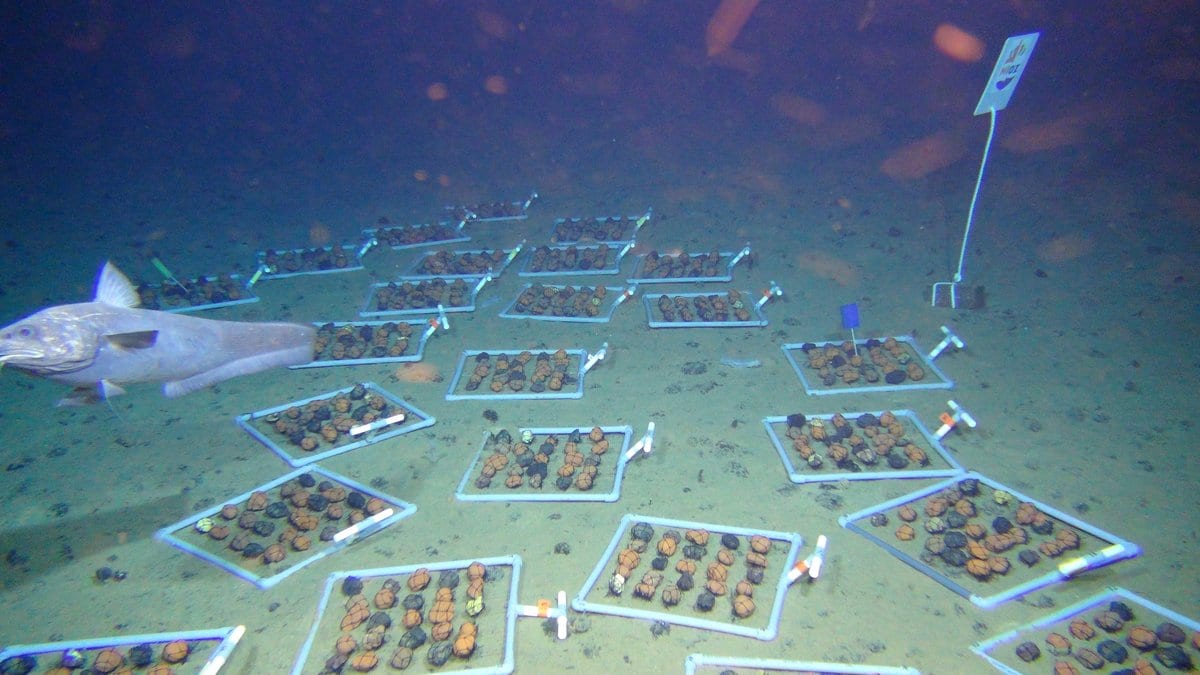
Fewer than 0.02% of simulated larvae released inside the 13 protected zones on the Pacific seabed reached another one, according to a modeling study of the Clarion-Clipperton Zone published Oct. 23, 2026, in Nature Ecology & Evolution. Its authors report that the zones, set aside ahead of deep-sea mining, do not work as a connected network.
The zones are the International Seabed Authority's Areas of Particular Environmental Interest, expanded in 2021 to nearly 2 million square kilometers. The paper describes them as designed to represent the region's habitats and buffer mining impacts. Connectivity was never a design criterion. Molly Kendall James of Plymouth Marine Laboratory and colleagues write that nobody had tested whether the network functions as a connected system, and they offer their study as an evidence base for planning before mining begins.
The team released virtual particles across the region and let modeled near-bed currents carry them for the weeks a deep-sea larva can drift. Most particles settled inside the zone they started from and a fifth outside the network entirely. Of 156 possible direct links between zones, 5 carried any particles, and median travel distances stayed under 100 kilometers while neighboring zones sit hundreds of kilometers apart.
Adding 53 sites as stepping stones between the zones raised modeled exchange among protected areas 406-fold. Where the model stops mined areas from releasing larvae of their own, the same additions nearly doubled the protected network's contribution to larvae arriving there.
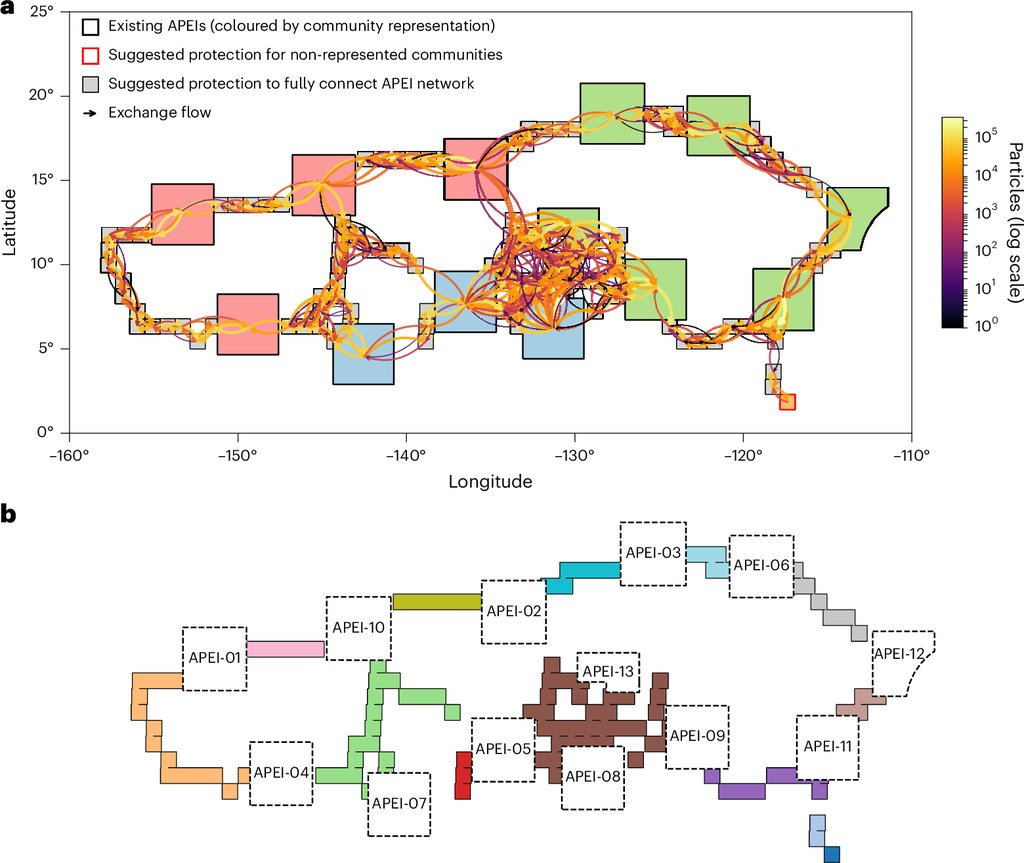
These are outputs of a model that assumes larvae are released evenly across the seabed, and the paper states they describe exchange within the simulation rather than real population or genetic connectivity. James and colleagues also report that 77% of the area their analysis ranks most valuable for connectivity lies outside the existing zones, and that unprotected, unmined ground is the model's dominant source of larvae resettling in mining areas.
The authors advocate building connectivity into conservation design and acting to reduce the risk of lasting damage before large-scale mining proceeds. The work was funded by the UK's Natural Environment Research Council and is open access.
Sources
- Nature Ecology & EvolutionPeer-reviewed