Where the Asteroids Our Spacecraft Visit Probably Came From

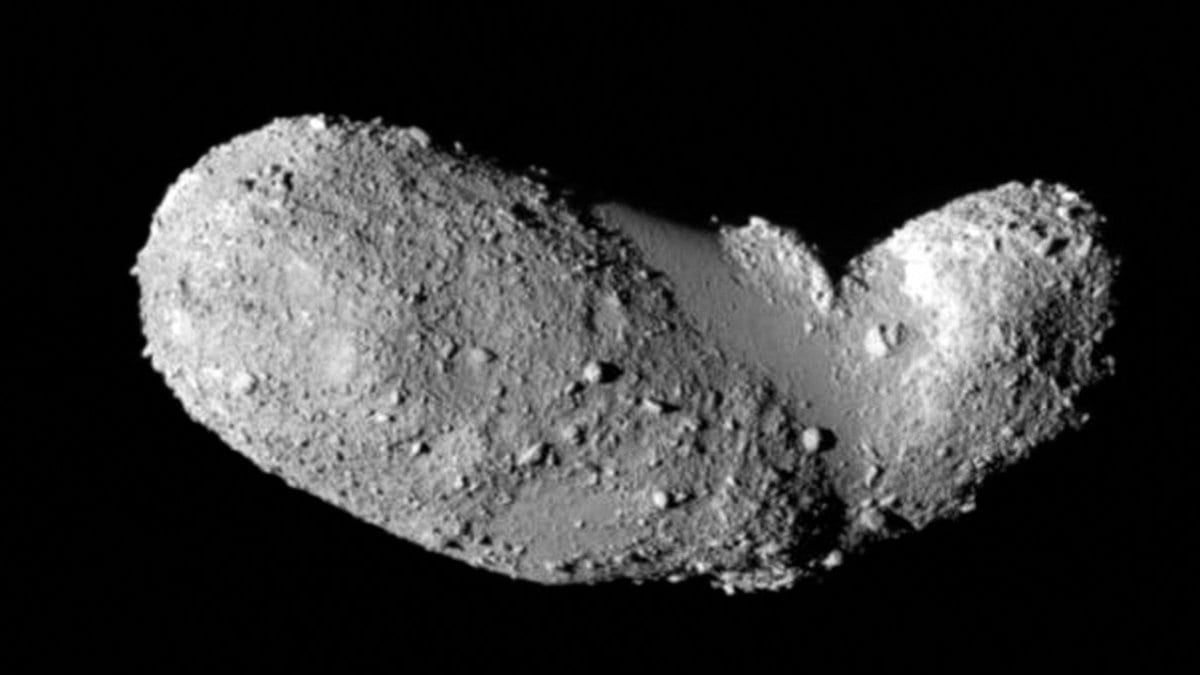
A grain of asteroid dust in a laboratory is a sample without an address. It can be weighed, sliced and dated, and it will tell you what that asteroid is made of. It will not tell you which part of the main asteroid belt the rock originated in, or what else out there is made of the same stuff. That second question is the one P.N. Simon and colleagues at Aix-Marseille University set out to settle for the handful of near-Earth asteroids spacecraft have gone to meet. Their paper was posted Oct. 5 and is accepted for publication in Astronomy & Astrophysics. It assigns six mission targets a probable source family in the belt, along with a type of meteorite on Earth that should resemble their composition.
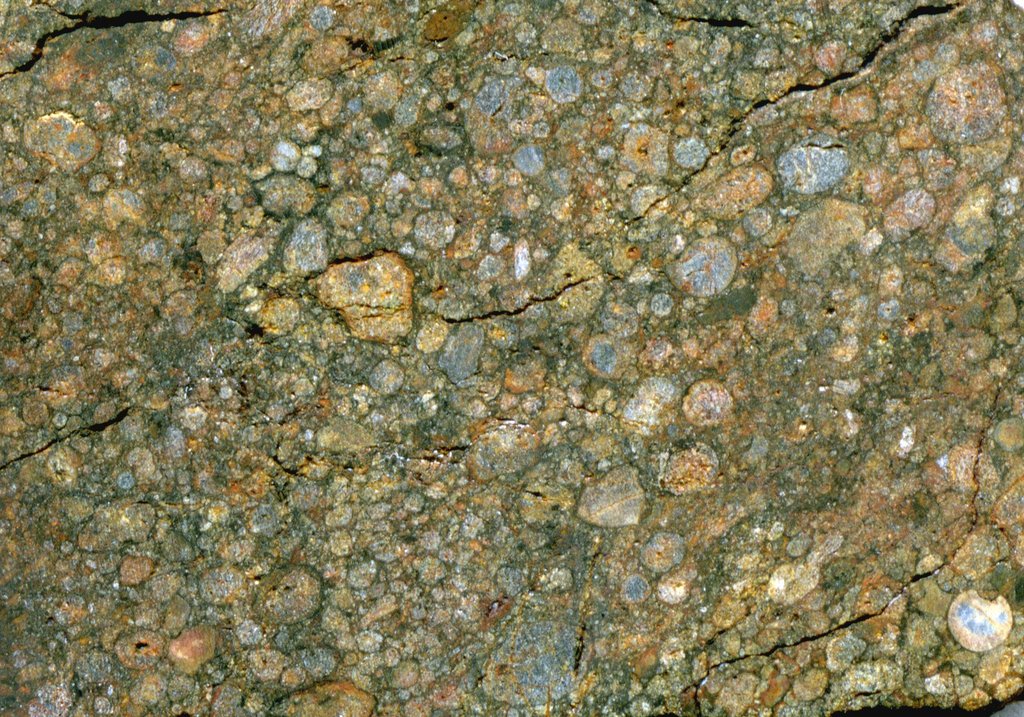
The approach in the new work pairs two methods, neither of them new on its own. Simon's team fitted near-infrared spectra of each asteroid against average spectra of four ordinary-chondrite types, the most common meteorites to fall to Earth. These are H, L and LL chondrites, with LL split here into a primitive form and a heated one. Each meteorite spectrum was first reddened using a model of how an airless surface darkens under sunlight and the solar wind. The best match was then checked against probability maps showing which families in the main belt feed rubble into which near-Earth orbits. The spectrum says what a body is made of. The orbit says where that composition could plausibly have come from, and agreement between the two is the whole argument.
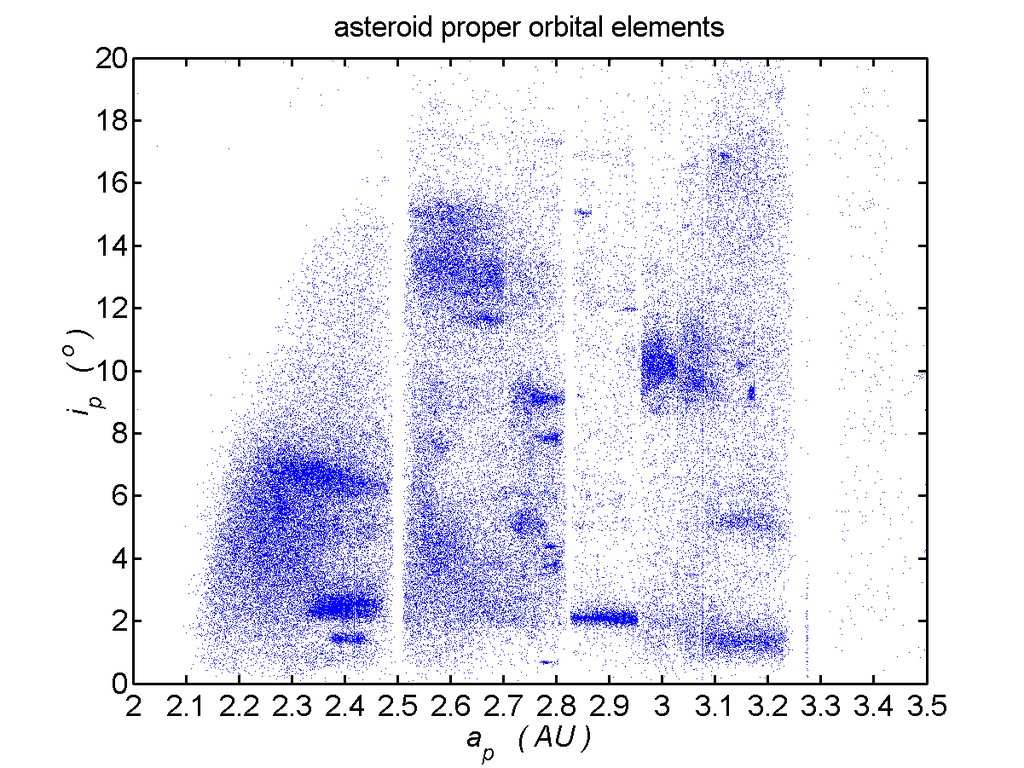
The six answers are not equally firm, and the paper is careful about that in a way a one-line summary is not. For Eros, Itokawa, Apophis and Torifune, the closest meteorite analogue is a thermally processed LL chondrite. The Flora family is identified as their most probable source. All four, though, lie in regions where the dynamical maps assign only moderate probability to Flora. Toutatis is compatible with two families at once, Massalia and Nysa, with the probability leaning toward Nysa. Only Didymos and its small moon Dimorphos, the pair NASA's DART spacecraft struck, fall in a region compatible with Massalia alone.
The object we know best has the weakest case here
Itokawa is the one body on the list whose material has been handled. JAXA's Hayabusa brought dust home from it in 2010, and laboratory analysis of those grains found an equilibrated LL chondrite, meaning one heated until its minerals evened out. That fixes the group, not the subtype, and the subtype is what the family argument turns on.
In this study, Itokawa has the thinnest spectral evidence of the six: one usable spectrum, with a primitive, unheated LL3 match running close behind the preferred one. Had that alternative won, its likely source would have been Nysa, not Flora. What steadies the Flora interpretation is not the spectrum but a clock. Argon dating of the returned grains places an impact or reassembly event in Itokawa's history about 1.3 billion years ago, while the Flora family's estimated age is about 1.2 billion years.
A prediction whose test is already on a recorder
The weakest source-family assignment of the six is Torifune, and it is the one a spacecraft has already reached. Hayabusa2#, the extended mission of the probe that sampled Ryugu, flew past Torifune in July 2026 carrying a near-infrared spectrometer. That was three months before this paper was submitted. Those spectra have not been published. The paper's placement of Torifune with Flora and with a heated LL analogue is a prediction whose test is already in hand.
It is also a placement that two peer-reviewed studies of the same asteroid do not support. Bourdelle de Micas and colleagues, in Astronomy & Astrophysics in January 2025, found Torifune's mineralogy a close match for ordinary L chondrites, rather than LL chondrites. Simon's comparison table records that study as having found equilibrated L or LL, a broader classification that partly overlaps with the new paper's conclusion. Popescu and colleagues, in The Planetary Science Journal, measured a mineral mix that sits at the very bottom of the range Simon's own appendix assigns to the primitive LL class, near the L end of that range.
Both sides have a case. Bourdelle de Micas's group proposed its candidate family, Lucienne, only tentatively, and concluded by calling for exactly the kind of dynamical analysis Simon's team has now performed. Simon's team addresses that question directly. Lucienne is a small family whose composition has not been characterized. Torifune's spectral slope, the tilt of its reflected light, is also consistent with several families, including Flora.
Below 100 meters, the mix starts to look like a meteorite collection
The second half of the work leaves the mission targets behind. Applying the same fitting to 651 near-Earth asteroids from a long-running infrared survey on Mauna Kea, the team finds that composition shifts with size. Above roughly 100 meters across, the heated LL types dominate. Below that, their share falls while the L and H types rise, approaching the proportions seen among meteorites that actually fall on Earth. Approaching, not matching: the word is the paper's own.
That trend is the paper's claim to novelty, and the authors frame it narrowly: the first direct observational evidence, drawn from spectra of near-Earth asteroids, that the source regions of ordinary chondrite meteorites are reflected in the population's composition. The links between
families and meteorite types are not new here. Marsset and colleagues tied L chondrites to the Massalia family and Brož and colleagues tied young asteroid families to the meteorite flux, both in Nature in 2024.
The small-size result rests on 53 objects split across four meteorite types and on a bias correction the authors themselves label qualitative rather than quantitative. The correction is designed to show where small asteroids are over- and underrepresented, rather than to measure the extent of those differences. The cross-check is also closer to home than it looks. The dynamical maps are the work of Brož, Vernazza and Marsset, three of this paper's own authors. The appendix also states that the spectral class boundaries were drawn to reflect the compositions expected of the candidate families, not strict divisions between meteorite groups. It is an internal consistency check, not an outside verdict.
Which leaves the encounters still ahead. ESA's Hera is approaching Didymos and Dimorphos, and in 2029 RAMSES is expected to arrive at Apophis before its close approach to Earth, while OSIRIS-APEX will arrive shortly afterward. Each mission will measure the asteroid's composition, allowing researchers to compare the results with a family prediction already in print. For Torifune, the answer may exist already, sitting on a spacecraft recorder, waiting to be reduced.