Repeat HPV Tests Showed Which Women Had the Highest Risk of Cervical Lesions
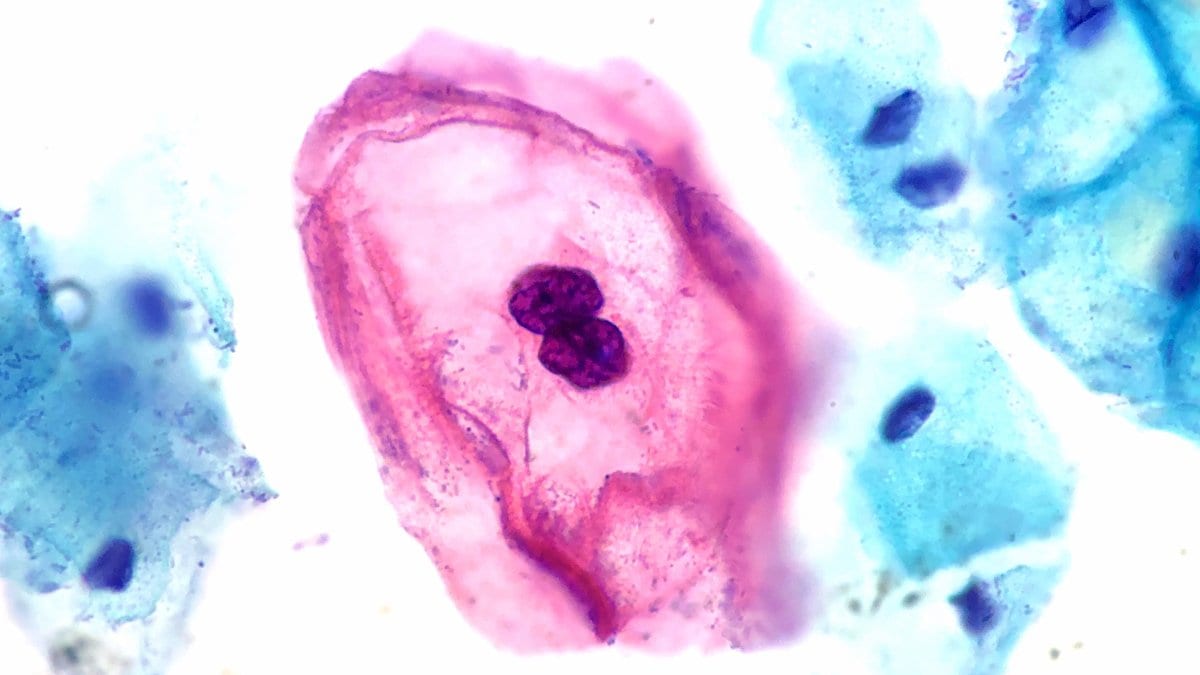
A team at Changzhou Maternal and Child Health Care Hospital in China reports that repeated tests of how much human papillomavirus a woman carries sorted women with a lasting infection into four groups. The share with cervical lesions ran from roughly one in ten in the lowest group to nine in ten in the highest.
The authors set out to test whether a single reading of viral load misses how an infection is moving over time, and they report that the repeated readings predicted lesions better than a woman's baseline information alone did.
The study was published Nov. 23, 2026, in the journal Cancer. It enrolled 1,502 HPV-positive women and tested them at roughly six-month intervals. First author Yilu Zhou, senior author Lina Zhang and colleagues ran their analysis on the 624 women who carried the same HPV type from one test to the next, which the study counts as a persistent infection.
The four patterns were low and stable, moderate and declining, moderate and rising, and persistently high. Lesion rates rose across them in that order — 10.9%, 17.8%, 74.2% and 90.4%. The lesions counted were low- or high-grade squamous changes in the cervix's surface cells, not cancer, and the four patterns were associated with them rather than tested as a cause.
The authors write that external validation is required before the approach is used in the clinic. The paper's background states that persistent HPV infection is central to how cervical lesions develop; what this work adds is the path an infection takes between tests.
Sources
- doi.orgPeer-reviewed

Medical Disclaimer: This content is provided for general informational and educational purposes only. It is not medical advice and should not be used as a substitute for professional medical advice, diagnosis, or treatment. Always consult a qualified healthcare professional regarding any medical condition, concern, symptom, or treatment decision.