Euclid Was Not Built to Chase Comets. It Found One Anyway

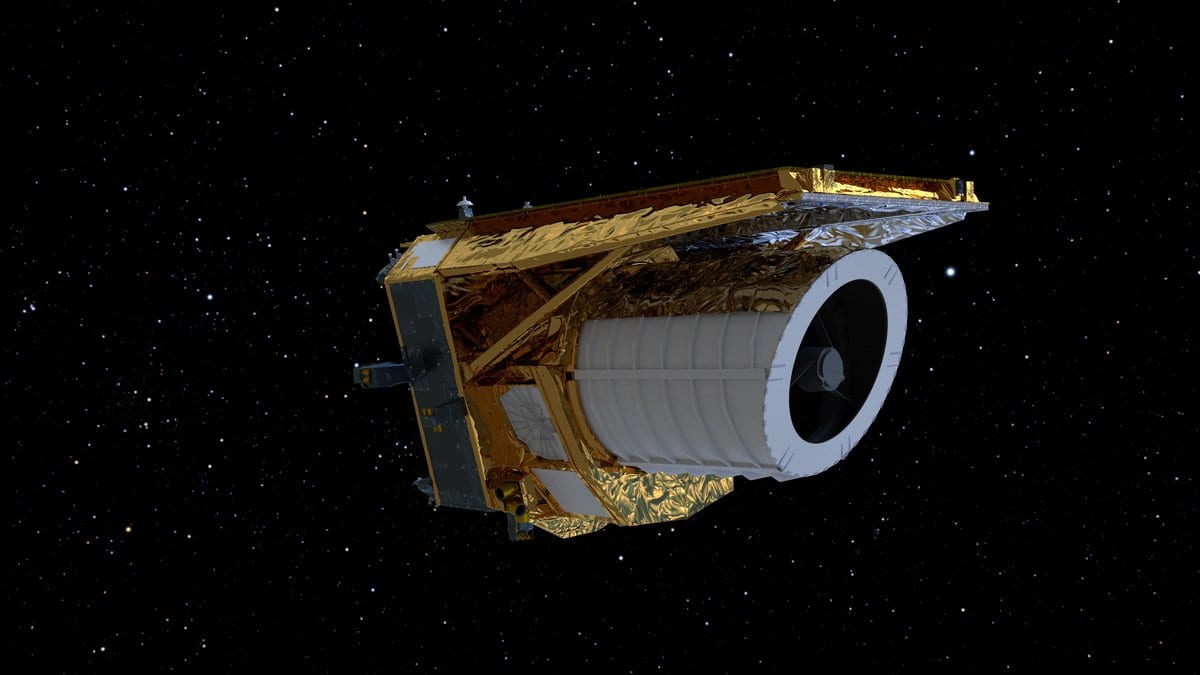
Euclid's job is to hold still and stare. The European Space Agency's telescope is mapping the shapes and motions of billions of galaxies, and anything that moves across its field during an exposure is a nuisance, a smear laid over the data it was launched to collect. Mikko Pöntinen, a PhD student at the University of Helsinki, wrote software that watches Euclid's images for things that move. Over nine days in September it flagged something that nothing in the catalogs could account for.
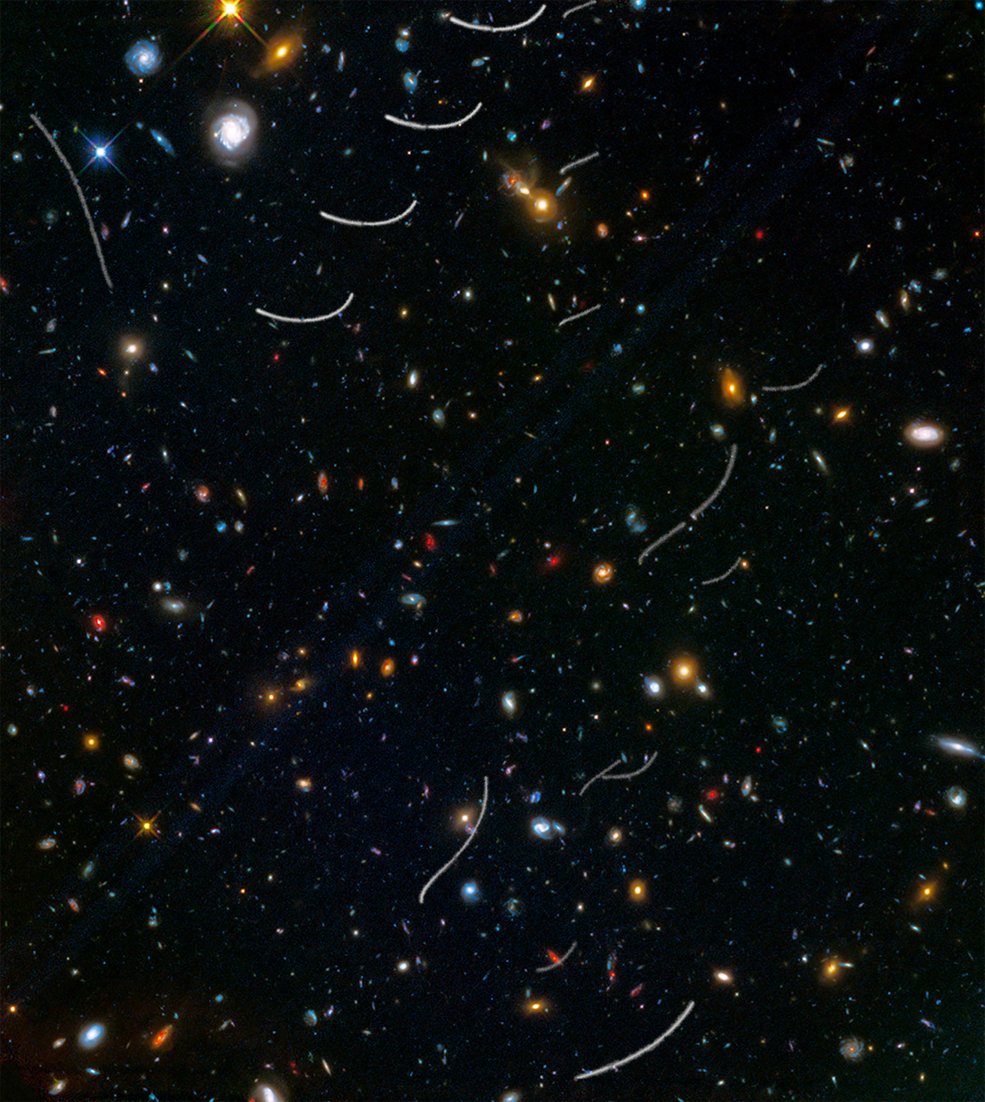
The smear repeated. Pöntinen predicted where the object should turn up in other frames and found it there, in five separate fields of view, 16 exposures in all, inside the patch of sky Euclid surveys as the Euclid Deep Field North. "By predicting its position I could identify it in other images, in total finding it in five image sets," he said in ESA's announcement of the discovery. "Further inspection revealed that it had a fuzzy cloud around it, indicative of an active object like a comet that is shedding dust and gas."
Checks against the catalogs of known comets and asteroids returned no match, so the detection went to the International Astronomical Union's Minor Planet Center, the clearinghouse that collects comet and asteroid reports from observers worldwide and assigns official designations. The report also alerted ground-based astronomers, and they began contributing observations of their own. On Oct. 8, the center confirmed the object as a comet, now designated C/2026 S1 (Euclid). No journal paper has been published to report the discovery: the public record is ESA's release, the designation, and an orbit solution in NASA's Small-Body Database at the Jet Propulsion Laboratory.
That second record is where the comet stops being a European result. ESA's release puts it about 1.3 billion kilometers from Earth and describes it as arching over the Solar System, standing almost straight up from the Sun's point of view. The JPL solution puts the closest approach to the Sun at about 8.7 times the Earth-Sun distance, out between the orbits of Jupiter and Saturn, and gives the tilt of the orbit as 85 degrees: within five degrees of perpendicular to the plane the planets travel in. That orbital solution incorporates observations beyond Euclid's images.
The broader evidence base is in the count. ESA accounts for 16 Euclid exposures; the JPL fit uses 56 observations. Roughly 40 of them came from the ground, providing measurements beyond the original Euclid data on which to fit the orbit.
What the fit cannot yet give reliably is how long the comet takes to go around. ESA says the orbit will take thousands of years to complete. But its note on the designation says the orbital period will be refined as more data are collected. Twenty-seven days of tracking is far too short an arc to settle it: the available solution leaves open whether the comet is on a bound orbit and will return at all.
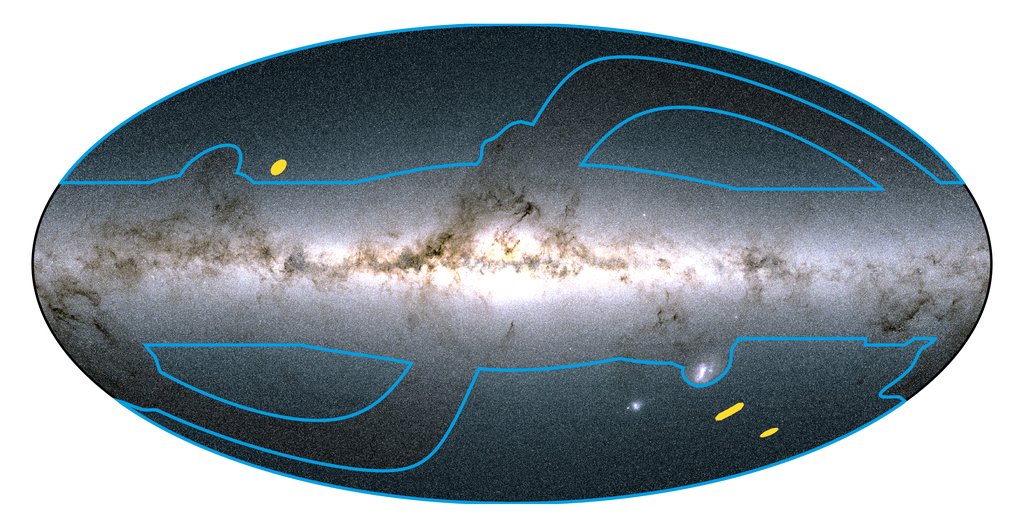
Euclid is not designed for this kind of work. It deliberately avoids the band of sky along the Solar System's plane, where interplanetary dust scatters light and can interfere with deep exposures. Its observing pattern steps from one patch of sky to the next and usually visits each patch once, so an object that moves cannot be looked at again on demand. Both constraints were working against this detection, and both are why software like Pöntinen's runs at all: a moving trail has to be recognized before it can be taken out of a galaxy image.
ESA makes a larger claim for the speed of it. The agency writes that the quick turnaround between identifying the object and validating it shows how Euclid can detect new comets while they are still relatively far from the Sun, which is the kind of early notice its future Comet Interceptor mission would need. That is a case built on one comet, and the release itself qualifies the claim. "Very few comets are expected to be discovered by Euclid so it was a happy coincidence that the combination of the comet's orbit and Euclid's scanning over those days captured the object in multiple images," said Bruno Altieri, Euclid Archive Scientist and part of the discovery team.
This comet will not be the target. "While this particular comet is not a suitable candidate for Comet Interceptor, the process of discovery and alert gives us a real test case for how our two mission teams will coordinate in the future," said Valeria Pettorino, Euclid Project Scientist. "And we are of course happy to have discovered a previously unknown comet for the Solar System community to follow-up on."
Euclid had picked up comets before, all of them already known. This is the first previously unknown comet it has detected. ESA's own expectation is that very few will follow, so the durable result may be less the comet than the weeks surrounding its discovery: a streak flagged by a student's software, checked against the catalogs, reported, followed up from the ground and given a name. C/2026 S1 belongs now to whoever keeps watching it, which is also how its orbit, and the question of its return, get settled.