A Claimed Riemann Hypothesis Proof Passed Its Machine Checks in a Day. The Mathematics Has Not Been Read

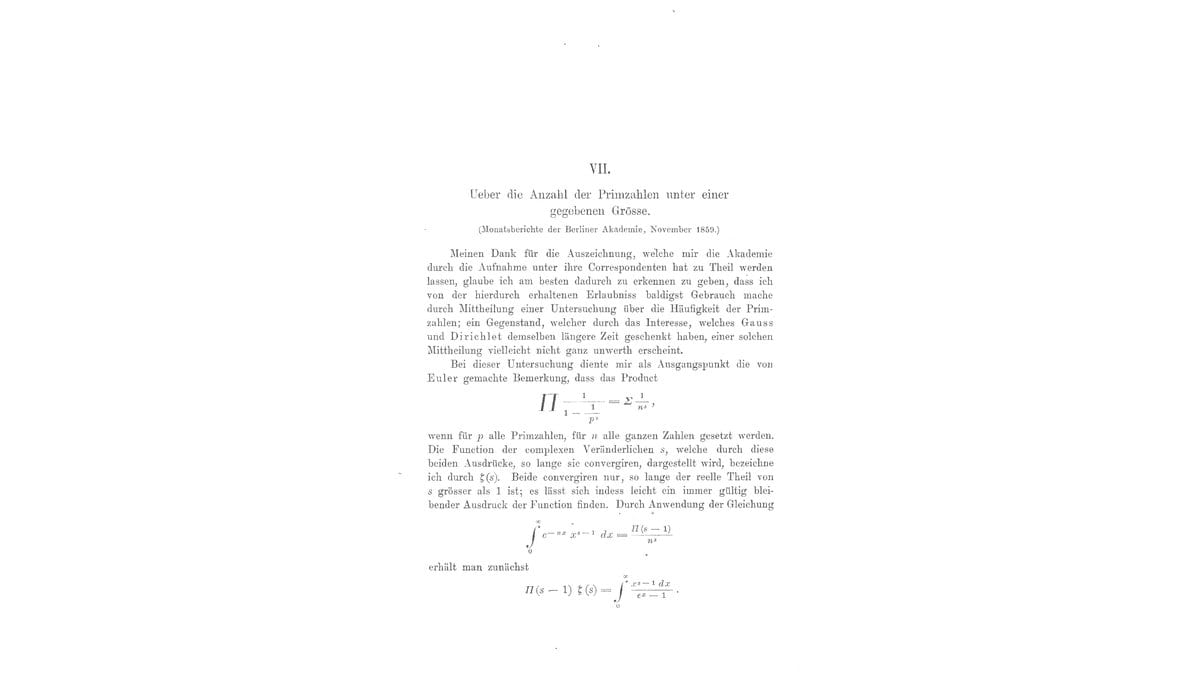
The note was four pages long, and it did not contain the proof. It announced one. On Nov. 20, 2026, Levent Alpöge posted it on his own web page: he believed that he had, working with Anthropic's AI model Claude, found a proof of the Riemann Hypothesis, a question about how the prime numbers are distributed that has been open since the nineteenth century. Alpöge works at Anthropic and is a junior fellow of the Harvard Society of Fellows, according to his homepage. The note itself is unsigned and states no affiliation.
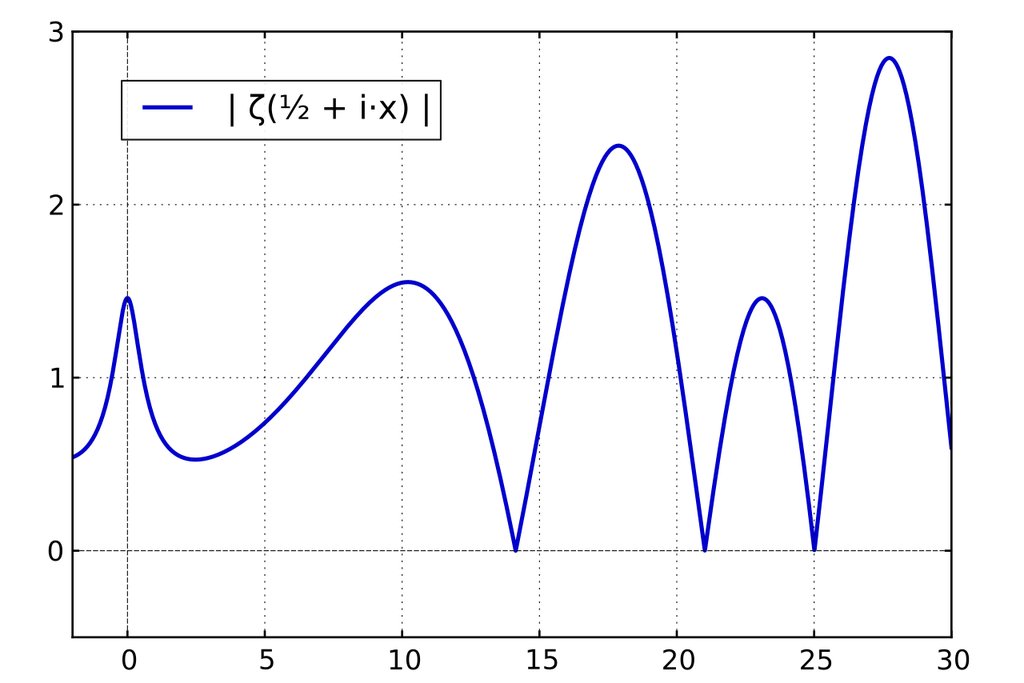
What he released was not an argument anyone could read. "It being obviously inappropriate to attempt to post some massive unreadable travesty of 'slop', I decided to only present Lean," he writes in the note — Lean being the language in which a proof can be set down so that a machine checks every step. The library runs to about 17 million lines of code, by the Lean community's own count. Nobody reads 17 million lines, so how an AI-assisted proof is checked becomes a question about machinery: the formal statement of the theorem, the assumptions the proof rests on, and the small program that gives the final yes.
At 13:55 on Nov. 21, 2026, a statement appeared on the Lean community's blog under a collective byline: "Joint statement by the Lean and Mathlib communities, endorsed by the Lean FRO and the Mathlib Initiative." No individual signed it. "We hereby certify that both the statement and the proof of the Riemann Hypothesis are correct," it reads, and: "We have full confidence that Alpöge's proof of the Riemann Hypothesis is correct, and we congratulate him on this achievement." It credits its four criteria to a Nov. 12, 2026 post on the Xena Project blog, written eight days before the claim. What is certified is a machine-checkable file: there is no paper, and no peer review. The statement certifies the Riemann Hypothesis, and never mentions the generalized version.
A certification is three separate checks
Alpöge claims more than the hypothesis itself. The method, his note says, "easily extends much further, resolving the so-called Generalized Riemann Hypothesis," with the extended version expected later. Andrew Sutherland of MIT published his own audit of the released archive, and he is precise about what the middle claim covers: "'GRH' here means Dirichlet L-functions: all moduli and all characters. Dedekind zeta functions, Hecke L-functions and automorphic L-functions in general are not among the statements that were checked." Alpöge's note defers that wider territory to future work.
The generalized hypothesis drew a second and separate claim the same day: on Nov. 20, 2026, Ravi Vakil, the president of the American Mathematical Society, posted on his Math 216 blog that Alessandro Maria Masullo had a proposed proof of it, that Brian Conrad had been looking closely at it for months and giving feedback that was being incorporated, and that it was so far looking good to him: "It is all human, with no AI." In an update to the post headed "Update about 8 hours later," he wrote that "several people have contacted me to report problems in the proposed proof, identified with the assistance of different AI models," adding that all issues "need to be resolved to the satisfaction of the community before this proof would be accepted as true," and that he makes "no claim as to the correctness of the proof strategy."
The first check is whether the formal statement is the right statement, because a wrong statement compiles as happily as a right one. Here the statement is Mathlib's own, Mathlib being the shared library of mathematics written in Lean, and the joint statement says it "has been carefully vetted by experts in Lean and number theory," isolated in a file that imports only Mathlib and compared against what Alpöge actually proved using two separate tools, "both confirming that the theorem proved in Alpöge's library is exactly Mathlib's statement of the Riemann Hypothesis."
The second check is the assumptions. Lean's own reference manual tells a checker to print the axiom list for each theorem and confirm that only the three built-in ones appear; anything else means an extra assumption was declared, or that part of the proof is unfinished. Sutherland reports that "the five headline theorems depend only on the three standard axioms."
The third is the kernel, the part of Lean that does the final checking. Sutherland writes that every module has been replayed through it, and that two independently written kernels, nanoda and con-leche, "accept the full exported proof." The joint statement adds that the exported proof was run past several checkers written in different languages, that "dozens of people have reported correct compilation of the codebase," and that those checks "ran on an inert export of the proof, out of reach of hypothetical malicious code in the Lean proof sources."
The word to watch there is independent. Sutherland's page carries its own byline: "Andrew Sutherland (MIT), checks run with Claude Code." Every one of the 11 commits to the verification notes kept in the certifying project's repository is marked as co-authored by Claude. Two of the checkers are AI-written on their authors' own account: con-leche was "implemented and proven consistent by Claude (Fable and Opus), under heavy supervision by Joachim Breitner at the Lean FRO," Lean's creator Leonardo de Moura wrote on Oct. 15, 2026, and con-ron, a Rust translation of it, is described in its own repository as "written by AI under supervision from Joachim Breitner at the Lean FRO," with no model named. Thomas C. Hales, a mathematician who counts himself among those working in formalization, recorded the same authorship for con-leche six weeks earlier, and added that "Con-Leche's consistency proof has been checked by more than a dozen other proof-checkers." No AI involvement is recorded for Lean's own kernel or for nanoda, which Sutherland describes as an independent Rust kernel. No source says the verification is compromised.
A second document sits in the same repository
That folder of verification notes opens by saying that "Everything in this folder was written by the people checking the submission, not by its author." They are one checker's work: all 11 commits are by a single contributor, and the repository was his own until it moved into the Lean community's organization early on Nov. 21, 2026. They record two things the certification does not mention.
The build is pinned to Lean 4.33.1, which lacks two runtime fixes that arrived in 4.34.1. Lean's own release notes say of one of them that "on machines with at least 18GB of free RAM, it could potentially be used to trigger use-after-free in the official kernel, which could be extended into a proof of False," and both fixes carry Lean's label for a runtime bug that could break the official kernel's soundness. The same release notes say kernels not built on the Lean runtime, nanoda among them, are unaffected. The notes themselves conclude that "a pass by the 4.33.1 kernel alone, which is what a successful build is, counts as limited evidence here. The judging is done by Lean 4.36.0 and independent checkers."
The notes also record that the archive defines a tactic, used through small macros in 67 files by the notes' count, which assigns a proof term to the goal without the elaborator, Lean's first checking stage, confirming that its type matches the goal. The kernel still checks it. In the notes' words: "the kernel is the only check. That is sound, because the kernel checks every declaration, and it is the reason this repository re-checks the exported proof with independent kernels."
Two of Sutherland's own checks had no verdict when his page was last updated, at 12:55 UTC on Nov. 21, 2026: "The lake comparator run and the Lean-kernel replay of the export are still in progress." The page is live-updated and says so.
Certified and understood are not the same thing
Six weeks before any of this, on Oct. 9, 2026, Hales had set out in a guest post on Terence Tao's blog what a Lean proof still rests on. "As of October, 2026, I know of no complete, public relative-consistency proof covering Lean abstract type theory," he wrote, adding that con-leche's own consistency claim "might suffice for all practical purposes, even if it differs in technical detail from the claim of Lean type-theory consistency." He also held that "a proof in Lean should not be accepted until a human audit is performed to ensure statement fidelity," a task he called "generally massively easier than checking the proof itself," and one he said Lean's comparator tool assists with. On cross-checking: "Cross-checking the proof by different kernels does not remove all doubt. The Collatz bug was not caught by cross-checking against a somewhat out-of-date Nanoda kernel, which accepted the illicit Collatz disproof because of its own unrelated bug." In the same passage: "Some of these errors can be mitigated by running different kernels that have been implemented in different programming languages on different hardware and operating systems." That was Oct. 9, 2026. Sutherland's page, dated Nov. 21, 2026, records nanoda accepting the full export.
Where his warning is general it is unhedged: "During the past year, much foundational work on the type-theoretic foundations of math and its reliability has been relegated to AI, and this is dangerous unless carefully audited by humans." At the foot of the same post he sets out his own practice: "Authorship is fully human (TCH). AI was used as a tool in search and research, fact-checking, and proofreading."
The joint statement says of two of the checkers that they "come with a formal proof, relative to set theory, that they cannot accept a false proof." De Moura, writing on his own blog about Lean's new kernels six weeks before this claim existed, opened with the reason they were built: "AI agents are very effective at finding vulnerabilities in our software. This includes the kernel (the proof checker) of the Lean proof assistant." His case for them is that the same bug is very unlikely to sit in two separately built toolchains, so "by checking a proof with both con-leche and con-ron, you gain a high level of protection against this class of bugs."
What nobody claims is that the mathematics has been read. The detailed verification discussion is not public: the thread the joint statement points its readers to sits behind a login. The certifying document puts the explaining in the future: "We look forward to all the activity in the mathematical community that will help explain the new ideas in this proof." Scott Aaronson notes in his post of Nov. 20, 2026 that "so far, not one of the AI results with Lean certificates has needed to be retracted (while several without Lean certificates have needed to be)"; he sets out the objections he expects skeptics to raise, among them kernel bugs that have in the past allowed proofs of 0=1 and the uncertain soundness of the underlying type theory, and then says plainly, "my bet is that the proof will stand." On what would count as satisfaction, he writes: "Mathematicians of course won't be satisfied with 17 million lines of Lean. They'll be satisfied when, and only when, they're able to explain and distill and reconstruct the ideas for themselves. And that will probably take years, since human mathematicians move only at biological speeds."
Alpöge says much the same about himself, in a note that is the latest of several AI-assisted, machine-checked mathematics results since late October. He writes that he personally has "little mastery of automorphic forms on higher rank groups," that he "may have baked lots of strange suboptimal choices into the argument," and that he is "presenting the world with a complete argument before having mastered a massive neighbourhood around its mathematics." He raises the question of the announcement's timing himself: "The precise timing is horrible," and "There is an obvious cynical view, to do with the timing, but it is false." What he says he will do next is the part no machine has done: "I intend to do my best to understand and impart understanding of this argument and its certain simplifications, to speak about it, to write it properly."