What Withholding Training Data Buys: A Delay, Not a Blank Spot

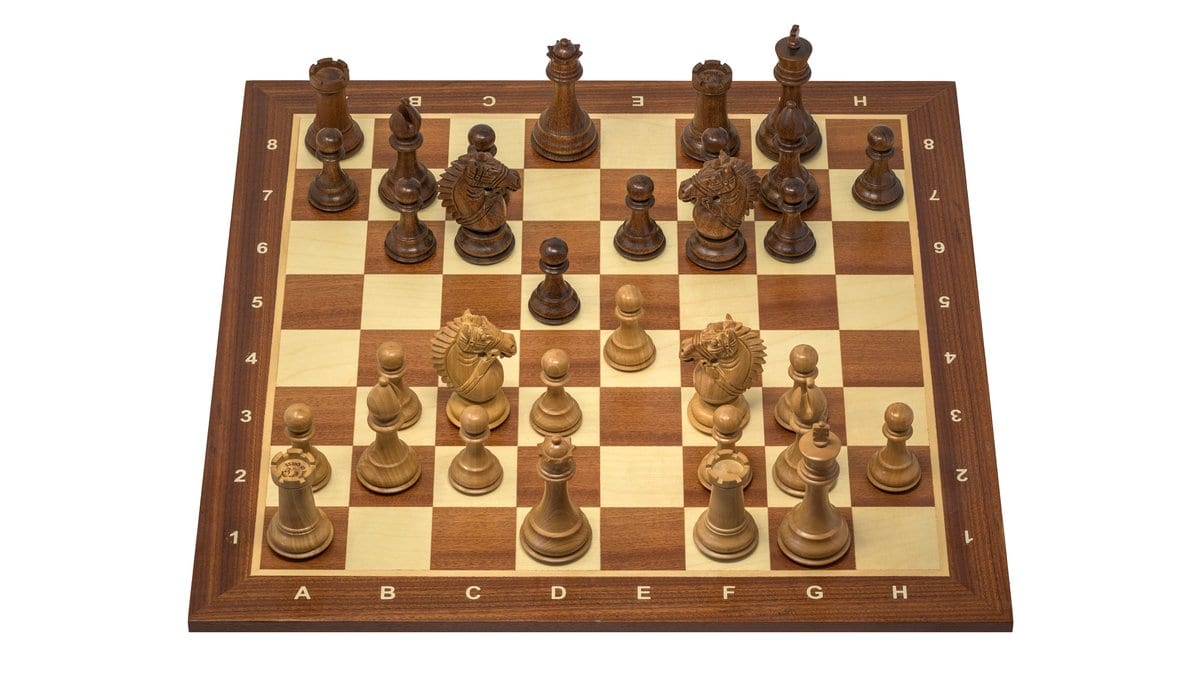
A language model was trained on chess games with one thing missing: it never saw a single reply to a check. Every game in its training text was one in which no king was ever threatened. Shown a held-out game and stopped at the first moment a check appeared, the model was asked what came next. It ranked the move a human had actually played first among the legal replies in 0.65 to 0.68 of those games. A model trained on the same games with the replies left in managed 0.68 to 0.71.
That narrow gap is the opening measurement of a preprint posted to arXiv on Nov. 18, 2026, by Mark Marosi and Peter Antal of the Budapest University of Technology and Economics. Developers routinely leave material out of pretraining, the long first training run that gives a model its general competence, so that the finished model cannot do things that could be misused. How long that holds, and how much data it takes to acquire the skill afterward, is what the two set out to measure. Their paper has not been peer-reviewed. It comes from a single two-author group, and no other laboratory has measured the relations it reports.
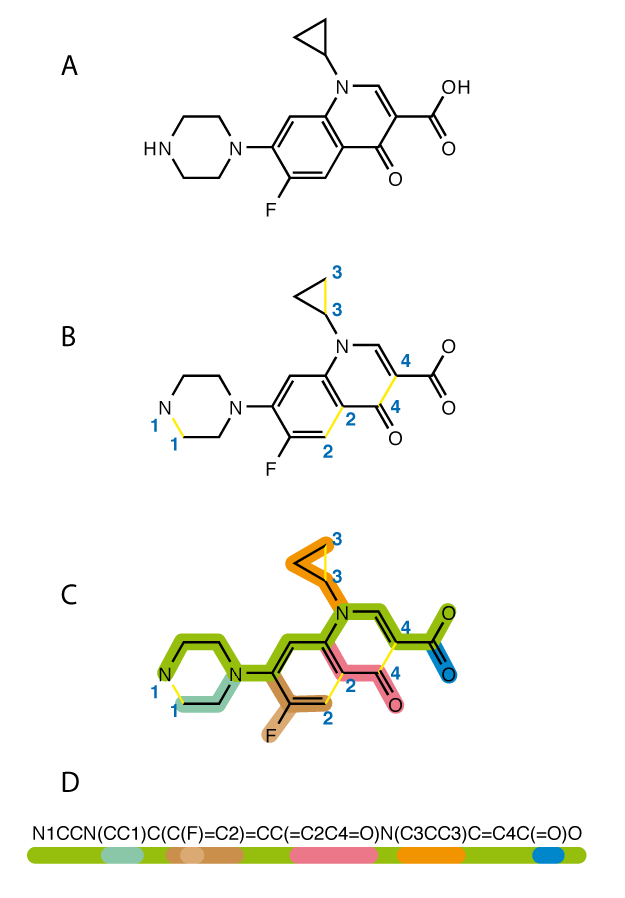
They withheld the training signal for one skill at a time in five settings: chess, the board game Othello, molecular strings, bracket languages and ordinary web text. Every model in the paper was pretrained by the authors themselves, at sizes up to 7 billion parameters; no commercial, instruction-tuned or deployed system was involved. The withheld skills were a reply to check, a forced pass in Othello, the symbol that closes a ring in a molecular string, matched brackets, statements of countries' capitals, and documents about astronomy, the programming language Rust and Chinese. Not one of them is a capability anybody filters data to prevent, and the paper tests none that is.
The delay is real, and it is not a delay in time
A filter does hold a skill back, and the paper's main business is measuring by how much. The unit is not hours or money but the model's general prediction loss, a measure of how well it predicts text overall. A filtered model reaches a given level of skill only once it has become that much better at everything else — the delay is real, but it is a delay in progress, not on a clock.
That delay also grows. The authors write that support for a withheld skill from the rest of the corpus falls as a model progresses, so their relations give "a deficit that widens with progress, and larger models progress further." For two of the skills, king safety in chess and the capitals of countries in the largest web-text model, the size of the delay follows from those relations with nothing fitted to it; the other skills needed a fitted sensitivity, one number tuned to the measurements. And the delay a filter produced in larger models could be predicted from measurements on smaller ones, which is the part of this a developer could use before paying for a big run.
Putting the data back costs a fraction of learning it fresh
The researchers then returned the withheld examples to the training loss and watched the skill arrive. They report that from each run's lowest-loss checkpoint, acquisition took at most 0.10 to 0.78% of the tokens a model needs to learn the skill from scratch, and 3.1 to 7.5% once the preceding steps that restore the optimizer's state are counted. Both pairs belong together: the larger one is the cost of the whole operation, the smaller one of the returned data alone. A control rule of matched difficulty, made by permuting the real one, needed 2.4 to 16 times as many tokens from the same checkpoints.
The 7-billion-parameter work is where the paper comes closest to a real training run, and it is also where its evidence is thinnest: two random seeds. Astronomy, Rust and Chinese documents were filtered out of the web text and then returned, and the capitals skill was thinned to a fraction of its targets. Rust is the case probed hardest, scored on whether the returned model's code actually compiled. Getting a skill back here was far more expensive than in chess. The authors write: "In our 7B model, the filtered domain returned with up to 13% of the model's training tokens." Two regimes, two numbers, and the chess fractions do not describe the large model.
A filter that was there from the start holds better
None of this makes filtering pointless, and the paper's own numbers say why. Chess models never shown the skill at all needed 5 to 20 times more tokens to pick it up than models from which an already-learned skill had been removed, and molecular-string models behaved the same way. Filtering from the beginning is more durable than deleting something a model already knows, which is close to the claim of one of the two studies this work measures itself against, a paper published at ICLR 2026 on building tamper-resistant safeguards into open-weight models by filtering their pretraining data.
It is also how the paper settles an apparent conflict with the other. Neil Rathi and Alec Radford, filtering individual tokens rather than whole documents in a preprint from January 2026, report that "filtering gets more effective with scale: for our largest models, token filtering leads to a 7000x compute slowdown on the forget domain" — the opposite direction, on the face of it, from a cost of return that falls as models improve. Marosi and Antal claim both trends follow from their own relations: the progress that widens the deficit a filter opens is the same progress that lowers the data needed to close it once that data comes back. The two results are halves of one picture, not a disagreement.
The authors make no recommendation out of any of it. Their discussion ends on comparisons with the literature on adapting trained models, not on policy, and what a developer should leave out of a training set is left to whoever is deciding. The code is published under an MIT license, with no trained models and no data beside it, so anyone wanting to check the largest result here will have to run it again.
Sources
- arXivPreprint
- proceedings.iclr.cc
- arXivPreprint