One Molecule, One Queen: The Scent That Keeps a Mole-Rat Colony Infertile

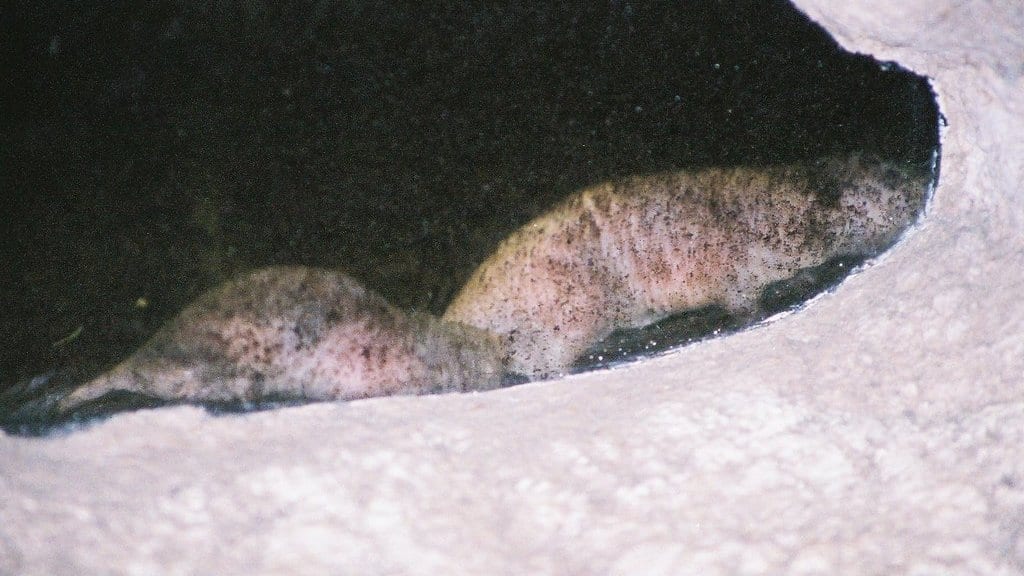
Deep in a maze of tunnels, a single female runs the whole operation. She is the only naked mole-rat in her colony who breeds. The dozens of other females around her, her daughters and sisters, live out their lives as diggers, foragers and pups' minders, their ovaries switched off. For decades biologists knew this happened without knowing quite how the queen pulled it off. What kept her sisters infertile? Fear? Stress? A whole bouquet of pheromones?
The answer, it turns out, is a single molecule.
A team led by Gary Lewin at the Max Delbrück Center for Molecular Medicine in Berlin reports in Nature that naked mole-rat queens release one volatile compound, isopropyl myristate, and that this alone holds the colony's reproductive order in place. It is a rare thing in mammal biology: a social hierarchy this elaborate turning on a chemistry this simple.
Naked mole-rats are already among the strangest mammals alive. They are nearly hairless, cold-blooded in all but name, remarkably resistant to cancer, and almost impervious to certain kinds of pain. They also live like insects. A colony behaves less like a family of rodents than like a termite mound or a beehive, organized around a single reproductive queen while everyone else stays sterile. Biologists call this arrangement eusociality, and among mammals it is exceedingly rare. The obvious question has always been enforcement. Bees and ants use pheromones to keep workers from laying eggs. Did a mammal do something similar, or had evolution found another route?
To find out, the researchers looked at what the queen gives off. They identified isopropyl myristate in her scent and then tested whether it was doing the work on its own. The result was clean. When they sprayed the compound into a colony that had lost its queen, succession stalled: the females that would normally have fought to take the throne stayed suppressed, as if she were still there. When they withdrew it, order broke down and the females began competing to breed. The chemical, in other words, was not merely a sign that the queen was present. It actively kept the colony's reproductive hierarchy in place.
Crucially, the queen does not release it all the time. The team found she produces isopropyl myristate only when she is pregnant, precisely when a rival's pregnancy would most threaten the colony's single-mother structure. The timing reads like a control signal switched on when it matters most.
The compound acts on the bodies of the other females in a specific way. Exposure raises their levels of prolactin, a hormone that suppresses fertility in mammals, while holding down progesterone, which the body needs to sustain a pregnancy. The queen's scent, then, nudges her subordinates' hormones toward a state in which reproduction simply cannot begin. Remove the scent and that hormonal brake lifts.
What makes the finding striking is its economy. A colony of naked mole-rats is a complicated society, with a division of labor and a strict reproductive monopoly, and one might expect an equally complicated chemical system to run it. Instead, a single molecule appears to carry the message. The researchers themselves noted their surprise that so intricate an order rests on one signal rather than a blend.
There is a longer arc here too. Isopropyl myristate is not exotic; it turns up in cosmetics and skin-care products, valued for how easily it spreads and absorbs. That an ordinary compound should serve as a mammal's throne-keeping signal hints at how opportunistic evolution can be, pressing whatever chemistry is at hand into a new job.
Sources
- NaturePeer-reviewed