A 17-Million-Year-Old Jaw From Egypt Asks Where Apes Really Began

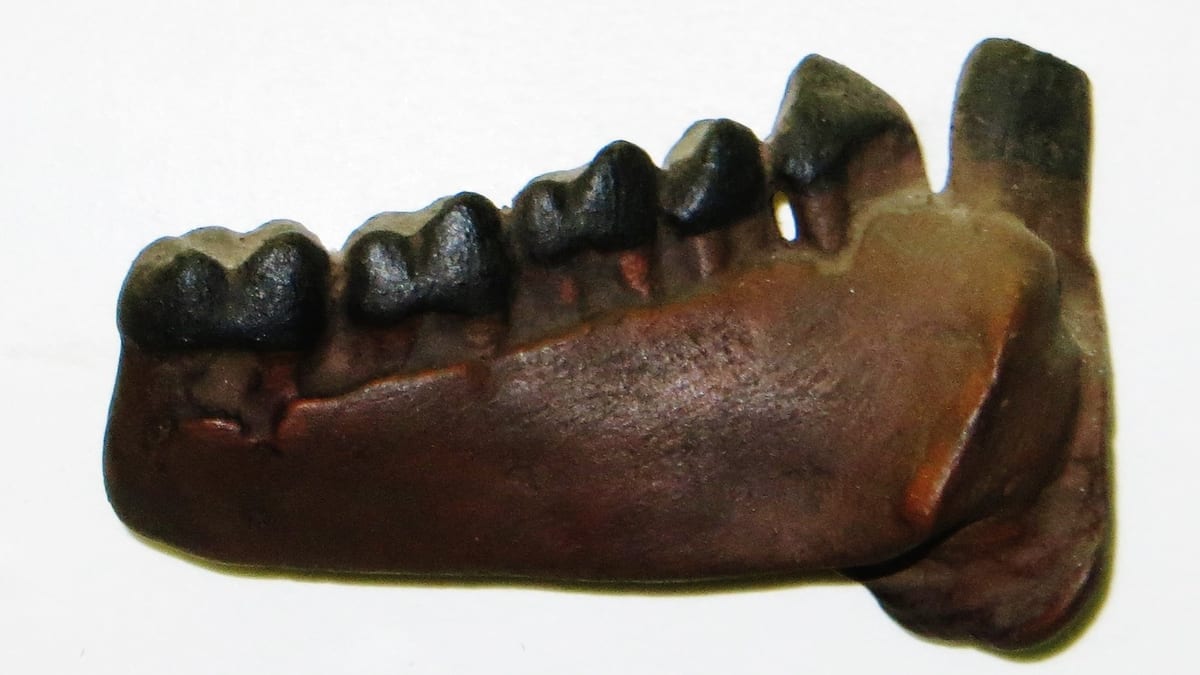
The evidence is a single lower jaw. It is robust, set with unusually large canine and premolar teeth and molars whose chewing surfaces are rounded and heavily textured, the kind of teeth suited to a diet that could switch between soft fruit and harder fare like nuts. From that one specimen, pulled from the desert at Wadi Moghra in northern Egypt, a research team has drawn a large claim about where our own branch of the primate family tree got its start.
The jaw belongs to a species the team has named Masripithecus moghraensis, described in Science by an international group led by researchers at Mansoura University's Vertebrate Paleontology Center in Egypt and the University of Southern California. It lived about 17 million years ago, in the Early Miocene, and the researchers report it as the first definitive fossil ape known from North Africa.
That "first" is the reason the find carries weight. For decades, the story of early ape evolution has been anchored in East Africa, where the richest Miocene ape fossils have turned up. North Africa was, in fossil terms, largely a blank. Masripithecus fills part of that gap, and its anatomy is what makes paleontologists sit up: the researchers place it closer to the lineage that leads to modern apes than East African species of roughly the same age.
If that reading holds, it complicates the tidy East-African origin story. The team argues that North Africa and the Middle East may have served as a crossroads, a corridor along which apes moved between Africa and Eurasia, and perhaps as a birthplace for the group that eventually produced gibbons, great apes, and humans.
Here the caution has to be stated plainly. This is a hypothesis built on one lower jaw. A single specimen, however diagnostic its teeth, is a thin foundation for redrawing the geography of ape origins, and the authors present the North Africa argument as an interpretation, not a settled conclusion. Where a species sits on the family tree can shift as more fossils emerge, and a jaw does not preserve everything a paleontologist would want to know about the animal it came from.
What is not in dispute is that a Miocene ape has now been documented in a region that had none, from teeth distinctive enough to name a new genus. The larger claim about ape origins will rise or fall on what else comes out of the ground. For now, the jaw does something still worth noting: it moves the map.