How Temperature Shapes the Structure of Grass Stems

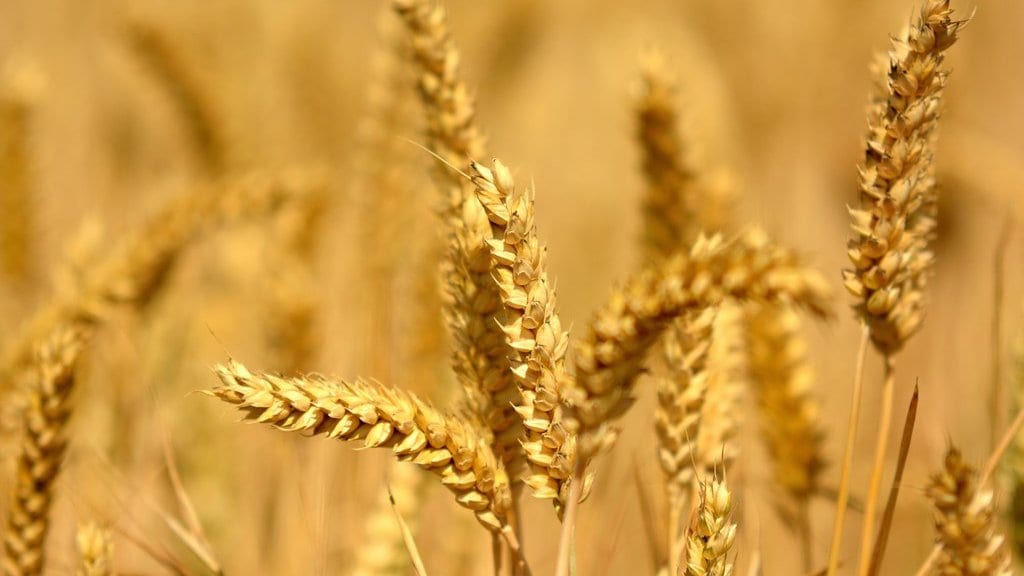
Point a houseplant at a window and it leans toward the light. That reflex (the sense that plants read the sun and organize their lives around it) is so intuitive it is easy to assume every plant lives by it. For decades, the assumption quietly shaped how biologists thought about grasses too.
It turns out the grasses on your plate may never have gotten the memo.
Samuel Hazen's lab at UMass Amherst set out to watch, in real time, when a grass decides to reinforce its stem. The timing tracked temperature, not the light-dark cycle. "Grasses don't seem to respond to light at all," Hazen said of the result. "In fact, they respond only to temperature." The finding, reported this month in Current Biology, is narrow in the way good science usually is, and it is worth being precise about what it does and does not say. What the team measured was the rhythm of a specific job (the thickening of the tough secondary walls that stiffen a grass stem), not the plant's total growth. But that job is the one that turns a floppy seedling into a stalk sturdy enough to hold up a head of grain, and its schedule had never been mapped this cleanly.
Watching a gene glow
To see the timing directly, the researchers needed a plant they could read like a clock. They turned to Brachypodium distachyon, a small, fast-growing grass known as purple false brome that geneticists use as a stand-in for its bulkier relatives: wheat, barley, corn. Into it they built a reporter, fusing CESA8, a gene that helps assemble the cellulose of the secondary cell wall, to firefly luciferase, the enzyme that makes fireflies glow. When the plant switched CESA8 on, it lit up. When it dialed the gene down, it dimmed.
That living readout let the team run the stem through different day-night regimes and simply watch when it glowed brightest. The bioluminescence concentrated in the places you would expect active wall-building (the nodes of the stem, a specific band of each elongating internode, the developing flower head), and it rose and fell on a daily rhythm. The crucial part: that rhythm held even when the researchers took light out of the equation and let temperature cycle on its own. The grass kept a robust daily schedule of wall-thickening driven by warm-cool cycles alone, peaking in the early morning, no light cue required.
An on-switch that is also its own off-switch
The more surprising piece is how temperature does the timing. This is not a simple thermostat where warmer means faster. When the team hit the plants with temperature shifts, CESA8 answered immediately. But the response was transient. Warmth would kick the gene up, then, after a delay, something pushed it back down.
Biologists have a name for a circuit like that: an incoherent feed-forward loop, in which a single input drives both an accelerator and, on a lag, a brake. Co-author Didier Gonze of the Université Libre de Bruxelles built a mathematical model showing that such a loop reproduces the grass's behavior: a system that reacts sharply to change yet refuses to let any single temperature run away with it.
The design has real consequences for when a grass grows fastest. In the team's experiments, the plants thickened their walls most vigorously not under steady heat but on cool nights punctuated by warm pulses, and least under warm days interrupted by cool ones. Prolonged cold nudged wall-building up; prolonged warmth tamped it down. The stem, in other words, is tuned to the shape of the temperature swing, not just its average.
Why a stalk's schedule matters
Grasses are the quiet engine of the human diet. Corn, wheat and rice alone account for most of the calories people and their livestock consume, and much of what makes a cereal crop useful (a stalk strong enough to bear grain, straw that resists flattening in a storm) comes down to how and when the plant lays down those secondary walls. That the schedule runs on temperature, through a circuit built to limit its own response, is not a footnote. It is a hint about where to look as growing seasons warm and heat waves lengthen.
There is a limit to how far these findings can be taken, and the researchers are careful not to overstate them. They studied a single model grass and one specific stage of its growth: the timing of secondary cell-wall thickening, tracked through a reporter gene. That tells us something about this part of the plant’s development, not how grass growth as a whole responds to light. And what holds for a model grass in the lab may not hold for a field of wheat. The work is peer-reviewed, published in Current Biology; an earlier version was posted as a bioRxiv preprint, and the two tell the same story. (The university's own account of the study frames the result more broadly, as being about "growth"; what the measurements actually pin down is the timing of stem-wall thickening.)
Even scoped tightly, the direction is suggestive. If the machinery that stiffens a stem is listening for temperature and wired to check itself, then a hotter, more erratic climate is speaking directly to that machinery. Knowing the grammar of the message, which is what mapping the CESA8 rhythm begins to provide, is the first thing a plant breeder would want before trying to change the reply.
For now, the clearest takeaway is also the quietly startling one. The plants that feed the world have been keeping time all along. They just have not been watching the sun to do it.