A THC Drug Cut Nightmares in a PTSD Trial, and Left the Rest of the Disorder Untouched

The dream repeats. For many people with post-traumatic stress disorder it is the same dream, most nights, for years, and the exhaustion it produces feeds back into everything else: the depression, the hypervigilance, the physical illness that keeps company with chronic sleep loss. Clinicians treat it with drugs borrowed from other conditions, none of them licensed for the job. No medicine is approved anywhere specifically for PTSD nightmares.
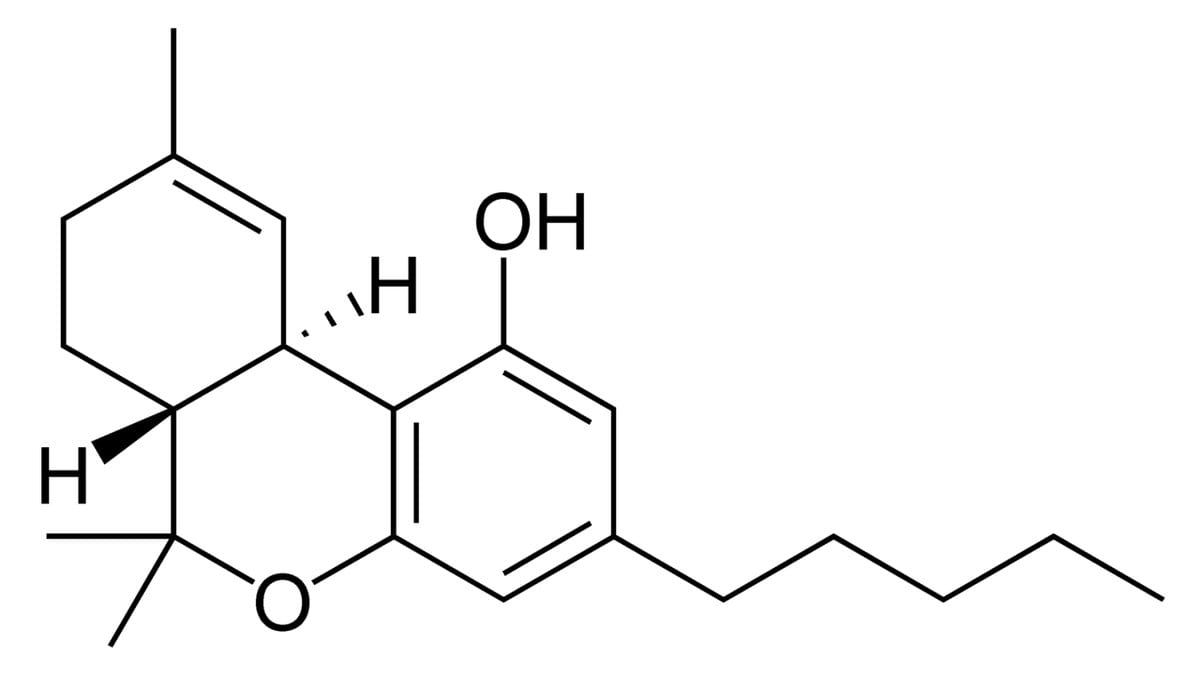
That is the gap a team led by Stefan Röpke of Charité in Berlin set out to probe. Their results appear in Nature Medicine, published Aug. 5. About 170 patients with PTSD and frequent, intense nightmares were randomised one-to-one to receive either dronabinol, a prescription preparation of tetrahydrocannabinol, or an identical-looking placebo, taken as drops once each evening before bed for ten weeks. The trial ran at four sites, two in Berlin and one each in Hamburg and Mannheim, from October 2020 to January 2025, and was registered before it began.
One note about the numbers below, because it affects how much weight to put on them. The published paper sits behind a barrier that would not open, so the effect sizes here come from Charité's own account of its own trial, cross-checked against the study protocol the team published in 2023 and against the entry in the public trials registry. The trial's existence, authorship, dates, sites, endpoints and funding are all confirmed in the public record. The specific figures are the sponsoring institution's.
The measurement is worth understanding, because it is where the result lives. The trial's primary endpoint is the B2 item of the Clinician-Administered PTSD Scale, which asks two things about the past week: how often the nightmares came, scored 0 to 4, and how bad they were, scored 0 to 4. Add them and the worst possible week scores 8. A clinician does the scoring in an interview, not the patient on a form.
Over the ten weeks, the dronabinol group's score fell by an average of 3.7 points. The placebo group's fell by 2.2. The difference between the arms, which is the actual effect of the drug, is about 1.5 points on that eight-point scale.
Charité also reports that more than a third of patients taking dronabinol had no nightmares at all by the end, and that a further 21 percent had at least halved theirs. Those are the figures most likely to be repeated, and they need a companion. No equivalent rate is given for the placebo group. Since the placebo arm improved by 2.2 points of a possible 8, a fair number of those patients were probably nightmare-free as well, and quoting the drug's absolute rate on its own makes the medicine look better than the comparison supports. The honest number is the gap between the arms.
What dronabinol did not do is treat PTSD. Overall trauma severity showed no clear change, and neither did accompanying depression. That sounds like a failure until you look at what the trial said it was doing. The protocol, published openly in BMC Psychiatry in 2023, names reduction of nightmares as the primary objective and other PTSD symptoms as secondary ones. The nightmare endpoint was fixed in advance, in public, years before the data came in. Nothing was swapped after the fact.
That is a bigger deal than it sounds. Outcome switching, where a trial reports the endpoint that worked rather than the one it promised to measure, is one of the more common ways a null result gets rewritten as a positive one. Here the promise is on file with a date on it, and a reader can check it in a few minutes.
On safety, the two sources of record do not say the same thing, and the difference matters. Side effects were common and more common on the drug - dizziness, headache and increased appetite, mostly mild to moderate - while roughly the same small number of patients in each arm stopped early because of them, which counts in dronabinol's favor. Charité's announcement reports no serious side effects. The paper's own tally uses a different category: a serious adverse event is anything that puts a patient in the hospital or worse, whether or not the drug caused it, and the paper counts seven patients on dronabinol who had one, against none on placebo. On a drug that would be taken every night, that asymmetry belongs in the result rather than in a footnote. After the treatment period ended, the team looked for withdrawal symptoms and found none.
The funding needs stating. The trial was supported by an unrestricted grant from Bionorica SE, the pharmaceutical company that also supplied the study medication. Charité was the sponsor and the study was investigator-initiated, registered before enrolment, run at academic sites with a placebo control, and peer-reviewed at a major journal. That combination is about as much insulation as industry-funded research gets, and it is not the same thing as independence. Readers can weigh it; they cannot weigh it if nobody mentions it.
The direction of the result was expected. In 2015 a Canadian team ran a small crossover trial of nabilone, a different synthetic cannabinoid, in service members with treatment-resistant PTSD nightmares, and saw a large reduction. It had nine participants. Effects that big in trials that small almost always shrink when the study gets properly powered, and 1.5 points on an eight-point scale in a group of 170 is roughly the shrinkage anyone would have predicted. That the number came out where theory said it would is a modest point in the trial's favour.
The limits are the obvious ones and none of them is answered here. Ten weeks is ten weeks: there is no information on whether the benefit holds at six months, and none on whether tolerance to THC builds, which it does for many of the drug's effects. The mechanism Röpke's team proposes, that THC dampens dream activity during REM sleep, is a hypothesis about why it might work rather than something this trial measured. And a cannabinoid in a psychiatric population is not a neutral intervention, whatever the side-effect table says.
Still, this is a result with its promises on file, its comparison stated and its placebo arm in view, which is more than most nightmare studies offer.
Sources
- Nature MedicinePeer-reviewed
- doi.org
- idw-online.de
Medical Disclaimer: This content is provided for general informational and educational purposes only. It is not medical advice and should not be used as a substitute for professional medical advice, diagnosis, or treatment. Always consult a qualified healthcare professional regarding any medical condition, concern, symptom, or treatment decision.