A Way to See Which Cells CRISPR Cut by Mistake, and What Changed Inside Them
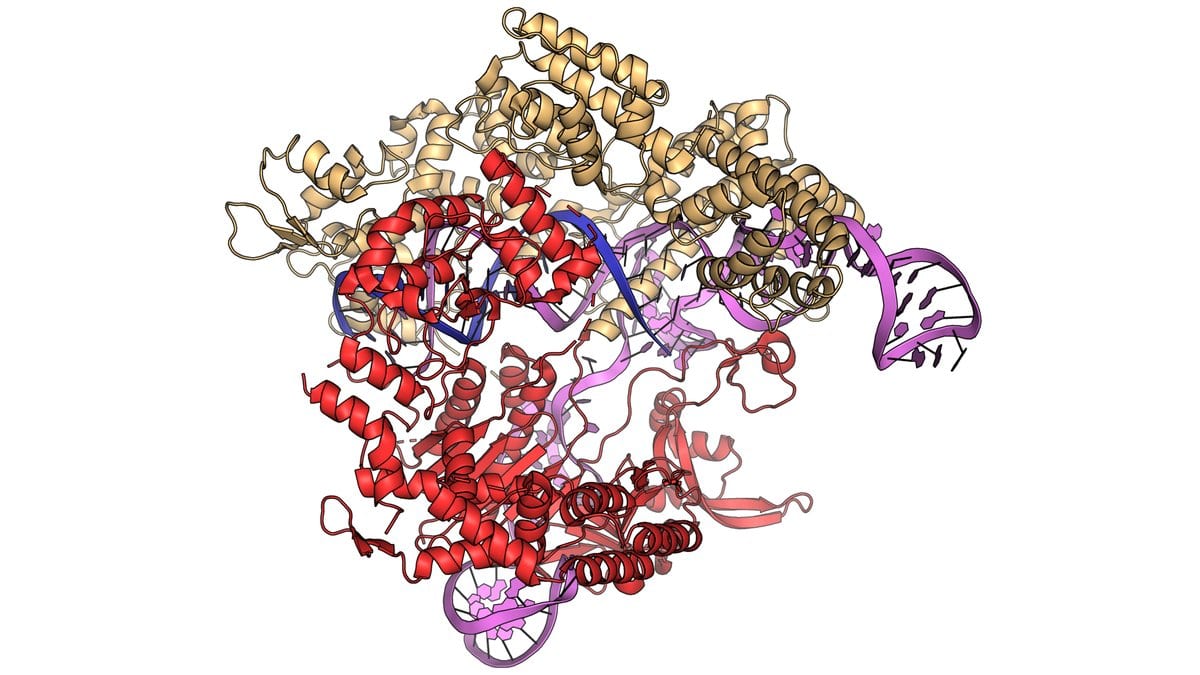
Every CRISPR experiment has ended with two questions and the means to answer only one of them. Where did the molecular scissors cut, including the places nobody aimed at? Bulk sequencing assays answer that, by grinding up a population of cells and reading the damage. And did any of those stray cuts actually do something to the cell that carried one? That question has been answered, when at all, in a different pool of cells from the one the cuts were counted in.
A method published Nov. 16, 2026, in Nature Methods answers both in the same cell. Michael H. Lorenzini, Brad Balderson and Graham McVicker, along with their colleagues, conducted the work at the Salk Institute for Biological Studies in La Jolla, California. They call it Superb-seq, and what is new about it is not the cutting but the bookkeeping.
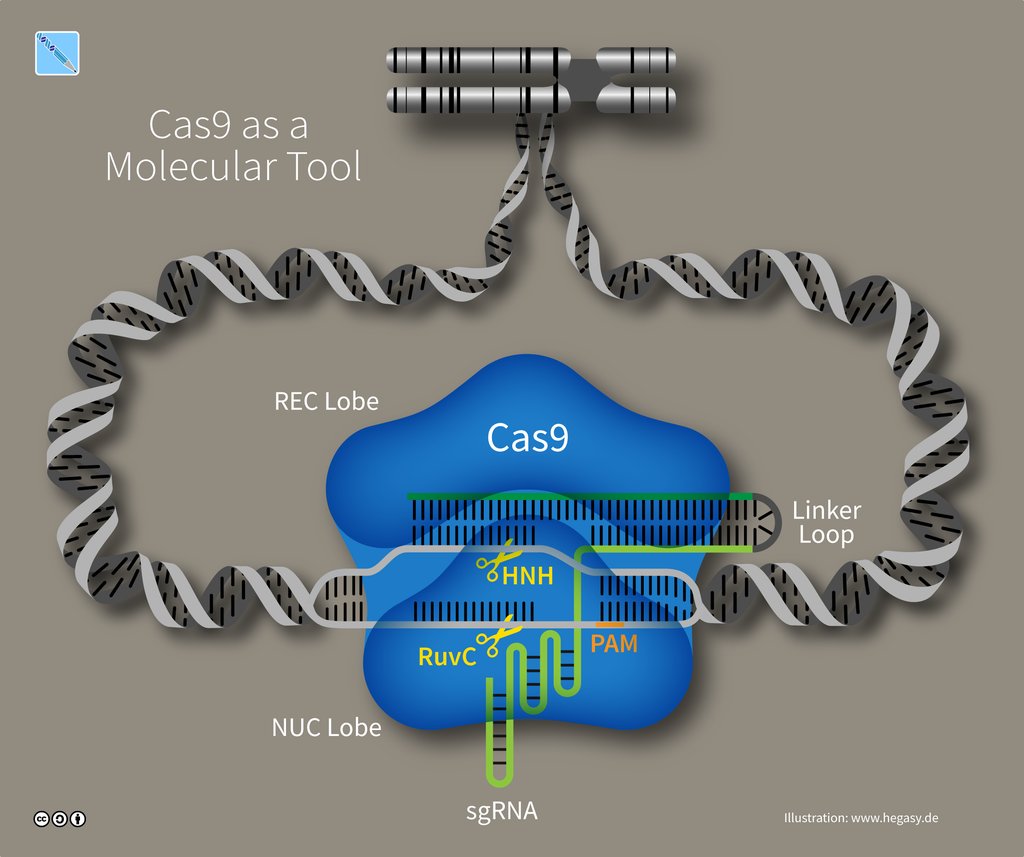
Cas9 arrives in the cell as a protein-RNA complex, together with a short piece of double-stranded DNA carrying a T7 promoter, a sequence that a phage enzyme reads as a starting line. Wherever Cas9 breaks the genome, the cell's own repair machinery can paste that tag into the break. The cells are then fixed and the phage enzyme is turned loose inside them, so every tag churns out RNA that names its own location. Those transcripts are sequenced alongside the cell's ordinary messenger RNA, one cell at a time, so a single run yields both an inventory of that cell's edits and a readout of what its genes were doing.
In the main experiment the team cut 10,000 K562 cells with seven guide RNAs aimed at genes that help repackage DNA. K562 is a human line established from a patient with chronic myeloid leukemia, according to the ATCC record for the line. Superb-seq found 5,761 edited cells, every one of the sites the guides were aimed at, and 36 sites nobody had aimed at. All seven guides had passed the specificity screening labs use to pick guides in the first place. Those 36 are what this method saw in these cells with these guides rather than the full set that exists: the authors report that bulk methods detected many off-target events Superb-seq missed, and the reverse.
A stray cut landed on a switch
Most sat inside introns, the stretches of a gene that get spliced out before a protein is made. One did not look like background. It fell in the first intron of USP9X, on top of a stretch that behaves like a regulatory switch in these cells. Cells carrying that edit made less USP9X, and a long list of other genes shifted along with it. One was MYC, a gene that drives cancer when it is overactive. The off-target cut usually turned up in cells that had also been cut on target, so the team could not tell which was responsible and ran a second experiment with guides aimed at USP9X itself. Those guides reproduced the drop and moved many of the same downstream genes, MYC included. McVicker and colleagues propose that the stray cut knocks out a landing site for SP1, a protein that switches genes on.
No two methods return the same count
Putting one guide through different assays does not produce the same answer. In a further experiment spanning three human cell lines, the team ran well-studied benchmark guides and set its counts against published results from established bulk assays. On the guide known as HEK site 4, Superb-seq counted 27 edit sites, whereas Tracking-seq had counted 88 and GUIDE-seq 134. On VEGFA site 2 it detected more sites than any of the bulk methods, and on EMX1 fewer than GUIDE-seq. Where methods overlapped, the share of cells Superb-seq found edited at a site tracked the bulk assays' own measures of how often that site was cut, which is the paper's argument that the counts are measuring the same thing even when they disagree about how many.
That experiment is also where the method does what a bulk assay cannot. Among the edits frequent enough to test, the team reports 19 that were associated with a change in the nearest gene's activity, nine of them specific to one cell type. The association comes from a model fitted across edited cells rather than from an experiment that switched a single edit off, so these edits travel with a change in gene activity and the paper does not claim they caused it. One went with higher expression of a nearby gene in one cell line and lower expression in another.
Prediction software is no substitute for the measurement. Asked to search until they turned up all of the off-target sites, Cas-OFFinder recovered every one, but only inside a list of 457,413 candidate sites. Two other predictors recovered 14% and 58% of them. The paper's own laboratory cross-check reads short stretches of DNA around each site, and it found insertions and deletions where Superb-seq said they would be, at frequencies that closely tracked how many cells Superb-seq had called edited there.
That cross-check is worth reading next to the paper's competing-interests statement, which discloses that six of the nine authors hold a commercial interest in the work. Lorenzini, Balderson and McVicker are inventors on a patent application covering the technology and founders of Cascadal Inc., which is developing commercial applications of Superb-seq. Three co-authors are employees of Integrated DNA Technologies, whose rhAmpSeq assay supplied that validation, and one of them holds equity in Danaher, IDT's parent company. By the paper's own author contributions, an IDT scientist designed the panel's primers and the assay's data were analyzed under an IDT scientist's direction. The independence question therefore reaches the check as well as the reagents.
The protocol has not met a primary cell yet
The paper is clear about where it stops. Every experiment in it was run in cell lines, and the full protocol is not yet validated in primary cells, including the blood and liver cell types CRISPR therapies are aimed at; the authors reason it should work there, because each separate step has been done in those cells before. Finding an unexpected cut does not prove that all possible cuts have been detected. That is why the authors describe the potential of their protocol and software to make genome-edited therapies safer as a goal for the future, not an achievement of the current study.
What the work hands a laboratory today is a question it could not ask before, not only where a guide RNA cut but whether the cells that took the wrong cut behaved differently afterward. A step-by-step protocol is posted publicly and the companion analysis software, Sheriff, is released openly, so another group can put the question to its own guides. The study first circulated as a preprint, and some figures changed in peer review; the numbers above are the published ones.