Genetic Study of 1.2 Million People Widens the Map of Chronic Pain
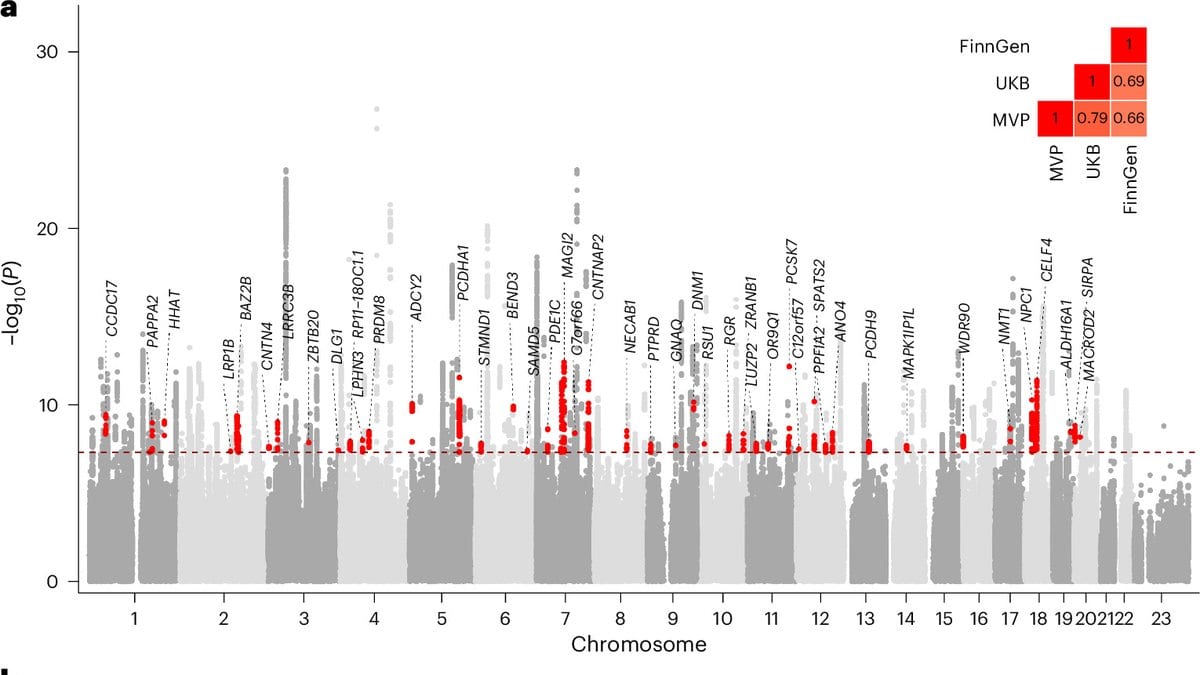
Researchers pooled genetic data from 1,235,695 people held in three biobanks of donated DNA and health records, and found 343 separate places in the genome linked to chronic pain. Ninety-two of those sites had not been tied to pain before; earlier pain studies had reported more than 170 in all.
The work was published Nov. 12, 2026, in Nature Neuroscience. The authors write that chronic pain has no useful objective indicator to guide prevention or treatment, and they offer the result as groundwork for biomarkers and risk prediction rather than as a treatment.
The three biobanks measure pain in different ways: self-reported intensity over several years in the Million Veteran Program, the number of painful body sites in UK Biobank, and diagnosis codes in FinnGen. Sylvanus Toikumo, Henry R. Kranzler and colleagues at the Crescenz VA Medical Center and the University of Pennsylvania combined the three into one measure they call multidimensional pain, then drew on measurements of gene regulation in brain and blood tissue to prioritize 490 genes with statistical evidence of a link. All the participants were of European ancestry, which the team says limits how far the findings carry to other populations.
Analyses run separately by sex returned 115 sites in men and 12 in women. The male sample was more than twice the size of the female one, and the paper attributes most of that gap to the makeup of the contributing biobanks rather than to biology, calling for larger and sex-balanced datasets.
The analysis also found pain-linked variants overlapping heavily with those for insomnia, depression, post-traumatic stress disorder and substance use disorders. Using a method that tests cause and effect with inherited variants, the authors report evidence that pain contributes to substance use disorders and to higher levels of C-reactive protein, a marker of inflammation. The full meta-analysis results have been posted on Zenodo, where other groups can download them.
Sources
- Nature NeurosciencePeer-reviewed

Medical Disclaimer: This content is provided for general informational and educational purposes only. It is not medical advice and should not be used as a substitute for professional medical advice, diagnosis, or treatment. Always consult a qualified healthcare professional regarding any medical condition, concern, symptom, or treatment decision.