The Friend You Both Know Is Usually One of the Best-Connected People Around

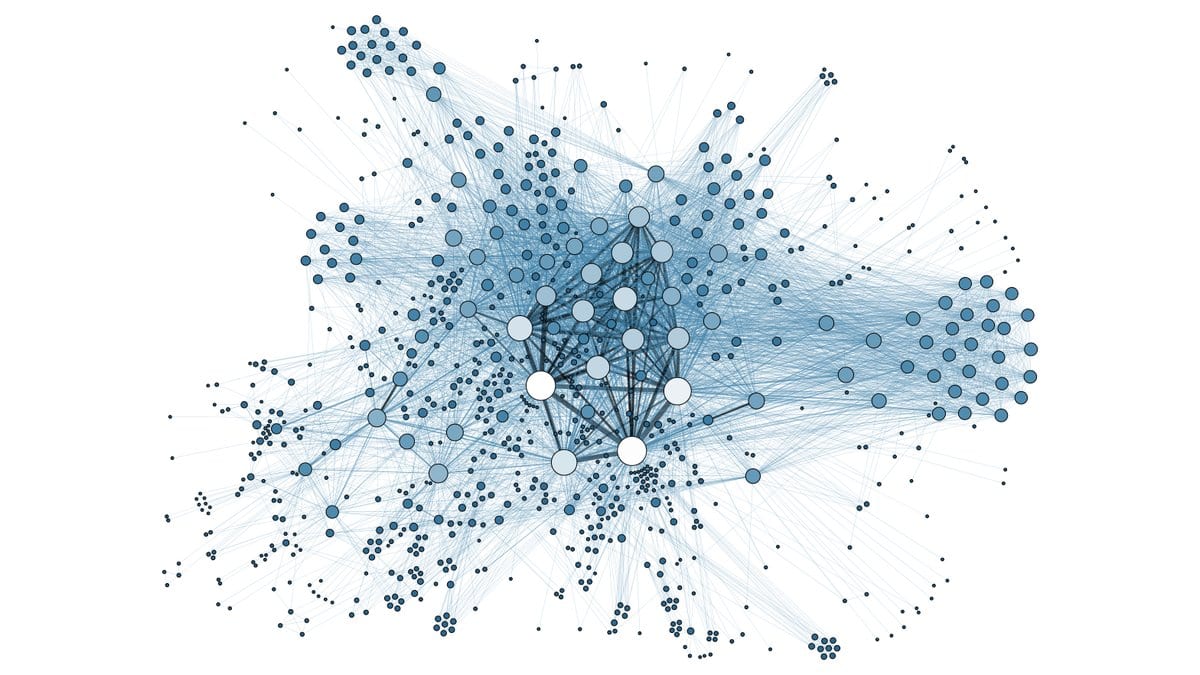
You get talking to two people you have never met before, and within a few minutes the three of you discover you all know the same person. The ordinary reaction is that the world is small. A paper published this week says something more specific and more useful: that person is very likely one of the best-connected people any of you knows.
The paper is by Alec McGail, an independent researcher in Chicago, and Scott Feld, a sociologist at Purdue University. It went online on August 26 in the Proceedings of the National Academy of Sciences. Feld's name on it is part of the story, because he is the man who described the effect this paper extends.
In 1991, Feld published a paper in the American Journal of Sociology with a title that gave away the conclusion: "Why Your Friends Have More Friends Than You Do." The claim sounds like an insult and is really a piece of arithmetic. Popular people appear on many friend lists and unpopular people appear on few. Sample the population by looking at somebody's friends rather than at the population itself, and you have already tilted the sample toward the well-connected. On average, your friends really do have more friends than you.
McGail and Feld extend that to friends held in common, meaning the people who turn up on more than one person's list. The more people who share a common friend, they report, the more connected that person tends to be, and they derive an expression for how quickly the effect climbs.
Two examples in the paper carry the point. In a regional Facebook network, a common friend of three randomly sampled individuals has on average more friends than 99.9 percent of the network. In a citation network, a source cited by any two of a random sample of papers has on average more citations than 99.99 percent of cited works.
Both numbers are averages, and the distinction matters. Neither figure is the probability that any given shared friend is unusually well connected. Each figure is where a mean lands. Collect everyone who shows up as a common friend of three randomly chosen people in that network, count the friends each of them has, and the average of those counts sits above 99.9 percent of the rest of the network. Plenty of individual shared friends fall well below that line.
Appearing on one randomly chosen friend list already favors people with many ties. Requiring someone to appear on two lists favors them again, and on three, again. Where a small minority holds a large share of the connections, three rounds of that tilt are enough to land near the very top.
That is also where the effect is sharpest, the authors write: in networks where a few nodes hold disproportionate shares of the ties. Their examples are superspreaders of disease, mega-influencers online, and unusually well-connected neurons.
From there the authors raise, without testing, a set of possible uses. Their closing line says they discuss implications for network sampling, targeted interventions, social perception and network dynamics. The suggestion a reader will reach for first is that finding a network's most connected members might not require mapping the network at all. Ask a handful of people who they know in common, and follow the names that repeat. For anyone tracing an outbreak, that would be a very cheap instrument.
Social perception is the item on that list that touches everyone. If the people who keep coming up in conversation are systematically the best-connected people around, then the slice of the social world any of us sees is tilted toward its stars. Feld made that argument about friends in 1991. The new paper says it holds harder for the friends we have in common.