A New Way Brain Cells Die, and Why It Might Be Worth Targeting

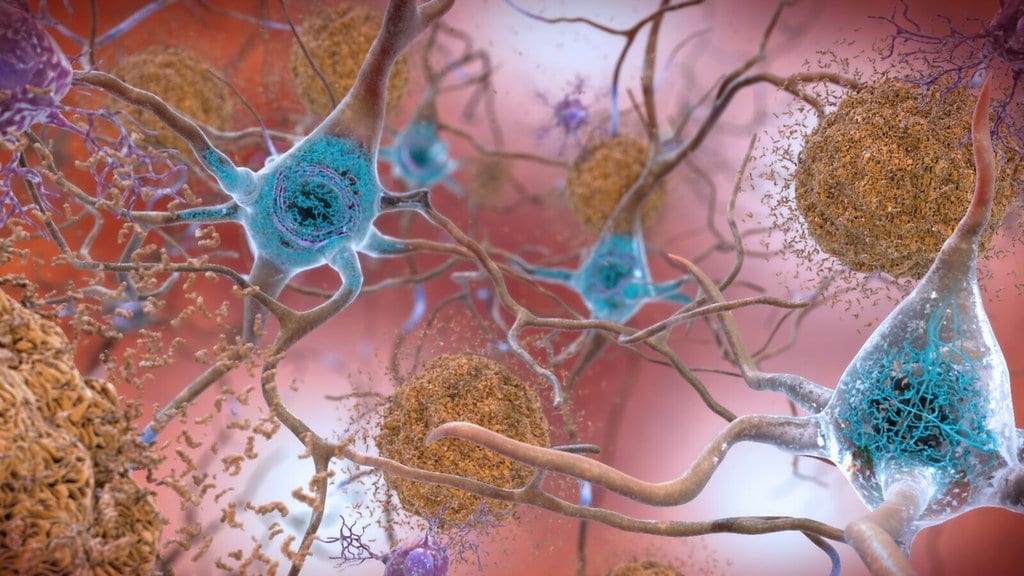
For decades, the story of Alzheimer's has been told from the outside in: sticky plaques between neurons, tangled fibers within them, a slow siege on the brain's wiring. But the plaques and tangles have never fully explained the part that matters most to patients: why, exactly, the neurons die. Something kills them, cell by cell, and much of that dying has stubbornly refused to match the tidy categories biologists already had names for.
A team at King's College London says it has found one of the missing routes, and it starts not at the cell's edge but at its core. Writing in Nature Communications, the researchers describe a distinct form of cell death they call karyoptosis, from karyon, the Greek for nucleus, the compartment that houses a cell's DNA. In karyoptosis, that command center is where the failure begins: under a build-up of toxic protein, the nucleus destabilizes, shrivels, and finally ruptures, spilling its contents into the cell.
A nucleus under siege
The trigger the team points to is proteotoxic stress, the strain a cell suffers when misfolded or clumping proteins pile up faster than it can clear them. Damaged neurons in dementia are known to accumulate such aggregates, including a protein called p62 that gathers when the cell's disposal systems fall behind. As that pressure mounts, the researchers found, it bears down on the nuclear envelope, the double membrane that keeps the genome sealed off from the rest of the cell.
Holding that envelope in shape is a mesh of structural proteins called the nuclear lamina, and one of its key girders is LaminB1. The study traces karyoptosis to a signaling cascade centered on an enzyme called p38 MAP kinase, which chemically tags LaminB1 by phosphorylation, a modification that appears to undermine the lamina's stability. Weaken the scaffolding and the nucleus can no longer hold its form: it shrinks, then breaks, and the cell expels its nuclear material. It is a death that works from the inside out.
What the human brains showed
To see whether any of this was actually happening in people, the team turned to postmortem tissue. Using computational tools to sort through roughly 3,000 individual cells from the brains of 28 patients (some with frontotemporal dementia, some with terminal-stage Alzheimer's), they looked for the molecular fingerprints of karyoptosis in the frontal cortex, a region hit hard in both diseases.
The signatures were markedly more common in the diseased brains. About 35 percent of the cortical cells from Alzheimer's patients bore signs of karyoptosis, compared with roughly 15 percent in the brains of healthy older people. That gap is the study's central human finding, and it deserves to be read for exactly what it is: a snapshot. Postmortem tissue captures a single frozen moment at the end of a long illness. It can show that a process is present and elevated; it cannot, on its own, prove that the process drove the disease, or say when in the decades-long course of dementia it took hold. This is a correlation in dead tissue, not a stopwatch on a living brain.
The part that hints at a treatment
The more provocative result came from trying to stop it. If p38 MAP kinase is the enzyme that destabilizes the nuclear lamina, then blocking p38 ought to protect the nucleus. In neurons grown from rats and pushed into proteotoxic stress in the lab, that is roughly what the team saw: interfering with the p38-LaminB1 interaction reduced the markers of karyoptosis and limited the damage. That points to a possible drug target: a lever you might pull to keep stressed neurons from tipping into this particular kind of death.
The distance from that result to a medicine is long. The rescue happened in rat neurons in a dish, not in a living animal and certainly not in a person. A cascade you can interrupt in cultured cells often behaves very differently in an intact brain, where the same enzyme may be doing necessary work elsewhere. Nothing here is a therapy; it is a hypothesis about where a therapy might one day aim.
One mechanism, not the mechanism
The most important caveat is also the easiest to lose in a headline. Karyoptosis is described here as a way neurons die, one entry in a growing catalogue that already includes apoptosis, necroptosis and others. The researchers are explicit that the known forms of cell death do not account for all the neuronal loss seen in these diseases, which is what motivated the search for a new one in the first place. Finding an additional route does not crown it the cause of Alzheimer's, a disease that almost certainly involves many overlapping failures. It widens the map; it does not redraw it around a single point.
Still, a new and well-characterized way for brain cells to die is a genuinely useful thing to have. It gives researchers fresh molecular markers to look for, a specific cascade to test and, if the p38 lead holds up beyond the dish, a candidate target that sits upstream of the neuron's death rather than downstream of its symptoms. Whether that lead survives the move from rat neurons to human brains is the question the next round of work will have to answer. For now, the nucleus, long treated as the cell's inviolable vault, turns out to be one of the places where dementia does its damage.
Sources
- Nature CommunicationsPeer-reviewed
Medical Disclaimer: This content is provided for general informational and educational purposes only. It is not medical advice and should not be used as a substitute for professional medical advice, diagnosis, or treatment. Always consult a qualified healthcare professional regarding any medical condition, concern, symptom, or treatment decision.