A Possible Source of Water on the Growing Earth: Silicate Particles Reacting With Atmospheric Hydrogen

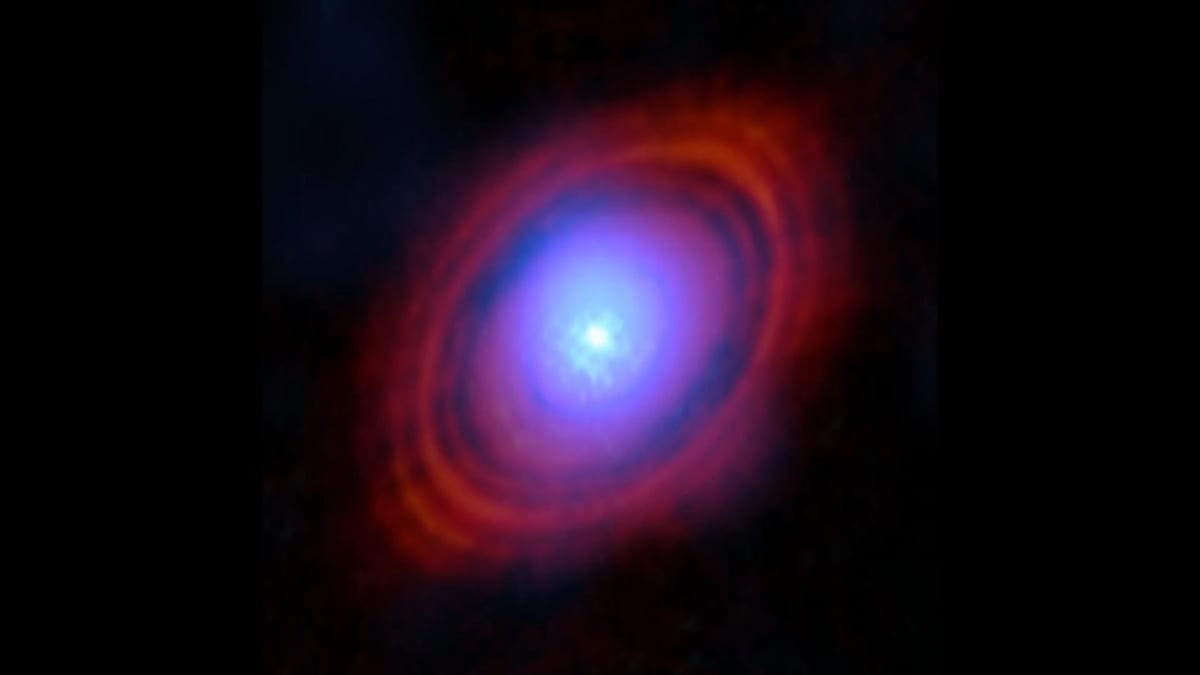
What is the origin of the water on Earth that later formed its oceans? There are two main proposed sources: external delivery by asteroids and other small bodies, and the material of the protoplanetary disk from which Earth formed. Yet a third hypothesis suggests that water formed during the accretion of the planet. As silicate particles settled through the hot hydrogen atmosphere of the proto-Earth, they heated up and began to react with the gas. Hydrogen then reacted with oxygen bound to iron in the silicates, producing water vapor and metallic iron.
A study by Susmita Garai, Zachary Sharp, Peter Olson and Anthony Gargano, published on Sept. 24, 2026, in Nature Geoscience, put this hypothesis to an experimental test. The authors conducted their experiments by heating iron-bearing silicate rock in a stream of hydrogen, then assessing the extent of iron reduction and whether water had formed. Using these experiments, the study confirmed the model’s predictions and detected water formation and the separation of metallic iron, with some phosphorus partitioned from the silicate phase into the metal.
The authors are now investigating a central question: how much water could this reaction have supplied to the growing Earth? They are comparing their experimental results with models of Earth’s growth to assess whether hydrogen reduction of silicates could have been a significant source of Earth’s hydrosphere rather than an exotic side reaction.
Three proposed sources of water on Earth
About 4.5 billion years ago, the growing Earth was forming within a protoplanetary disk, a cloud of gas and solid particles orbiting the young Sun. The inner disk, where the rocky planets formed, was too warm to retain water ice as readily as regions farther from the star. One leading hypothesis claims that water was delivered to Earth by bodies that formed in colder regions of the Solar System.

By studying the different ratios of deuterium to ordinary hydrogen in modern ocean water and in hydrogen-bearing meteoritic material, the likely sources of Earth’s water supply can be researched. Models of early Solar System dynamics have shown how water-rich bodies could have been delivered to the inner Solar System. A study by Sean Raymond and André Izidoro, published in Icarus, investigated the delivery of water-bearing planetesimals during the growth of Jupiter and Saturn. As solid particles became concentrated, they formed relatively large bodies called planetesimals, which helped build the planets.
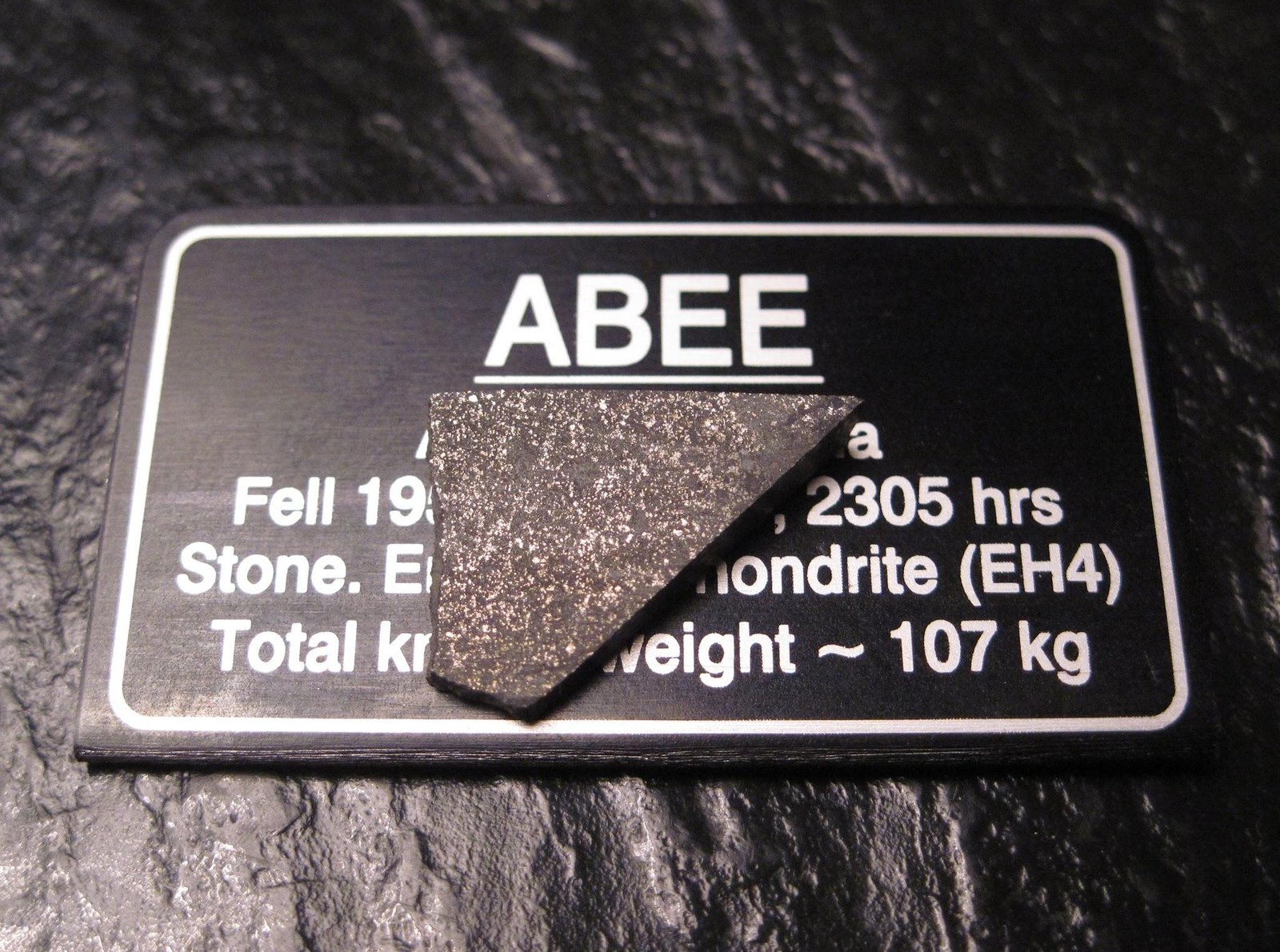
Another hypothesis suggests that Earth may have inherited hydrogen from the material it accreted early on. In 2020, Laurette Piani and colleagues reported in Science that enstatite chondrites, meteorites with certain isotopic signatures similar to Earth’s material, contain sufficient hydrogen, under certain assumptions, to supply at least three times the mass of water in today’s oceans. Unlike familiar molecular water, hydrogen in such material can exist in other chemical forms. Yet a further possibility suggests that water formed from nearly dry rocky particles through reaction with the gas surrounding the growing Earth.
Before Garai’s work, researchers had already studied interactions between hydrogen and intensely heated silicate material through experiments and calculations. In 2023, Edward Young, Anat Shahar and Hilke Schlichting used a thermodynamic model to calculate how a primordial hydrogen atmosphere above a magma ocean could have produced water from initially dry material resembling enstatite chondrites. Francesca Miozzi and colleagues produced water in their experiments in 2025 by reducing iron oxide with hydrogen at pressures of 16 to 60 gigapascals and temperatures above 4000 K. Garai’s experiments examined a different stage of planetary formation under different conditions: flowing hydrogen reacted with heated silicate rocks, as envisioned in a model of particles settling through an atmosphere. Changes in iron and phosphorus content were tracked in these experiments.
Accretion of rocky particles through a hot atmosphere
One proposed method by which planets grow is pebble accretion. Solid particles ranging in size from roughly millimeters to centimeters are called pebbles in a gaseous protoplanetary disk. Collisions and gas drag affect the pebbles as they pass through the disk, allowing some to be captured by the gravity of a protoplanet. A protoplanet is a planetary body still taking shape. A 2021 model by Anders Johansen and colleagues showed that terrestrial planets could have formed through pebble accretion.
A young rocky planet could grow massive enough to capture and retain an envelope of gas. In the model investigated by Garai and colleagues, this envelope was rich in hydrogen captured from the young protoplanetary disk. Temperatures deep in the atmosphere could become high enough for settling silicate particles to begin melting. At high temperatures, hydrogen reacts with iron-bearing material. In this scenario, the reaction can occur if the planet retains a hydrogen atmosphere, the particles have time to heat up and at least partially melt, and they remain in contact with the hot gas long enough. Some of the oxygen in the particles must exist in chemical forms bound to iron. The conditions depend on planetary growth and are taken into account when computing the evolution of the early atmosphere.
Transfer of oxygen from silicates to hydrogen
Even nearly dry rock contains oxygen bonded to other elements in its minerals. Some iron in silicate material is described by geochemists as the FeO component. Hydrogen can be used as a reducing agent for the conversion of this component to metallic iron and water at high temperature. The reduction of iron oxide by hydrogen at high temperature can be schematically represented by the following reaction:
FeO + H₂ → Fe + H₂O
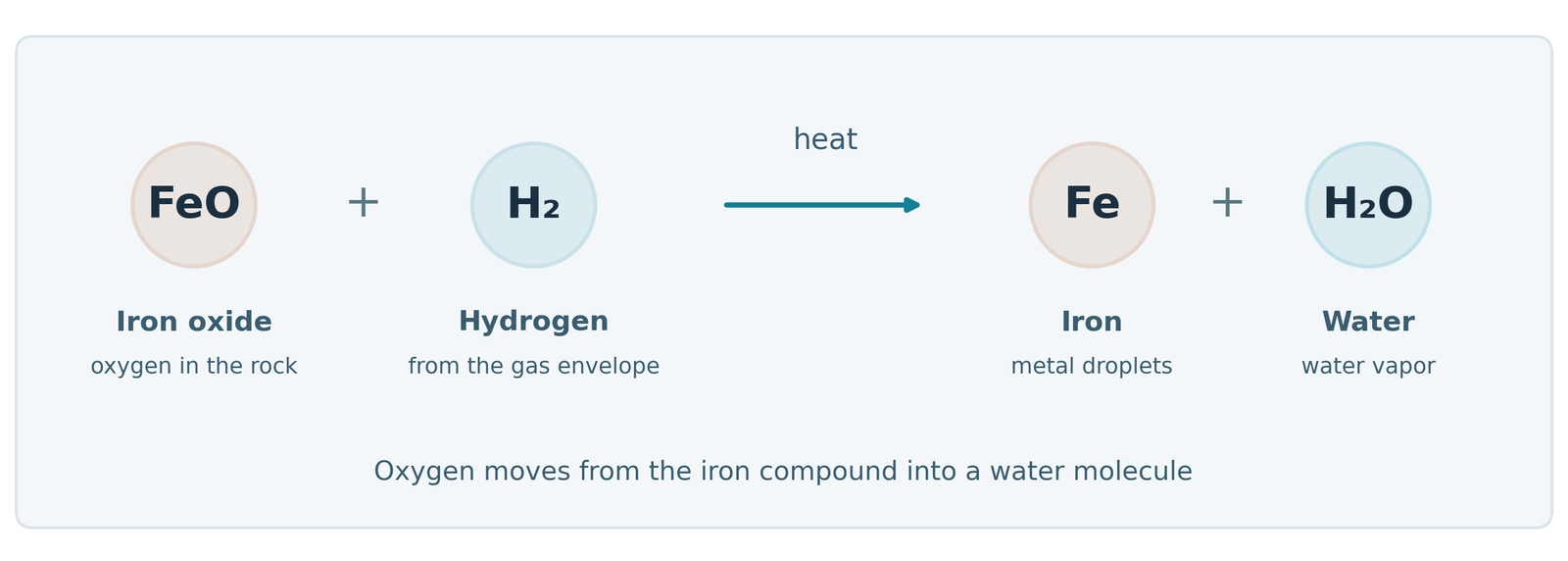
Some of the iron in the silicate material enters the metallic phase. This process is known as iron reduction. The silicate material is then changed in composition as water vapor forms and metallic iron separates. Water formed by this reaction would initially have remained as hot vapor in the young Earth’s atmosphere. Before liquid oceans could form, cooling, possible dissolution in a magma ocean, interior–atmosphere exchange and loss of material to space would also have come into play.
Laboratory experiments on water formation
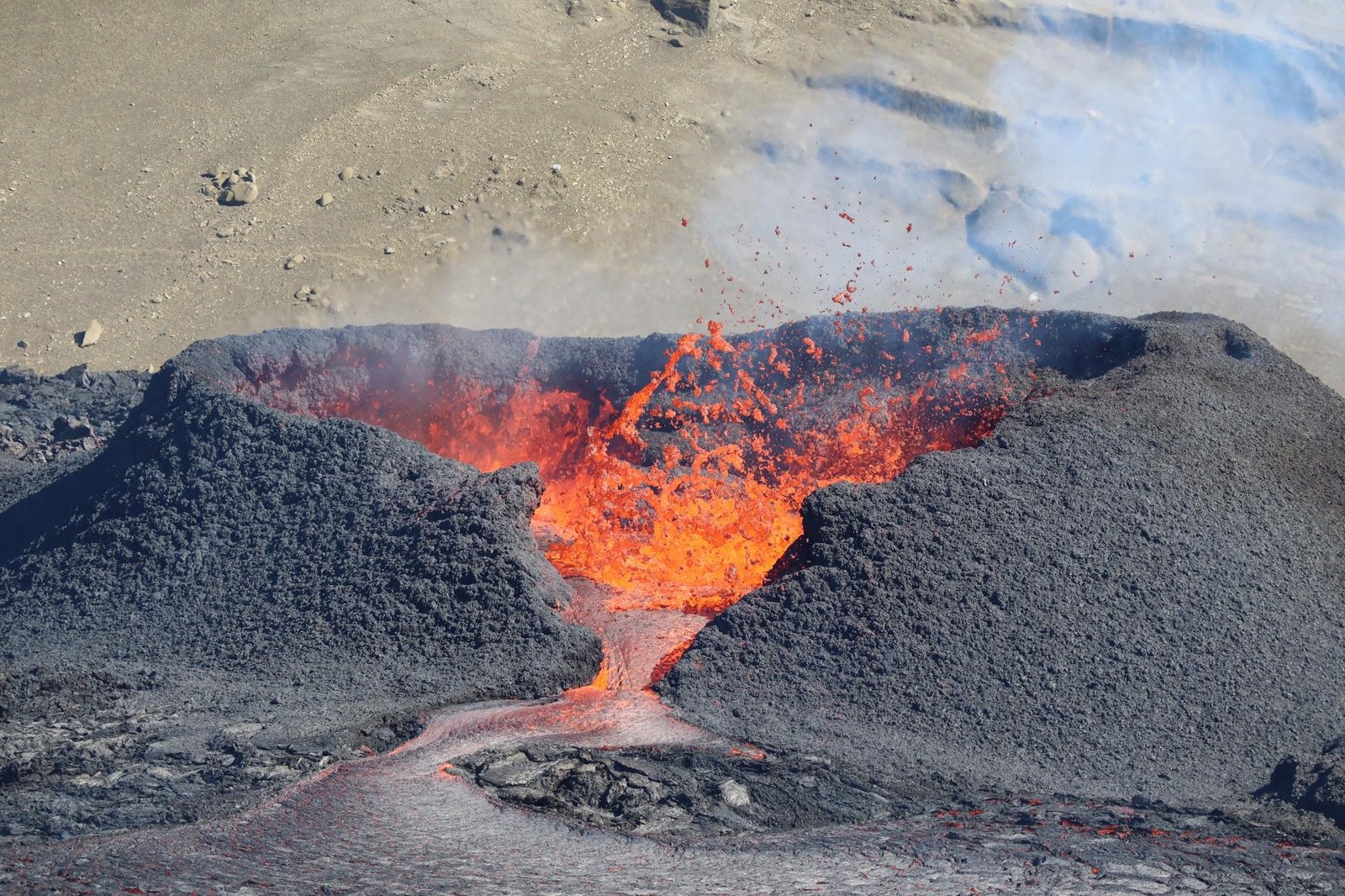
Garai’s team used both natural terrestrial rocks and synthetic analogs in its experiments. Mid-ocean ridge basalt (MORB) from the East Pacific Rise was the principal rock used in the experiments. The comparison materials were a synthetic basalt containing neither phosphorus nor sulfur and picrobasalt prepared from equal parts natural basalt and olivine, a magnesium-rich mineral. Varying the starting composition was particularly useful for assessing the behavior of iron and phosphorus.
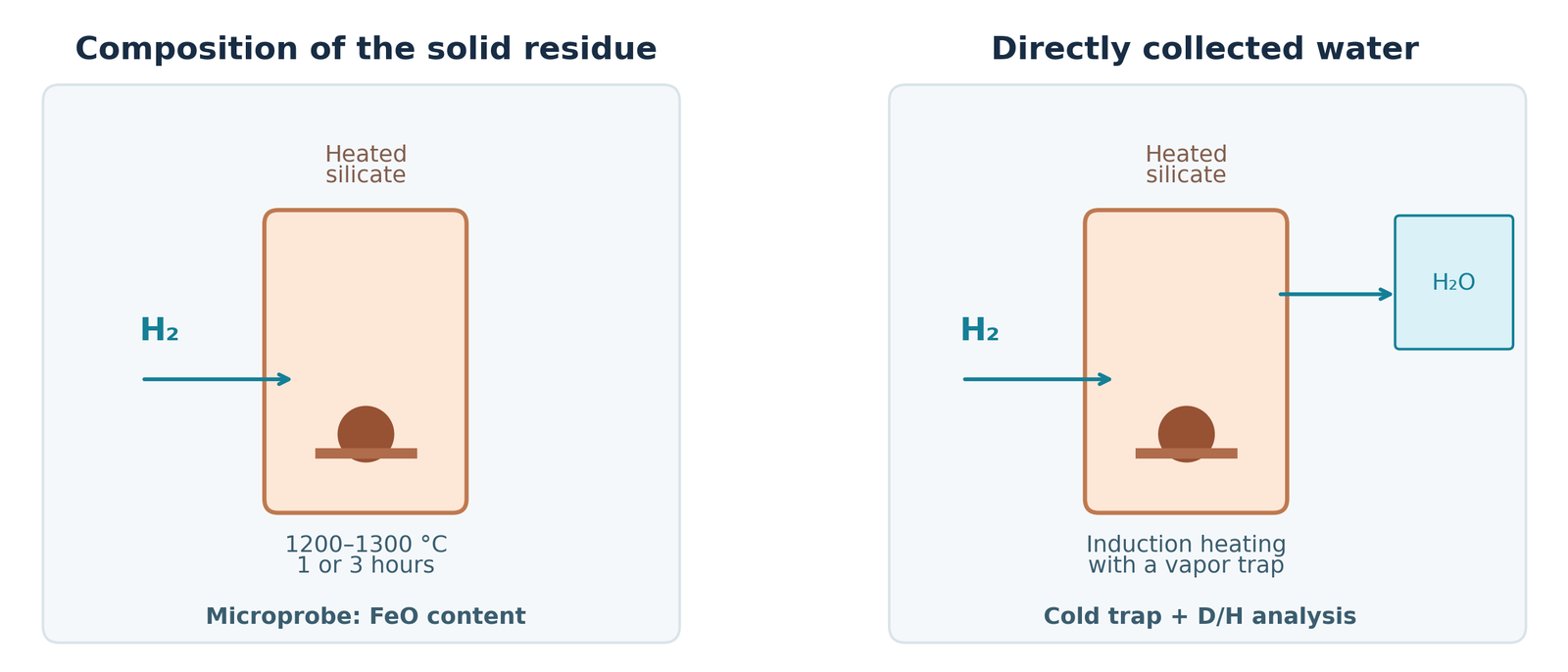
The team produced homogeneous glasses for the hydrogen experiments by melting the samples in a stream of helium. This removed the water initially present in the natural basalt, about 0.8% of its mass. In the main vertical tube furnace experiments, about 100 milligrams of material was placed in tungsten holders. After preparation, the samples were held at 1200 or 1300 °C in a stream of hydrogen for either one or three hours.
The chemical composition of the heated samples was analyzed using an electron microprobe. An electron beam bombards the sample, causing it to emit characteristic X-rays that are used to determine the composition of microscopic regions. Changes in composition were determined by comparing concentrations of iron and other elements in the starting silicates with those in the material remaining after the reaction. These samples also contained metallic inclusions not present in that form before exposure to hydrogen.
The electron microprobe was used to determine the chemical composition of the silicate residue in the tube furnace experiments. The researchers calculated, from the stoichiometry of the reaction, how much water had formed: each oxygen atom released from iron oxide during reduction could become part of an O molecule. Uncertainty in the measurements of sample composition also affected the precision of the calculated water yield.
An induction furnace suited to higher temperatures was used for a separate set of experiments, including those with picrobasalt. Sample masses ranged from roughly half a gram to one gram, and individual runs lasted about 15 minutes. The water vapor was then carried by the gas stream into a trap cooled with liquid nitrogen. Water collected in a single short run could range from a few to about twenty milligrams (Table S1 in the electronic supplement to the paper by Garai and colleagues). The isotopic composition of this water is given in Table S3 of the same supplement. Direct collection of the water complemented the estimates based on analysis of the silicate residue. The two experimental setups are described in a diagram in the paper’s supplementary information.
Reduction of iron and transfer of phosphorus
The fraction of FeO reduced in the basalt experiments depended primarily on temperature. At 1200 °C, the natural MORB sample was not yet completely molten. According to Figure 4 in the paper by Garai and colleagues, the fraction of FeO reduced was about 20–30% at 1200 °C, and about 70% at 1300 °C, when the basalt was fully molten. Increasing the heating time from one to three hours changed the extent of reduction less than did increasing the temperature from 1200 to 1300 °C.
Using analysis of the cooled samples, the researchers found metallic inclusions containing phosphorus transferred from the silicate melt, leaving the remaining silicate material depleted in phosphorus. The authors considered, in detail, the implications of this separation for the growing Earth. In this scenario, metal moving down toward the future core carried iron and the phosphorus it had taken up. This loss of iron and phosphorus is one possible explanation for the low iron-to-magnesium ratio of Earth’s primitive mantle and the lower phosphorus concentration in Earth’s mantle than in the mantle of Mars.
Water formation on a planetary scale
The volume of Earth’s present-day oceans is estimated by the U.S. Geological Survey (USGS) to be about 1.338 billion cubic kilometers. On a planetary scale, far more silicate material could have reacted than was studied in the laboratory.
Understanding how the experimental result can be applied to an entire planet requires a model of its growth. The number of iron-bearing particles settling through the atmosphere, their temperatures and the time they remained hot enough to react must be taken into account when computing water production. Another factor in estimating the water inventory is how much hydrogen Earth retained and what fraction of the water survived the subsequent dispersal of the atmosphere. Models in the supplementary information to the paper by Garai and colleagues consider different scenarios, which give widely different estimates of the water inventory. The result depends on geochemical constraints, including the range of iron-to-magnesium ratios consistent with the mantle’s composition.
Isotopic ratios can help test these models of Earth’s water. In one scenario considered in the supplementary information, approximately 80–90% of the hydrogen is assumed to have escaped into space. In this scenario, hydrogen loss changes the relative abundances of the light and heavy isotopes and can bring the calculated isotopic composition of the water closer to its present-day value. This result describes the authors’ gas-loss scenario, and the assumed hydrogen loss does not establish how much of that hydrogen Earth actually lost.
The isotopic record of hydrogen
The ratio of deuterium to ordinary hydrogen is particularly useful in the search for the origin of Earth’s water. For ordinary hydrogen, the nucleus contains a single proton. The nucleus of the heavier isotope, deuterium, contains one proton and one neutron. Deuterium can sometimes take the place of ordinary hydrogen in a water molecule. Water from different starting materials can have differing ratios of deuterium to ordinary hydrogen, D/H, due to differences in its subsequent history.
Primordial hydrogen in the Solar System had a low deuterium-to-hydrogen ratio. In the hydrogen-loss calculation in the supplementary information, Garai and colleagues use an initial D/H ratio of about 3.1 . This is about one-fifth of the value for the ocean water standard VSMOW, 1.5576 .
The isotopic composition was measured for both the incoming hydrogen and the water produced in the induction furnace experiments with the cold trap. The D values in Table S3 of the electronic supplement to Garai’s study range from approximately −76 to −50‰ for the water, compared with about −150‰ for the hydrogen from the cylinder. These D values represent how the ratio of deuterium to ordinary hydrogen in the sample differs from the ratio in the ocean water standard. A less negative value therefore indicates a higher relative abundance of deuterium. The collected water was enriched in deuterium relative to the starting gas. The experiment illustrates a fractionation process that changes the isotope ratio as water forms. Combining the isotope ratio in the primordial gas with calculations of isotopic exchange and hydrogen escape to space, one can estimate the isotopic composition of water on the young Earth.
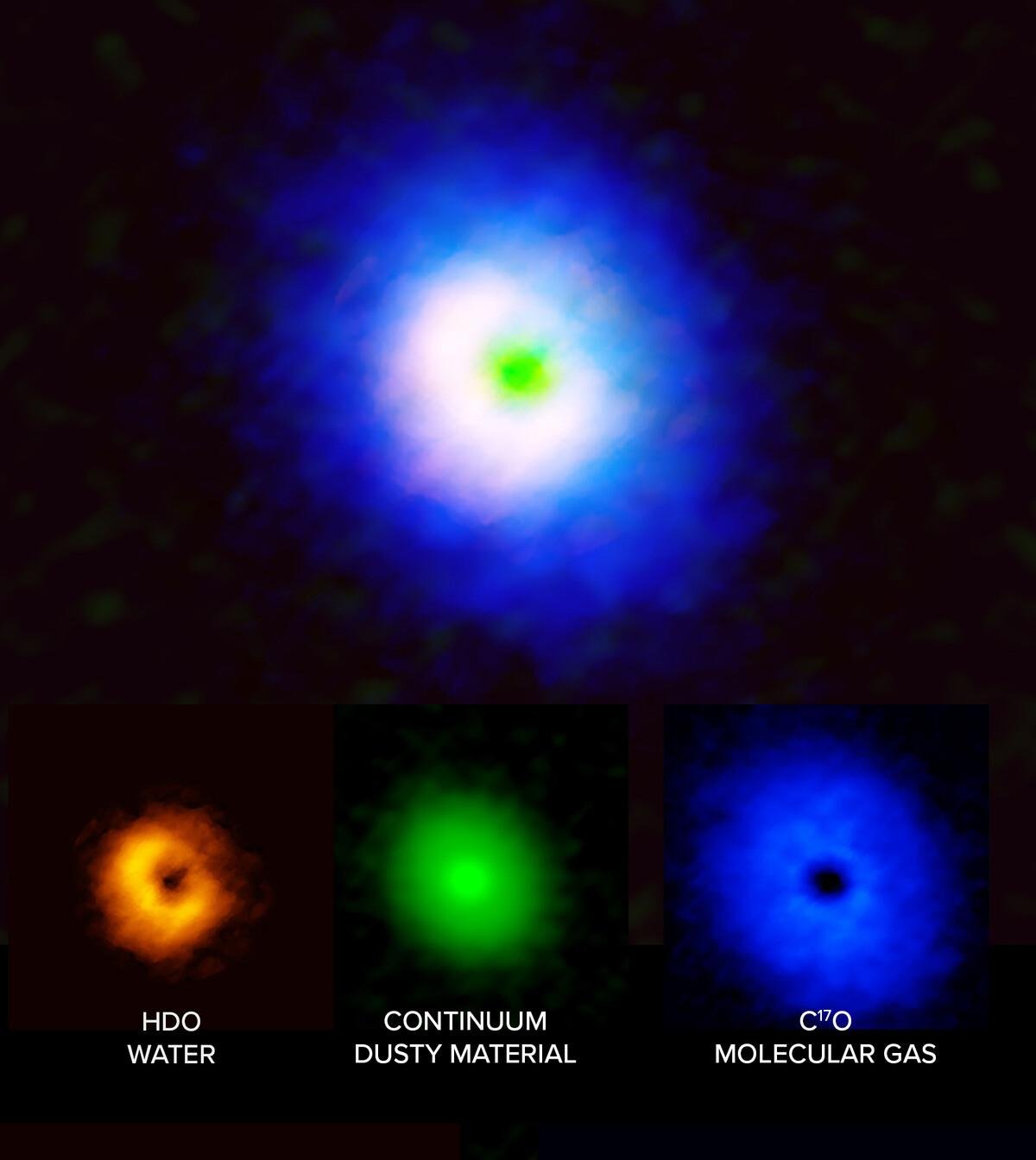
By studying the isotopic ratios of water, Garai and colleagues compare several possible sources of Earth’s water. Water delivered by celestial bodies, hydrogen inherited from Earth’s building material and water formed by reaction with primordial gas may have differing isotope ratios. For each scenario, one can calculate the ratio of deuterium to ordinary hydrogen in the water that survived and compare it with the D/H ratio measured in today’s ocean.
When did the young Earth have liquid water?
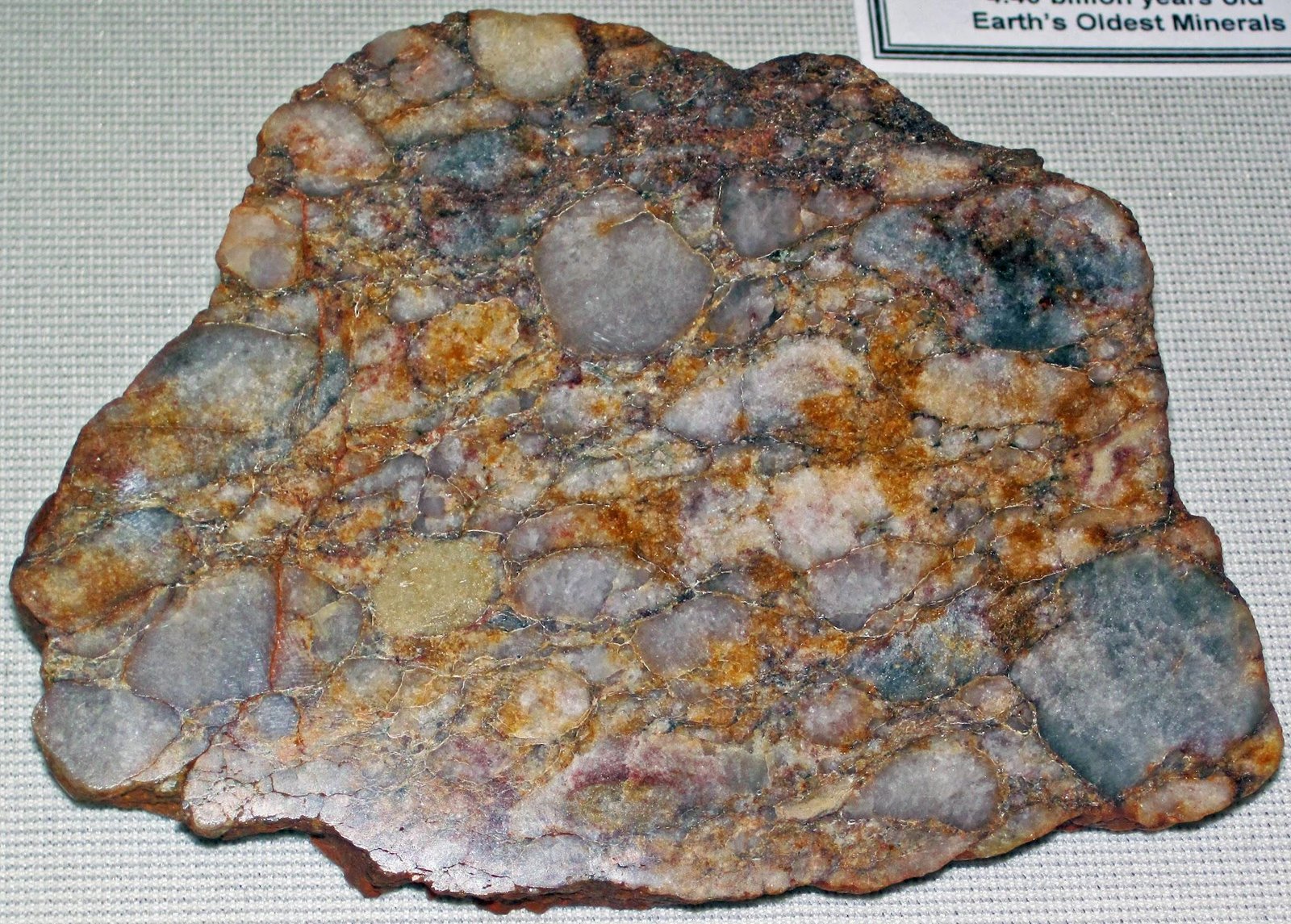
Isotopic abundances provide another important clue to the history of water. Variations in hydrogen isotopes can reveal information about the origins of water, while oxygen isotopes in ancient minerals can reveal when liquid water may have been present. From the oxygen isotope composition of a single zircon crystal about 4.4 billion years old, Wilde and colleagues inferred that liquid water may have existed near Earth’s surface at that time. The evidence from this zircon is indirect, because it depends on the mineral’s chemical history. In a review by Sara Vulpius and colleagues, surviving rocks dated to about 3.7 billion years old provide firmer evidence of aqueous environments. Zircons and ancient rocks help constrain the time frame for the hydrosphere, but cannot identify a particular source of its water.
Liquid oceans could form on Earth only if the planet retained some of its water and cooled enough for vapor to condense. This same requirement also applies to rocky planets where heated silicates come into contact with a hydrogen atmosphere during accretion.
In its experiments, Garai’s group reproduced one reaction in this chain by heating nearly dry rock in flowing hydrogen to produce water and metallic iron. This reaction can now be incorporated into models of the early Earth. By accounting for how much material reacted with the atmosphere and what fraction of the resulting water Earth retained after the atmosphere dispersed, researchers will be able to compare the calculated volume of water with the volume of today’s oceans.
Sources
- Facchini S. et al. (2024). Resolved ALMA observations of water in the inner astronomical units of the HL Tau disk. Nature Astronomy, 8(5), 587–595.
- Garai S., Sharp Z. D., Olson P. L., Gargano A. M. (2026). Experimental simulation of water formation on Earth from dry pebble rain. Nature Geoscience.
- Andrews S. M. et al. (2016). Ringed Substructure and a Gap at 1 au in the Nearest Protoplanetary Disk. The Astrophysical Journal Letters, 820(2), L40.
- Raymond S. N., Izidoro A. (2017). Origin of water in the inner Solar System: Planetesimals scattered inward during Jupiter and Saturn's rapid gas accretion. Icarus 297, 134–148.
- Piani L. et al. (2020). Earth's water may have been inherited from material similar to enstatite chondrite meteorites. Science, 369(6507), 1110–1113.
- Young E. D., Shahar A., Schlichting H. E. (2023). Earth shaped by primordial H₂ atmospheres. Nature, 616(7956), 306–311.
- Miozzi F. et al. (2025). Experiments reveal extreme water generation during planet formation. Nature 648, 551–555.
- Johansen A. et al. (2021). A pebble accretion model for the formation of the terrestrial planets in the Solar System. Science Advances, 7(8), eabc0444.
- Garai S., Sharp Z., Olson P. L., Gargano A. M. (2026). Experimental simulation of water formation on Earth from dry pebble rain. Dryad, electron microprobe dataset.
- Garai S. et al. (2026). Supplementary information for Experimental simulation of water formation on Earth from dry pebble rain. Tables S1–S4 (XLSX) and supplement (PDF).
- USGS Water Science School (2019). How Much Water is There on Earth? Reference data on water volume.
- Tobin J. J. et al. (2023). Deuterium-enriched water ties planet-forming disks to comets and protostars. Nature, 615(7951), 227–230.
- Wilde S. A., Valley J. W., Peck W. H., Graham C. M. (2001). Evidence from detrital zircons for the existence of continental crust and oceans on the Earth 4.4 Gyr ago. Nature 409, 175–178.
- Vulpius S. et al. (2026). Formation and redox evolution of Earth's early atmosphere and hydrosphere. Nature Reviews Earth & Environment 7, 412–426.