Living Cultures Let Biologists Look Inside Eukaryotes' Closest Relatives at Last
Researchers at the Japan Agency for Marine-Earth Science and Technology have grown two strains of Heimdallarchaeia, the archaea that branch closest to eukaryotes on the tree of life, and report that both have simple interiors and cannot live on oxygen. Eukaryotes are the complex cells that make up plants, animals and fungi.
The lineage had been known almost entirely from DNA assembled out of environmental samples, leaving no living cells to examine. Writing in Nature on Oct. 28, 2026, the team says culturing them from an oxygen-exposed habitat was needed to settle two questions: whether these archaea have an elaborate interior, and whether they breathe oxygen.
The two strains, HC1 and SC1, came from a biofilm inside a gas-production well on the Boso Peninsula in Chiba Prefecture, Japan, where erupting brine exposes the film to air every hour. Isolation took three years after the first sampling. Both strains grow only alongside methane-making partner archaea, and they grow slowly: the paper gives HC1 a doubling time of about 7 to 12 days at 30 °C, and SC1 about 14 to 20 days.
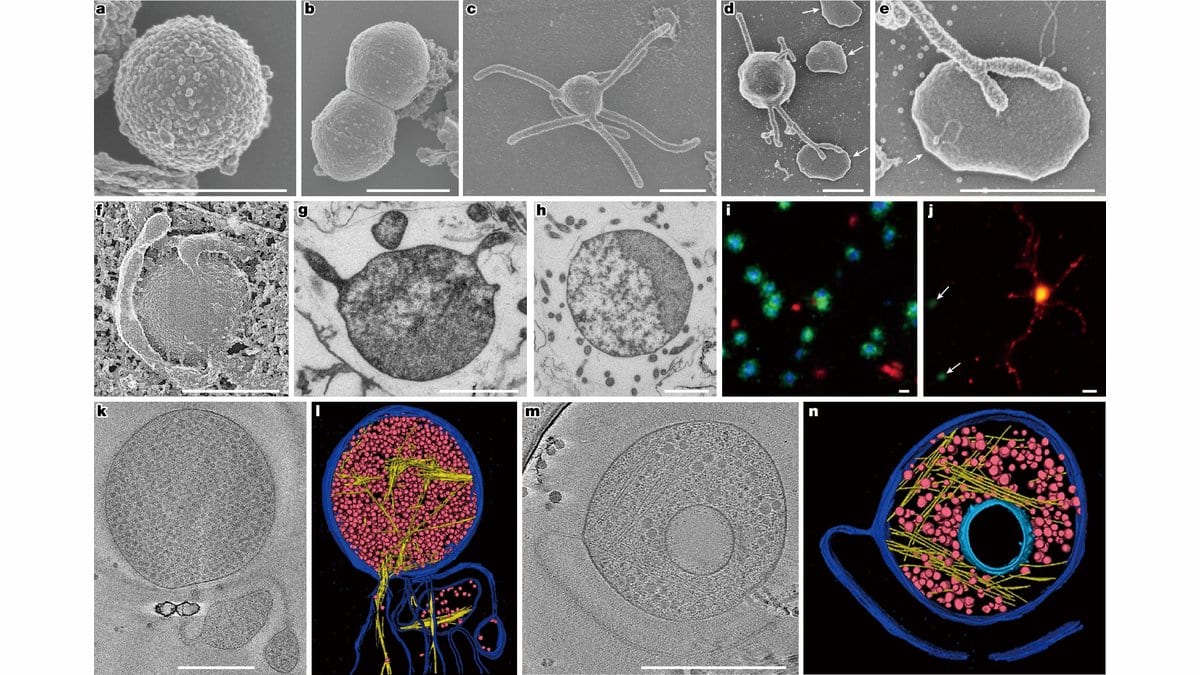
Electron microscopy showed ordinary microbial cells, round and dividing in two, pushing out finger-like extensions and shedding membrane sacs, with none of the lasting internal membranes that organize a complex cell. The team sequenced circular genomes of 7.91 million and 6.75 million base pairs.
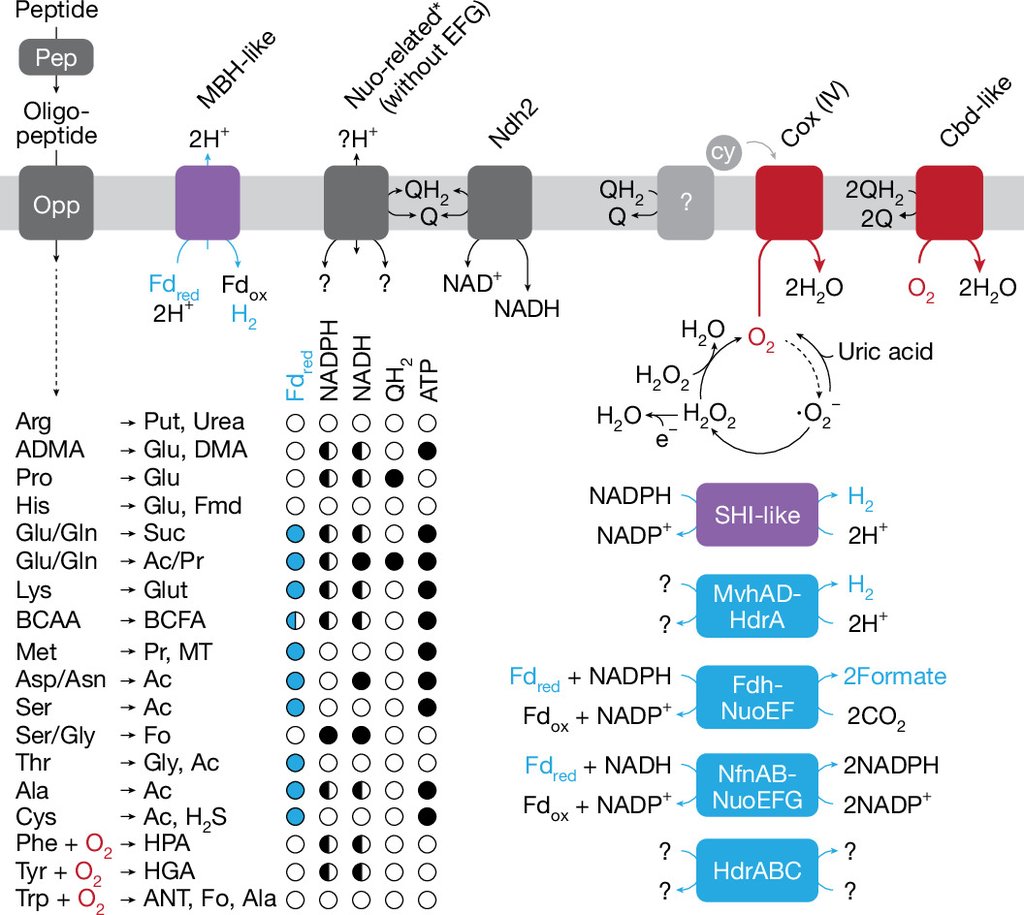
HC1 does carry genes for cytochrome c oxidase, an enzyme that cells use to consume oxygen. The authors report that the culture still would not grow when oxygen was present, unless oxygen-consuming bacteria shared the vessel. They read the enzyme as a way of clearing oxygen away rather than of living on it, and say a comparison of other Heimdallarchaeia genomes points the same way.
On that basis the authors propose that the archaeal ancestor of eukaryotes was also unable to live on oxygen and simple inside, which would make the origin of complex cells a steep change in both structure and chemistry. The two strains get the proposed names Candidatus Margulisarchaeum peptidiphilum and Candidatus Flexarchaeum multiprotrusionum.
Sources
- NaturePeer-reviewed
