Swift Is Observing Again After Six Months off, but One Telescope Stays Dark
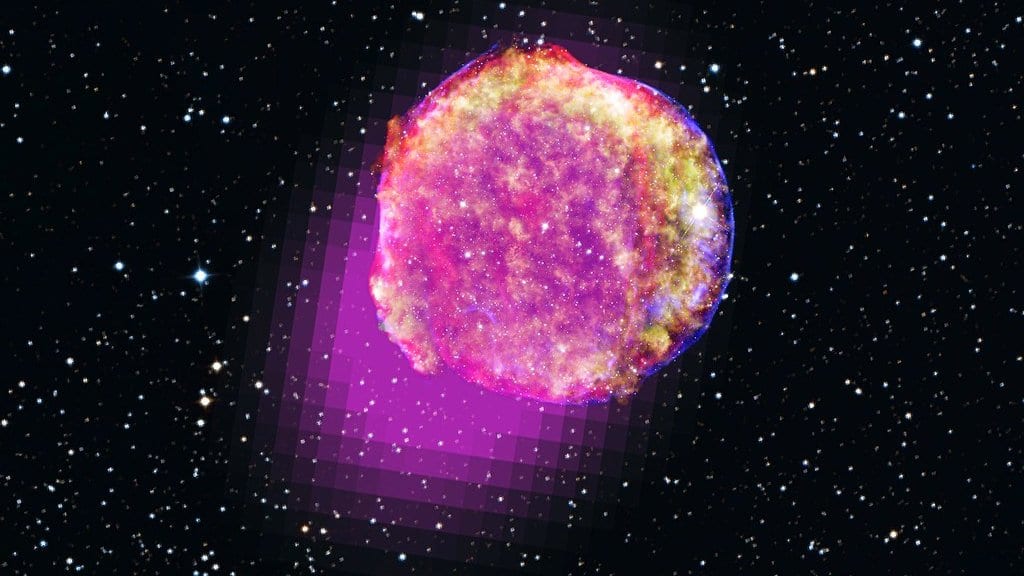
NASA switched two of the three science instruments on its Neil Gehrels Swift Observatory back on Wednesday, Aug. 26, resuming observations suspended since February.
The Ultraviolet/Optical Telescope and the X-ray Telescope are the two now running, NASA said in a mission blog post Aug. 28. They were switched off to reduce the satellite's drag through the upper atmosphere and extend its time in orbit while a commercial mission tried to boost it higher.
The third instrument is still off. NASA says the Burst Alert Telescope was halted in April to cut power draw so Swift's solar panels could be angled to reduce drag further, and that the team is working to return it to data collection in the next few weeks.
The X-ray Telescope's first image after the restart was of Tycho's supernova remnant, taken the same day, Aug. 26. NASA puts the remnant about 13,000 light-years away, in the northern constellation Cassiopeia.
The boost attempt has been called off. NASA contracted Katalyst Space in September 2025 to build and launch a spacecraft within one year, then meet, grab and lift Swift. That spacecraft, LINK, launched in July on a Northrop Grumman Pegasus rocket and developed problems controlling its orientation later that month. NASA and Katalyst announced Aug. 19 that LINK would not capture and boost Swift; the company will still attempt to rendezvous with the observatory and run proximity operations to demonstrate in-orbit servicing.
Swift has no propulsion to counter atmospheric drag, and NASA says recent solar activity increased that drag and left the satellite sinking faster than expected. Agency predictions had the low-drag configuration keeping Swift above 185 miles (300 kilometers) until October; below that altitude, NASA says, the telescope becomes difficult to operate and the rate of descent climbs quickly. With science observations running again, NASA now expects Swift to reach that altitude within one to two months.
Swift has been operating for 21 years. NASA says it observes across a wide range of light, points rapidly at short-lived outbursts and sends alerts to other facilities in space and on the ground for follow-up observations.