NASA's Swift Is Chasing Cosmic Explosions Again, With Its Orbit Running Down
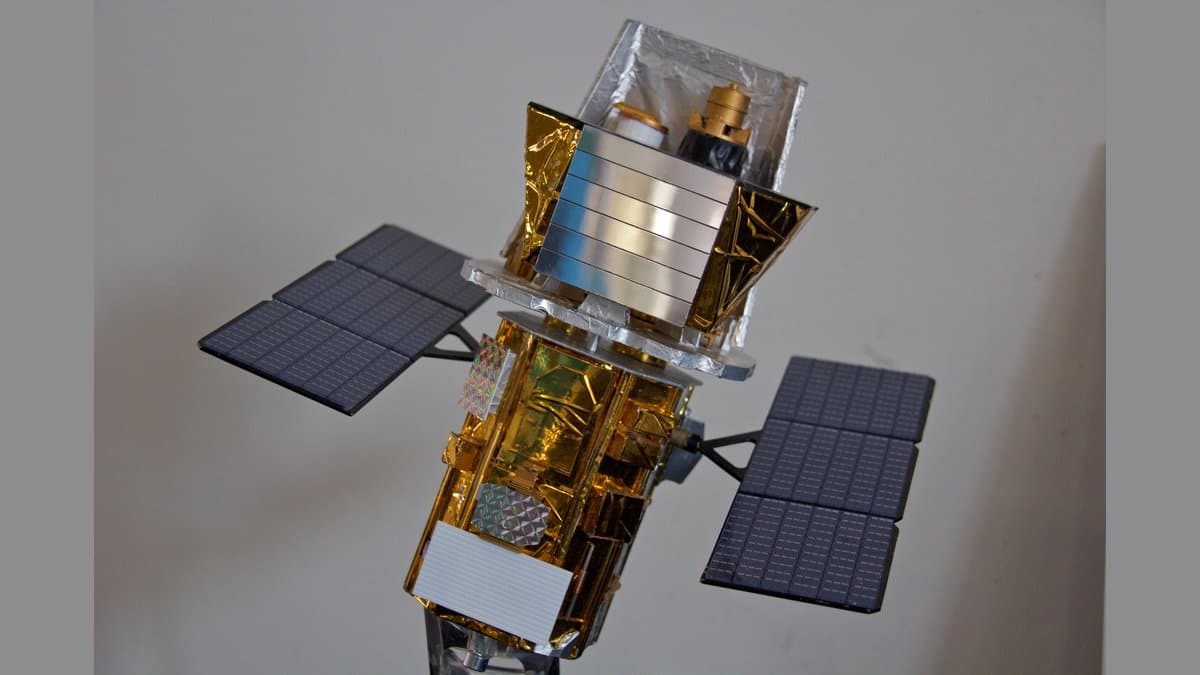
NASA has switched the gamma-ray detector on its Neil Gehrels Swift Observatory back on and allowed the spacecraft to start pointing itself at new cosmic explosions again. Swift team members confirmed that the Burst Alert Telescope was calibrated and detecting gamma rays, the highest-energy form of light, on Sept. 18, and the team allowed the observatory to return to automated pointing on Sept. 21. The instrument had been powered down since April.
NASA's Swift mission blog describes what that restores: the flight operations team at Penn State in University Park sends the observatory a daily plan of what to observe, and when the Burst Alert Telescope catches a flare of gamma rays, Swift is designed to interrupt the plan and turn its ultraviolet/optical and X-ray telescopes onto the outburst on its own.
NASA states that the return to science has also restarted Swift's rapid sinking. The satellite is now about 200 miles (325 kilometers) above Earth, and below 185 miles (300 kilometers), operations become more difficult and science observations will likely cease. The team estimates Swift will reach that altitude sometime in early to mid-October.
Use of the instrument was halted in April to cut power consumption, which let Swift hold its solar panels in the position that best reduced drag and extended the satellite's time in orbit. That was in preparation for a commercial mission that would have boosted Swift to a higher altitude, and the return to normal operations follows the scaling back of that mission. The observatory had returned to data collection in August without the gamma-ray instrument.
The science operations team had also been slowing the descent through its choice of targets. From December 2025, the team began swapping about a quarter of Swift's planned science targets for points in the sky that minimized drag, and by February it had switched over entirely, which meant the spacecraft no longer broke off its plan for gamma-ray bursts.