Galactic Energy's Pallas-1 Made Orbit on Its Debut Launch
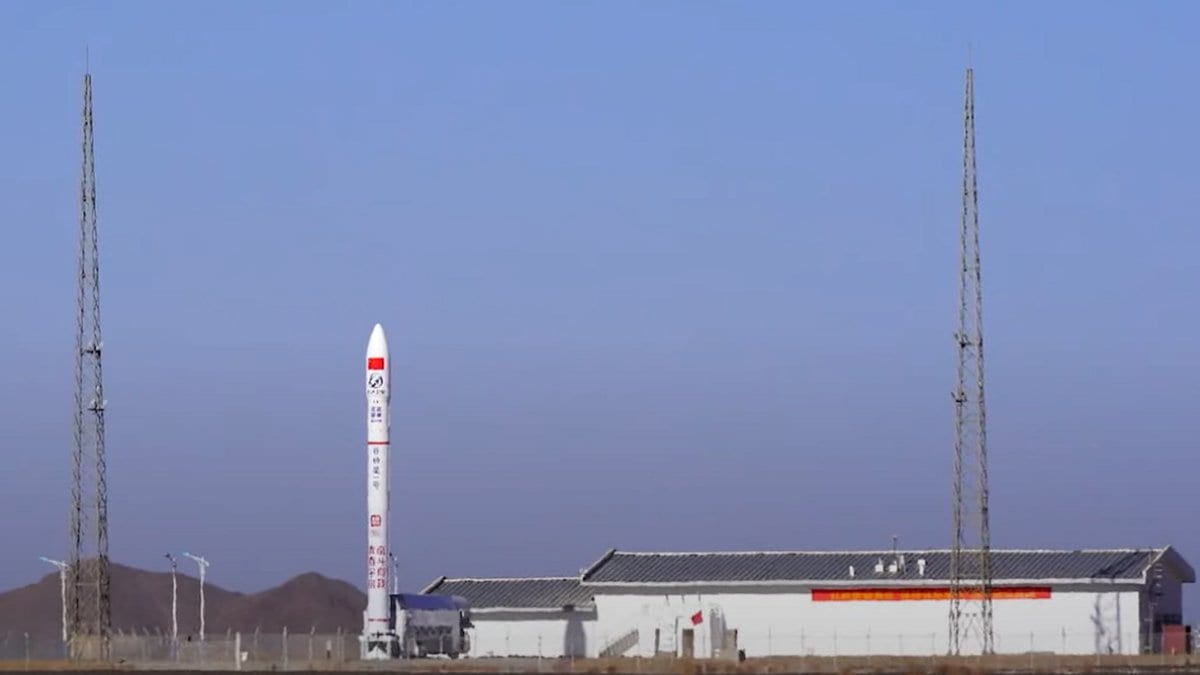
Galactic Energy's Pallas-1 rocket reached orbit on its first flight, lifting off at 10 a.m. Beijing time on Sept. 1 from the Dongfeng Commercial Aerospace Innovation Test Zone at Jiuquan and delivering its payload to the planned orbit. The rocket flew normally throughout and the mission was a complete success, Xinhua reported.
It is the first liquid-propellant rocket the company has flown. Galactic Energy's 21 previous orbital successes were all flown by its solid-fueled Ceres series, according to the Science and Technology Innovation Board Daily. The outlet's reporter watched the launch from inside the test zone and reported that this was also the first use of a launch pad the company built for Pallas-1.
Pallas-1 is a two-stage vehicle 52 meters long with a core diameter of 3.35 meters. It has a liftoff mass of about 283 metric tons and 350 tons of liftoff thrust, according to specifications the developer gave Xinhua. The rocket carries 5 to 7 tons to low Earth orbit.
The first stage clusters seven Cangqiong-50 liquid-oxygen and kerosene engines, which Galactic Energy developed itself. The company says the arrangement lets the rocket complete its flight if one engine fails, and that the engine has been measured in testing across a throttle range of 32% to 105% of rated thrust. Pallas-1 is the first privately built rocket in China to fly seven engines in parallel.
No landing was attempted on this flight. The first stage is designed for no fewer than 25 flights. The company said reentry control, grid fins and pinpoint recovery on land or at sea will be tested step by step on later missions.
A Galactic Energy representative told Xinhua the rocket's design goal is to give commercial satellite customers an efficient, low-cost "space express." Xinhua also reported that the vehicle can fly with an optional Aishenxing-2 upper stage.