Glucose Monitors Lowered Blood Sugar in a Trial Funded by Dexcom
Adults with type 2 diabetes who do not use insulin had lower blood sugar at the end of a 26-week trial if they wore a continuous glucose monitor than if they got routine care, the CONNECT Study Group reported Oct. 14, 2026, in the New England Journal of Medicine. The trial was funded by Dexcom, a maker of glucose monitors, and the paper lists employees of the company among its co-authors.
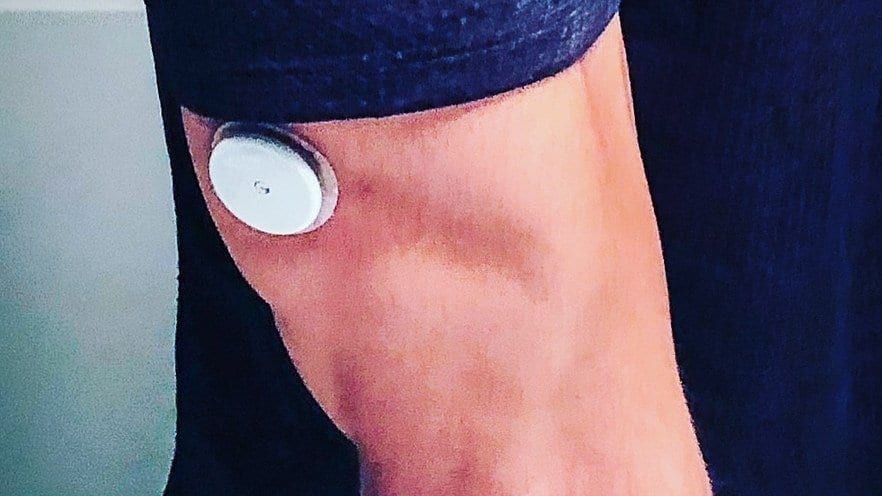
Continuous glucose monitors are small sensors worn on the skin that read blood sugar through the day. They are already used in type 1 diabetes and in type 2 diabetes treated with insulin. The authors write that the role of monitoring in type 2 diabetes not treated with insulin needed further study.
The CONNECT trial randomly assigned adults at 22 primary care practices in the United States to use a monitor or to continue routine care, 145 in the monitoring group and 138 in the control group. The main measurement was glycated hemoglobin, a blood test that reflects blood sugar over the preceding weeks. The monitored group's level ended 0.9 percentage points lower than the routine-care group's, after adjustment. Time spent with glucose between 70 and 180 mg per deciliter was 21 percentage points higher with monitoring. No episodes of severely low blood sugar were reported.
The authors conclude that among adults whose type 2 diabetes was being managed in primary care without insulin, using a monitor led to a greater drop in glycated hemoglobin and a lower risk of high blood sugar than routine care.
Participants ranged in age from 21 to 84 years. The trial is registered with ClinicalTrials.gov as NCT06601166.
Sources
- New England Journal of MedicinePeer-reviewed

Medical Disclaimer: This content is provided for general informational and educational purposes only. It is not medical advice and should not be used as a substitute for professional medical advice, diagnosis, or treatment. Always consult a qualified healthcare professional regarding any medical condition, concern, symptom, or treatment decision.