A Voltage Slides Graphene's Layers and Switches Its Magnetism On
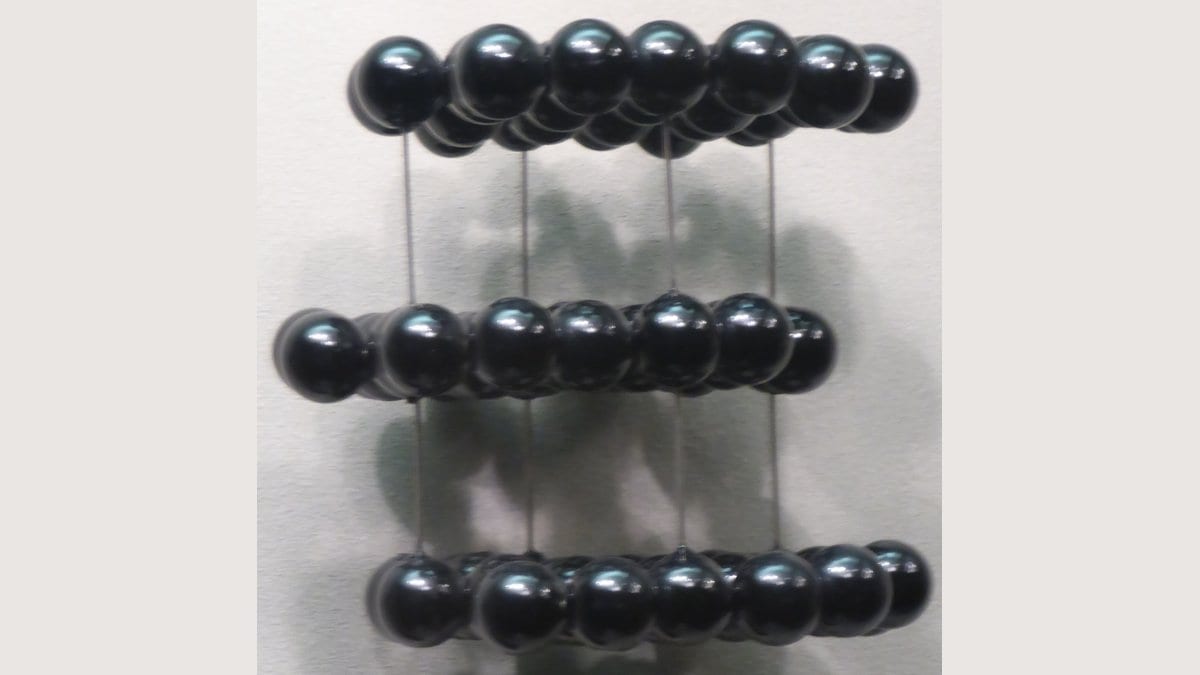
Daniel Brandon, Kenji Yasuda and colleagues at Cornell University report that a voltage can slide the four carbon sheets of a graphene stack into a different arrangement, and that the shift turns the material from non-magnetic into a magnet that stays magnetic after the voltage is switched off.
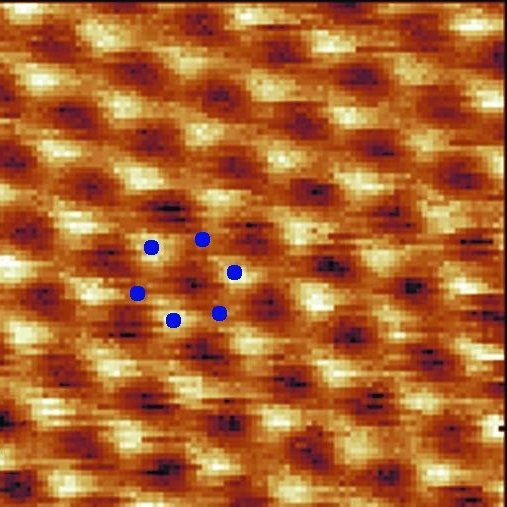
Their paper in Nature Nanotechnology, published Oct. 14, 2026, presents the switch as a way to toggle a material between complex electronic states on demand, and as a way to learn how the borders between differently stacked regions shape the behavior of a whole sample.
Four-layer graphene can sit in either of two stacking orders, the common Bernal order or a rhombohedral one that is less stable. The rhombohedral form hosts electronic phases the Bernal form lacks, including states in which electrons act collectively. Working with samples built from two graphene bilayers laid together with a very small twist, the team reports that sweeping the gate voltages drives the stack back and forth between a Bernal-dominant state and a mixed state holding both orders. That switching works across a wide range of voltage settings, and only the mixed state is magnetic.
In transport measurements, the magnetism shows up as an anomalous Hall effect, a sideways voltage that appears with no magnetic field applied. Where that signal comes from is not settled. The authors report that it reverses sign when the electric field across the stack is reversed, and say this suggests it may come from the boundaries between Bernal and rhombohedral regions rather than from the regions themselves.
The two effects sit at very different temperatures. The paper reports that the stacking switch persists up to 300 K in one device, while the magnetism needs deep cold: the Curie temperature, above which the magnetism vanishes, is around 8 K at two of the gate positions measured and about 2 K at a third.
Per its data-availability statement, the raw data and the code behind the paper's figures are posted on Zenodo. The work was funded by the U.S. Department of Energy's Office of Basic Energy Sciences.
Sources
- Nature NanotechnologyPeer-reviewed