A Buried Volcano on the Moon's Far Side Points to an Ancient Magnetic Field
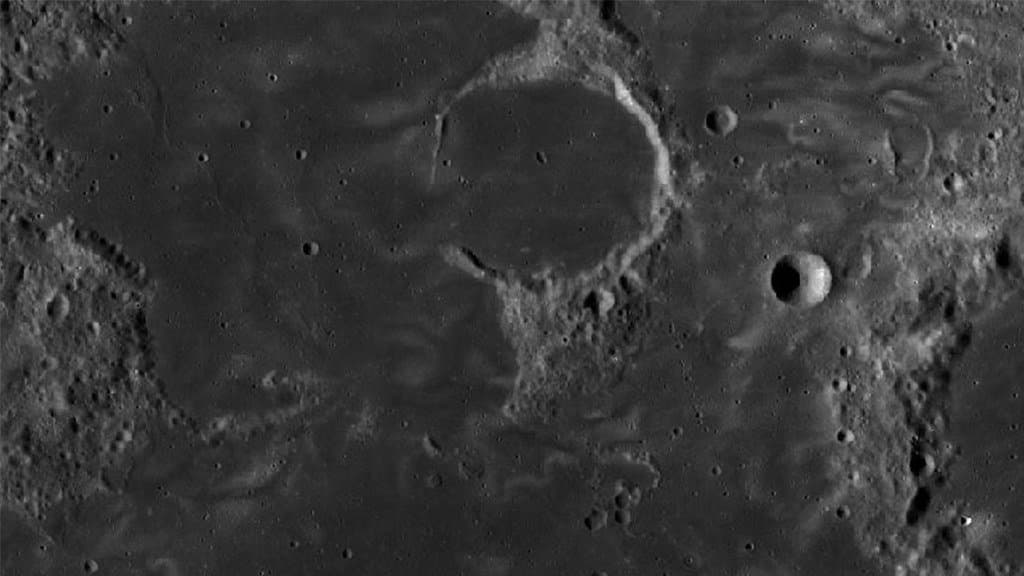
Researchers at ETH Zurich report that a dense, strongly magnetized rock body lies buried beneath the Dewar region on the Moon's far side, and that magnetizing it would have taken a field of at least 11 microtesla about 4.2 billion years ago. The study, published Sept. 23 in Science Advances, points to this as evidence of a field generated by motion in the Moon's core.
Accorging to the university, the Moon's early magnetism has been debated for decades because the rock samples Apollo astronauts brought back contradict one another. This team used no samples, working only from measurements made in lunar orbit, and the researchers note that the results should help future missions choose where to measure on the ground.
The gravity data come from NASA's GRAIL mission, the magnetic field models from the Lunar Prospector and Kaguya orbiters. Combining the two data sets into one model, the team found a body about 60 kilometers wide and 9 kilometers deep, denser than the crust around it and strongly magnetized. The team describes it as solidified magma risen from below, a buried volcanic complex dated from the impact debris above it.
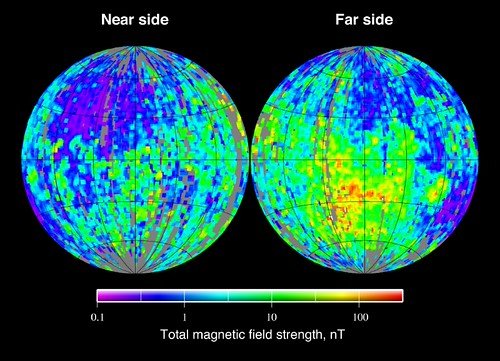
The paper identifies 11 microtesla as a minimum, not a measurement: because the iron content of such rock is known, the team could calculate the weakest field that could have magnetized the magma as it cooled. For comparison, Earth's field today is about 50 microtesla.
The study also rules out a short-lived field from a large impact, because Dewar lies outside the regions where that is considered possible. "We can therefore be almost certain that the magnetic field must originate from a longer-lasting dynamo generated in the core," said Xi Yang, an ETH Zurich doctoral student and the paper's first author. The researchers do not yet consider the question resolved: it is unclear how the Moon's small core could have sustained a field that strong.
The paper finds that lunar swirls, the bright curved markings that appear where the Moon carries a magnetic anomaly, form only where the magnetization lies horizontal and deflects the solar wind.
Sources
- ethz.ch
- Science AdvancesPeer-reviewed