The Milky Way's Disk Flattened in Two Stages, Precise Star Ages Show

Astronomers using data from the European Space Agency's Gaia star-mapping mission have dated the moment the Milky Way's disk stopped flattening fast and began flattening slowly. David Mirabal of the Instituto de Astrofísica de Canarias and the Universidad de La Laguna and colleagues put the change at about 10.85 billion years ago, in a letter published Oct. 16, 2026, in The Astrophysical Journal Letters.
In the letter, the authors write that astronomers have lacked precise ages for large, representative samples of stars, which has made competing accounts of how the disk formed hard to tell apart. Their ages for stars near the Sun are good to better than 5%, which they say is enough to separate those accounts.
The team fitted color-magnitude diagrams, plots of stellar brightness against color, to Gaia measurements of complete samples of nearby stars, grouped those stars into populations of nearly uniform age and chemical makeup, and measured how far each population spreads above and below the plane of the Galaxy. Younger populations sit consistently closer to that plane.
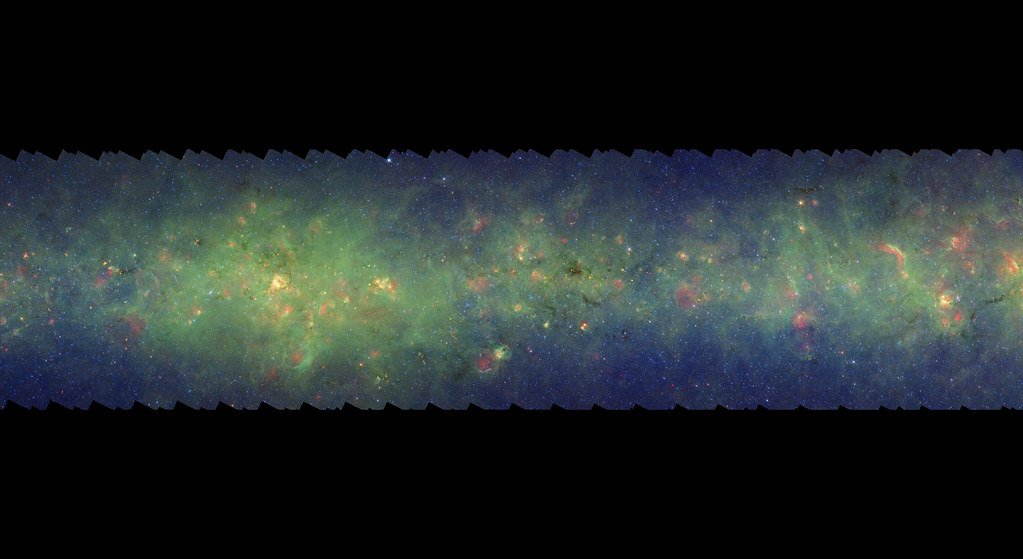
Before the break, the thinning was steep. The authors report that scale height, the distance over which star counts fall off as you move away from the plane, dropped from more than 1.26 kiloparsecs to about 0.5 in just 2 billion years; a kiloparsec is roughly 3,000 light-years. After the break, the thinning became very gradual, reaching about 0.1 kiloparsecs for the youngest populations.
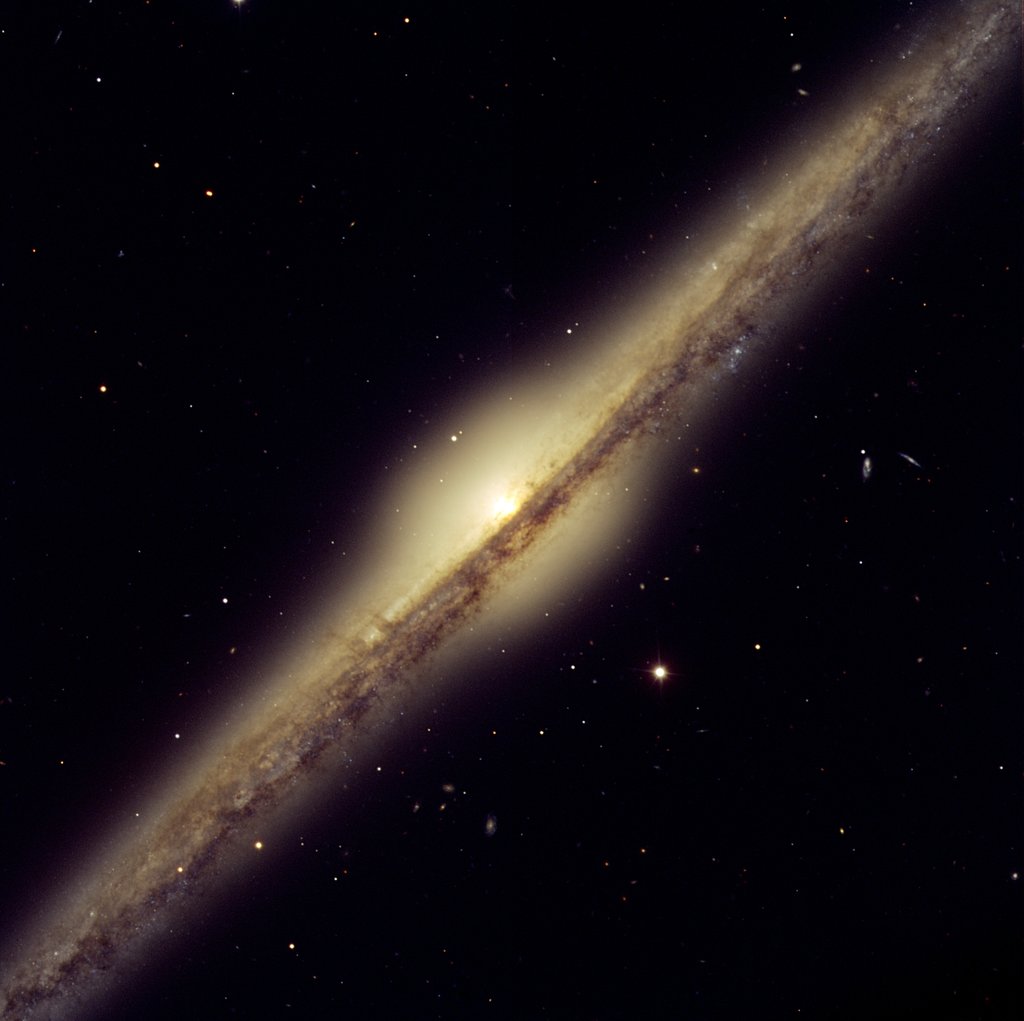
Astronomers have long described the disk as a thicker, older component plus the thin one the Sun sits in. Two accounts of the thicker component compete: that it was born puffy and settled toward the plane, known as upside-down formation, or that an initially thin disk was stirred up over time.
The authors report that the very rapid early settling points to upside-down formation, and that it strongly supports a history in two phases: a turbulent early epoch in which the thick disk was essentially built, then a quieter stretch of gradual gas settling that formed the thin disk. The letter is open access under a Creative Commons Attribution license.
Sources
- The Astrophysical Journal LettersPeer-reviewed