Enzymes Added to Compostable Plastic Made It Break Down on the Deep-Sea Floor
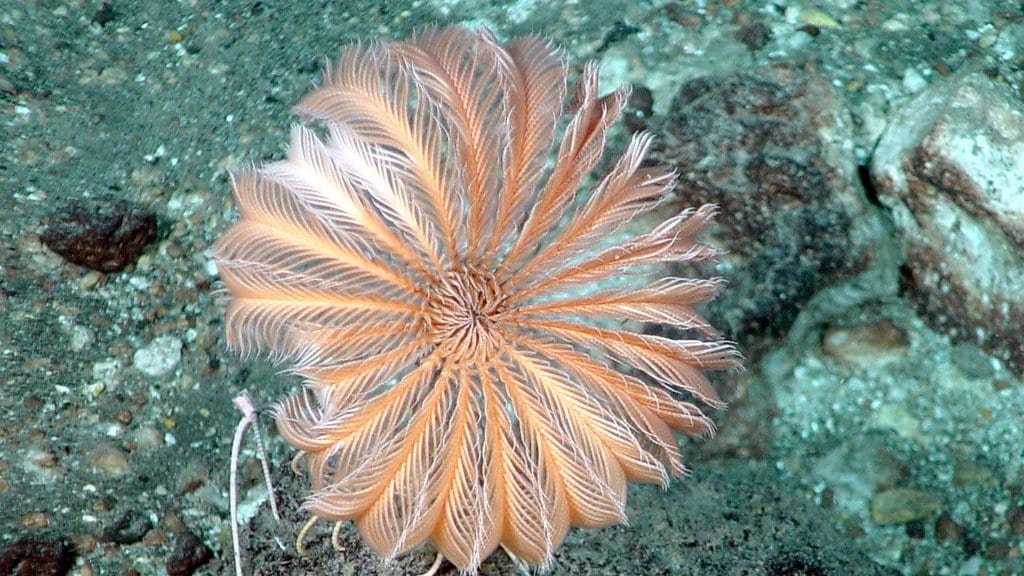
Researchers at the University of Tokyo and the Japan Agency for Marine-Earth Science and Technology (JAMSTEC) report that putting enzymes inside four compostable plastics made the materials break down in seawater, including on the deep-sea floor. Their study appeared Oct. 21, 2026, in Nature.
Compostable plastics are built to fall apart in the heat and microbial activity of industrial composting. The same materials degrade only to a limited extent in the ocean, least of all in the deep sea, presenting enzyme embedding as a potential solution to marine plastic pollution.
The paper reports field tests at depths from coastal water 2 to 6 meters deep down to a sea floor 5,503 meters deep. At 757 meters, films with enzymes in them degraded almost completely within five months. At the deepest site, where the water is colder and the pressure far higher, breakdown was moderate rather than near-complete.
Films carrying 0.1% enzyme by weight degraded rapidly in coastal seawater, and the enzyme-loaded plastics held mechanical properties similar to the same plastics without enzyme. Chemical analysis turned up small breakdown products, and measurements of oxygen use supported mineralization, the breakdown of the material into simple compounds.
The four plastics tested were poly(butylene succinate), poly(butylene succinate-co-adipate), poly(epsilon-caprolactone) and poly(butylene adipate-co-terephthalate), all of them commercially available. QiuYuan Huang of the University of Tokyo is the study's first author, and Tadahisa Iwata, also at the University of Tokyo, is the corresponding author.
Sources
- NaturePeer-reviewed