Mercury Has Shrunk More Than We Thought, and Rubble Was Hiding the Evidence
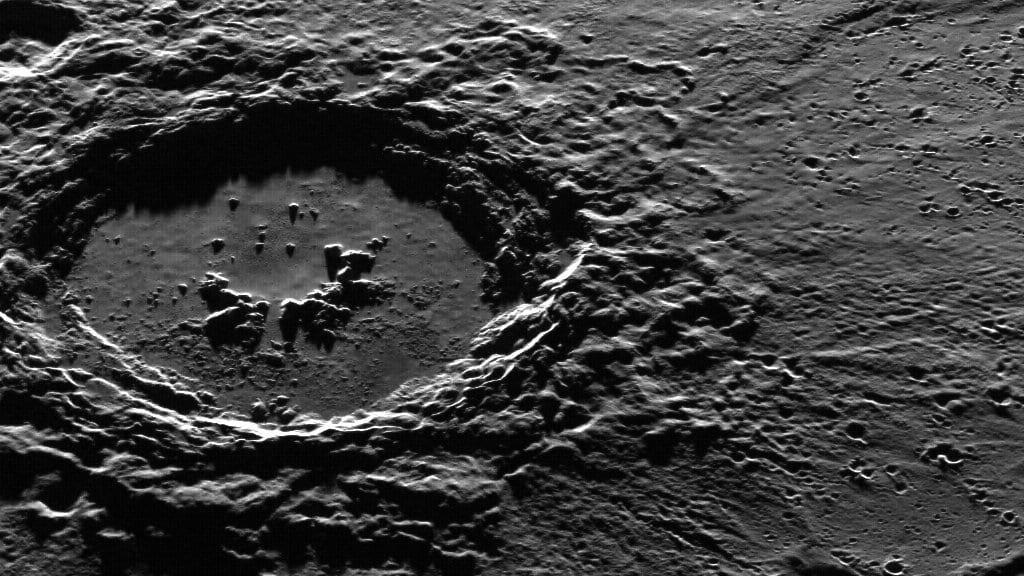
Mercury's surface carries the record of how much the planet has shrunk as its interior cooled, and part of that record has been buried. G. Nishiyama of the German Aerospace Center's Institute of Space Research in Berlin and colleagues report that the ridges and cliffs left by that shrinking are largely missing from Mercury's roughest terrain, where debris thrown out by impacts appears to cover them or keep them from forming. Correcting for the gap puts the shrinking of Mercury's radius up to 30% higher than earlier estimates.
Working out how much Mercury has contracted is key to understanding how the planet evolved, the paper says. The work was published Sept. 10 in Geophysical Research Letters under an open license.
Those estimates come from mapped shortening structures, the ridges and cliffs pushed up where the crust was squeezed together as the planet contracted. They are spread unevenly across Mercury, which does not match the even shrinkage expected from a planet cooling as a whole. The team tested whether the missing structures had been covered over by more recent resurfacing, such as material thrown out by impact craters.
Using surface roughness as a stand-in for how fresh the ground is, they built a new global roughness map of Mercury and set it against strain maps drawn from a catalog of shortening structures. Rough regions came out short of them. The authors read that as roughness-related processes hiding structures that were already there, making them harder to spot, or preventing them from forming.
The paper reports that the effect biases earlier contraction estimates downward by several kilometers, which is where the higher total comes from.
The same roughness bias may matter for other rocky bodies, including the Moon, the authors write. Their global roughness maps of Mercury, measured at scales from 5 to 100 kilometers, are posted publicly on Zenodo.
Sources
- Geophysical Research LettersPeer-reviewed