Skip to content
See the World Through ScienceA project of ALLATRA

NASA Says Lucy Is the First Spacecraft to Reach Jupiter's Asteroid Swarm
Space

Republish this story

Our work is licensed under Creative Commons BY-NC 4.0. You may republish this piece for free — with credit to ALLATRA Media and a link to the original, unedited beyond length trims, and not for commercial use.

Read the full license

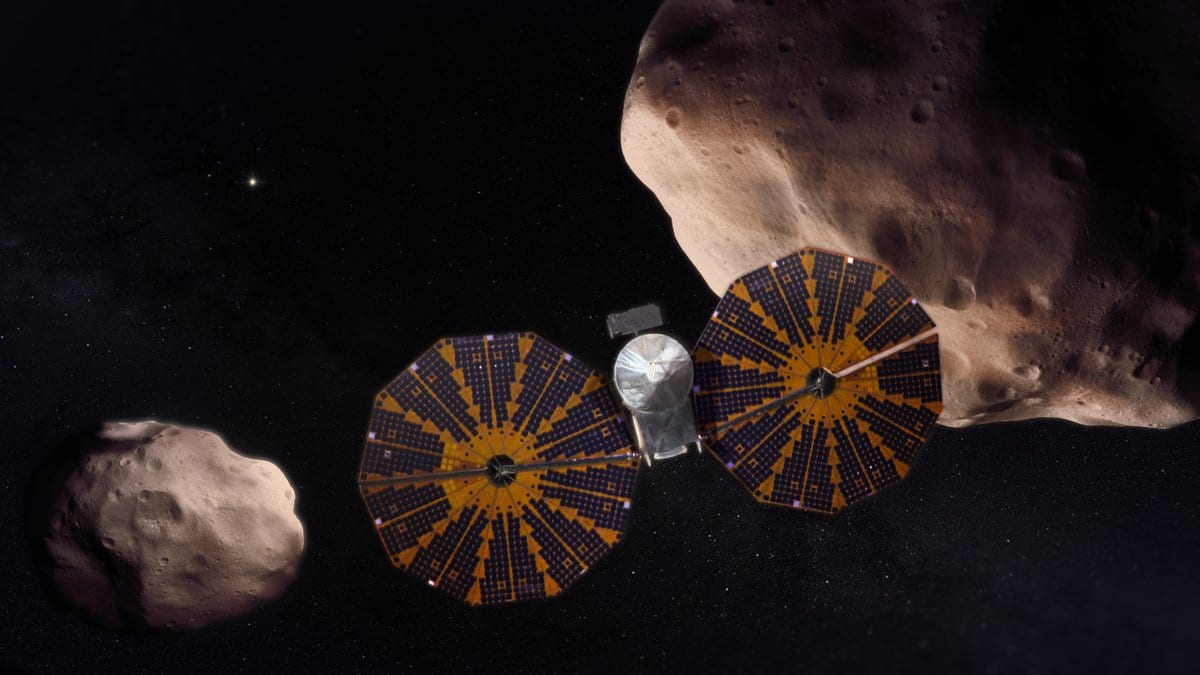
Artist's rendering of NASA's Lucy spacecraft, its two round solar arrays extended, passing between two dark, cratered asteroids in deep space.
Lucy draws alongside the binary Trojan pair Patroclus and Menoetius, the mission's last targets, due in March 2033 (illustrative)."Lucy-PatroclusMenoetius-art" by NASA’s Goddard Space Flight Center/Conceptual Image Lab/Adriana Gutierrez, via Wikimedia Commons, Public domain

NASA said on Oct. 28, 2026, that its Lucy spacecraft has entered the region of the Jupiter Trojan asteroids, a population of primitive bodies that shares Jupiter's orbit around the Sun. The spacecraft has traveled more than 2.2 billion miles since it launched on Oct. 16, 2021.
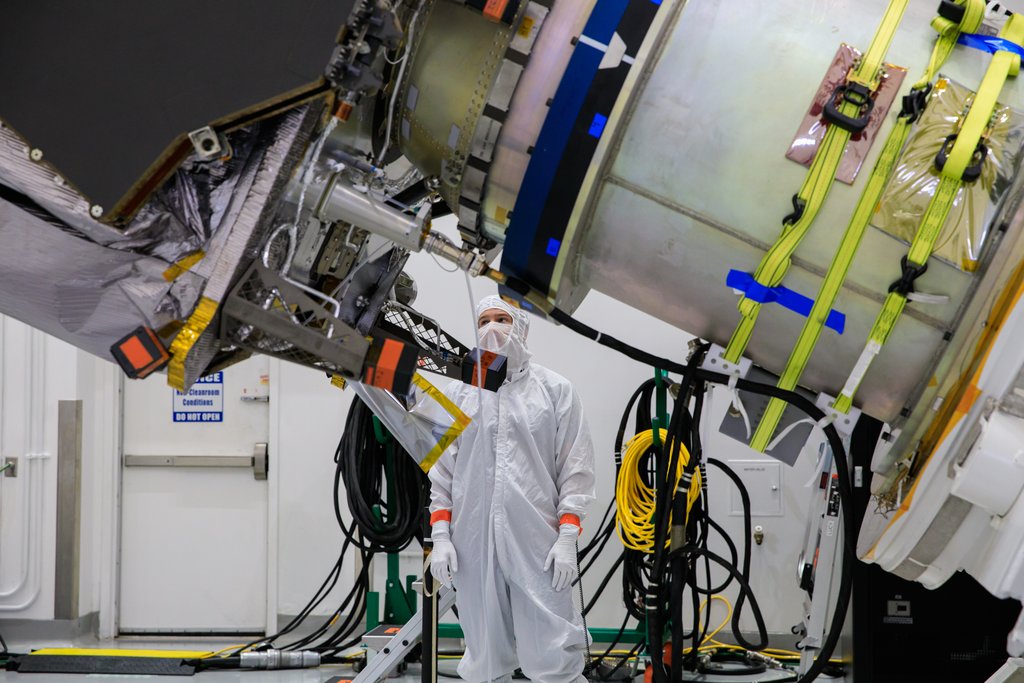
A technician in a white clean-room suit stands beneath the Lucy spacecraft, held horizontally in a rotation fixture among cables and lifting straps.
Lucy in a processing room in Florida on Sept. 1, 2021, six weeks before it left Earth. "Lucy Spacecraft Rotation (KSC-20210901-PH-GEB01 0007)" by NASA Kennedy Space Center / NASA/Glenn Benson, via Wikimedia Commons, Public domain

The agency says Lucy is the first spacecraft to enter that region, and that scientists expect a close look at the Trojans to help them refine their theories of how the planets formed and how they ended up in the orbits they hold today.

There is no sharp edge to cross. NASA's post on the mission blog says space has no well-defined boundaries, and that mission engineers place Lucy by tracking the spacecraft's radio signals and by imaging the stars around it. The tracking puts Lucy near Jupiter's Lagrange point 4, a gravitational balance point that runs ahead of the planet and holds thousands of asteroids.

Distance is why nothing had been there before. The Trojans sit as far from Jupiter as Jupiter sits from the Sun, about 484 million miles. Several spacecraft have visited Jupiter itself, some using its gravity to throw themselves farther out, but none had a reason to travel that much farther.

Lucy's first close pass, of the asteroid Eurybates, is set for Aug. 11, 2027. The agency says the spacecraft and its instruments are working as expected in the dimmer light and colder temperatures this far from the Sun.
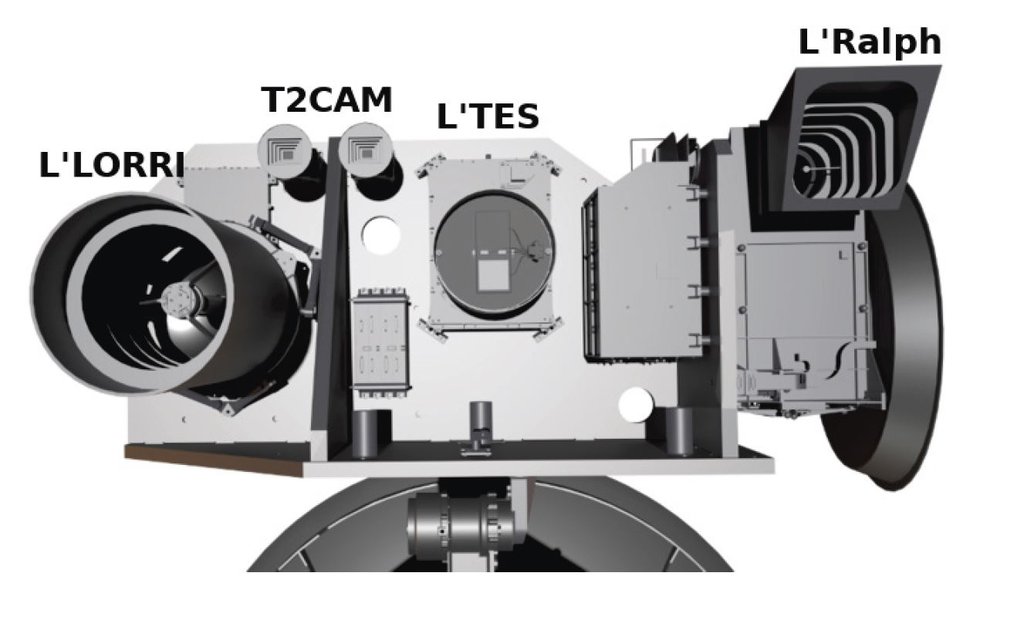
Labeled cutaway of Lucy's instrument platform, naming the L'LORRI camera, the T2CAM cameras, the L'TES thermal spectrometer and the L'Ralph imager.
The four instruments that will study each Trojan, beginning with Eurybates on Aug. 11, 2027. "Lucy spacecraft - Instruments platform" by NASA, via Wikimedia Commons, Public domain

Flybys of Polymele, Leucus and Orus come next, and the paired asteroids Patroclus and Menoetius in March 2033.

Sources

Spot an error?

Spot an error?

Report an error

Spotted a mistake on this page? Tell us what's wrong and our editors will take a look.

What kind of problem?

Only if you'd like us to be able to follow up. We won't use it for anything else.

We correct mistakes openly. Select any text to flag it. Fixes are logged under our Corrections Policy.

Report an error

Reporting on

NASA Says Lucy Is the First Spacecraft to Reach Jupiter's Asteroid Swarm

What kind of problem?

Only if you'd like us to be able to follow up. We won't use it for anything else.

We read every report. Corrections are logged publicly.