Hera Finally Sees the Asteroid That Humans Moved
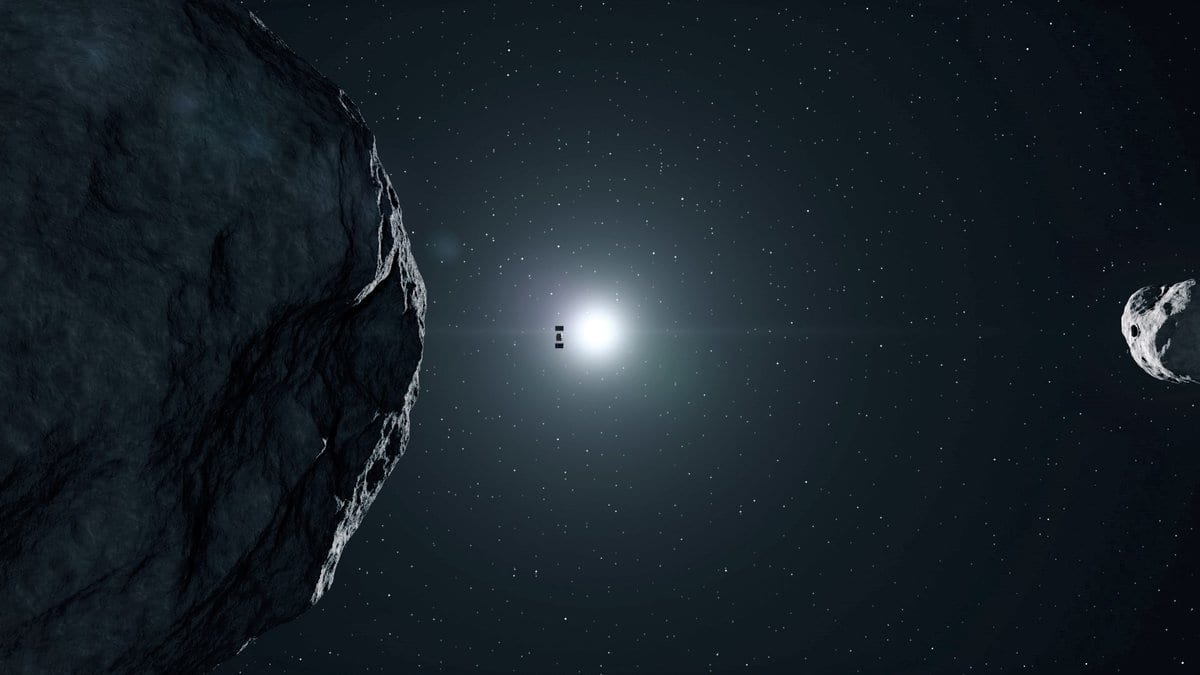
The European Space Agency says its Hera spacecraft has imaged the asteroid Dimorphos as an object separate from the larger asteroid it orbits, the first time the mission's own camera has split the pair into two. The agency says that before this image, Hera was resolving the Didymos system as a single dot.
Hera is flying to the Didymos system to examine what NASA's DART spacecraft did to Dimorphos in 2022, when it struck the smaller asteroid and slowed its orbit by around 33 minutes. ESA says the spacecraft will carry out a close-up investigation of that crash site over the coming months.
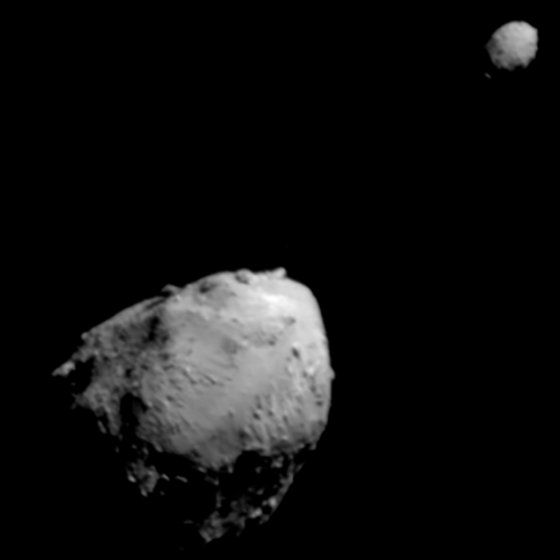
The agency published the image Oct. 27, 2026. It says Hera took the picture on the evening of Oct. 18, 2026, from 1280 kilometers away, using its monochromatic Asteroid Framing Camera, and that Dimorphos covers only about one pixel.
"With this image the smaller Dimorphos asteroid becomes visible for the first time," Michael Kueppers said in the release, adding that although Dimorphos is around one pixel across in the picture, "it is clearly well separated from its parent body."
The image followed Hera's braking maneuvers earlier in the month. ESA says a pair of thruster firings a week apart slowed the spacecraft to 20 meters per second relative to its targets, so that it could close in gradually.
"For the very first time we are seeing through Hera's own eyes the very double asteroid system that the mission was designed and built for," mission manager Ian Carnelli said. The agency says the first detailed images of Dimorphos are due Nov. 25, 2026.
ESA says key questions about the impact are still open: whether it left a crater or reshaped the asteroid, what Dimorphos is made of, and which of its properties explain a deflection much larger than impact simulations had predicted.
Hera is carrying a pair of shoebox-sized CubeSats, which ESA says it will deploy for a closer survey, eventually progressing to a landing.