Model Maps Where Ancient Martian Rain Delivered a Building Block of Life
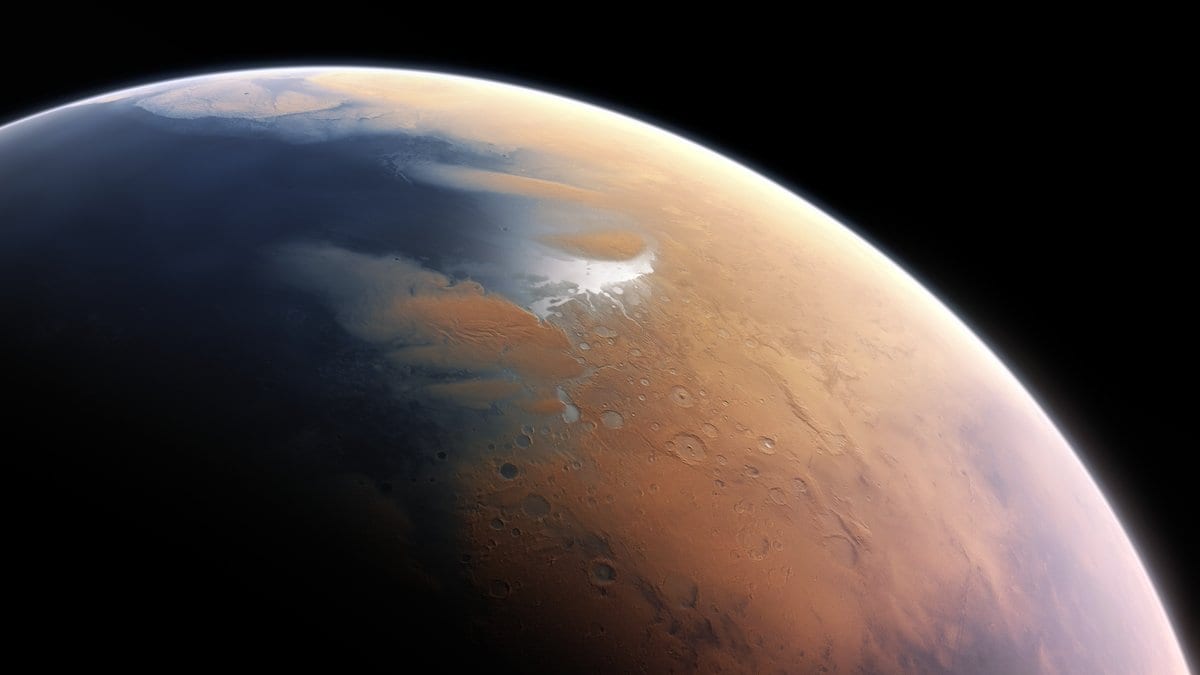
Researchers led from Tohoku University have built a computer model of where formaldehyde (H₂CO) would have landed on the surface of early Mars, and it puts about ten times the global average over the mountainous Tharsis and Elysium regions. Nothing was measured. The map is a prediction for conditions 3.8–3.6 billion years ago, not a detection of formaldehyde on Mars.
Tohoku University says formaldehyde matters because, once it reaches water, it can serve as a starting material for reactions that build sugars, amino acids and other complex organic molecules. "By comparing our map with findings from rovers, we can begin to test whether places that received more H₂CO were also more favorable for early life-related chemistry," said Shungo Koyama, the study's first author, at the Institute of Science Tokyo and Tohoku University.
The study was published in The Planetary Science Journal on Sept. 30, 2026. It simulated how temperature, water vapor, pressure and ultraviolet light shaped formaldehyde production in the air of a warm, wet Mars. The team reports that water vapor was especially important: ultraviolet light broke apart water molecules and released the reactive hydrogen that formaldehyde needs to form, while rainfall carried the molecule down to the ground. Wetter regions were predicted to receive more than drier ones, which is why the highlands stand out.
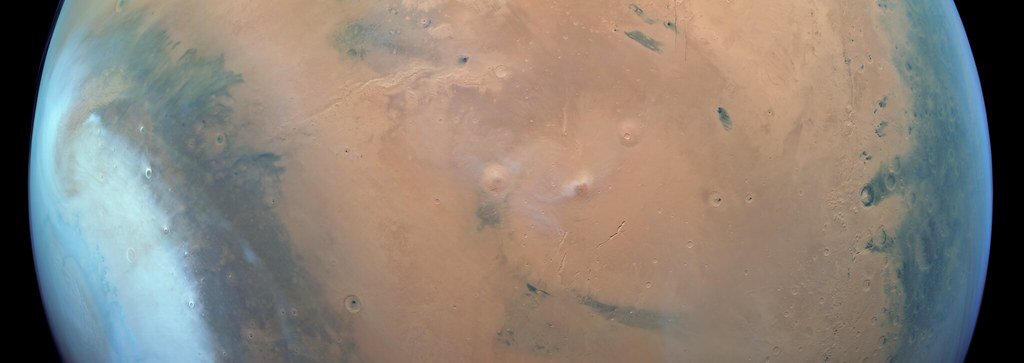
Because water governed both the formation of formaldehyde and its delivery, the researchers suggest the Martian water cycle may have decided where the molecule could accumulate. Their map is laid over present-day topography with the landing sites of Mars missions marked. Earlier work had already shown formaldehyde could form in the air of a warm early Mars; what had not been worked out was where it came down.
Sources
- www.sci.tohoku.ac.jp
- The Planetary Science JournalPeer-reviewed